



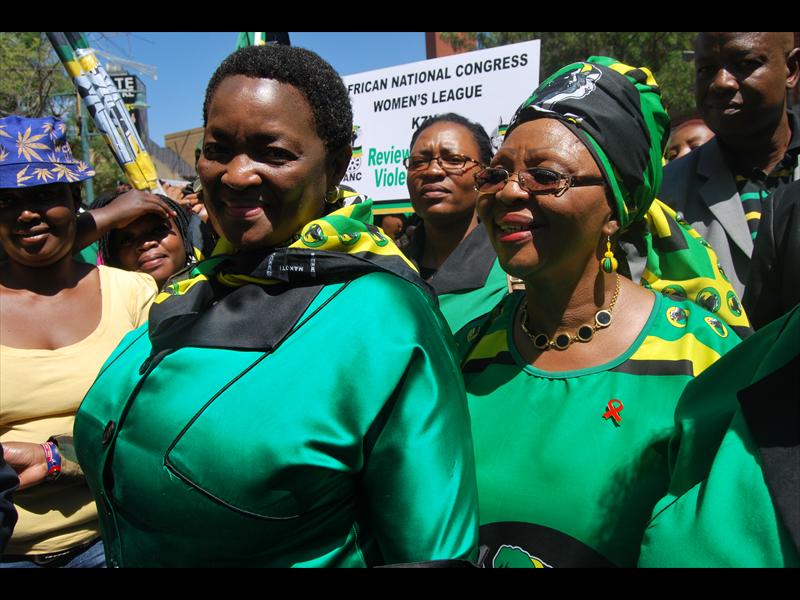
The ANC Women’s League’s 13th elective conference has been postponed for another week because more preparatory work is still needed, said the league’s interim task team co-ordinator Maropene Ramokgopa while briefing the media on Tuesday.
The conference themed “Advancing decisive action towards the full liberation and emancipation of women” is now expected to take place on July 21 to July 23 at Nasrec, Johannesburg.
“Following the exhaustion of the issues raised, the meeting determined a need for more time to resolve the issues identified and which are critical to the convening of a successful Conference.
“Accordingly, it has been resolved to post the national conference by a week to the 21st until the 23rd of July 2023, to allow all necessary measures to be undertaken to uphold the credibility and integrity of the Conference.
“All the branches with any outstanding issues, through official and organisational channels will be contacted in order to address these challenges,” she said.
Ramokgopa said some provinces have concluded pre-registrations while others are experiencing challenges.
“The meeting welcomed the fact that in several provinces most notably Western Cape, Eastern Cape, Limpopo Free State and Gauteng, pre-registration proceeded smoothly with most of their delegates successfully registered.
“Other provinces, such as KwaZulu-Natal and the Eastern Cape, experienced a variety of challenges which required further attention. Our assessment however is that there is still room for improvement in the registration process in all of the provinces.
“The ANCWL National Task Team (NTT) further resolved to give greater focused attention to the dispute resolution and appeals process to ensure that all matters raised by our branches, regions and provinces are fully attended to”.
Party task team convener Baleka Mbete said the party needed to resolve disputes in time ahead of the conference and urged delegates to lodge their disputes in areas nearest to them.
“You don’t say, ‘I know Maropene in Johannesburg, therefore I go straight to her.’ No, you don’t do that. The provinces have a dispute resolution structure that listens, must understand what the issues are,” Mbethe said.

