

As letters of the alphabet go, there is one that punches well above its weight. Out of a total of 308,000 entries in the Oxford English Dictionary, just 366 words begin with the letter “x”, and very few of those make it into most people’s vocabulary. Yet despite this aloofness – or perhaps because of it – x is perhaps the most powerful and alluring letter we have.
X-Files, X-Factor, X-Men, Generation X, X-rays, X-rated, Planet X… the letter is embraced in popular culture and by brands as shorthand for something unknown, futuristic or provocative. Its shape can signify everything from love (the kisses we use to sign off our emails and texts), to absence, prohibition and even death (as with the skull and cross-bone). It’s impressive for a letter that Dr Samuel Johnson described in 1755’s Dictionary of the English Language as: “a letter which though found in Saxon words, begins no word in the English language.”
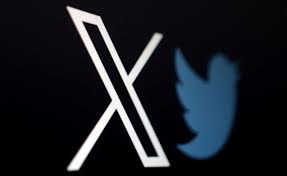
This week, the 24th letter of the alphabet was thrust into the spotlight once again, as Elon Musk announced an abrupt rebrand of Twitter – the social media company he bought in October 2022 for $44 billion. The site’s iconic blue bird logo is no more, replaced by a black letter X, part of Musk’s long-term plan to be a “platform that can deliver, well… everything.”
Musk says he chose x because it “embod[ies] the imperfections in us all that make us unique”. His fascination with it dates back over two decades, first evident in 1999 when he named his online banking service X.com, before it later evolved into PayPal. He bought the web domain back in 2017, claiming it had “great sentimental value.” He named an early Tesla car Model X, and his space exploration programme SpaceX. In 2020, Musk had a son with the musician Grimes, and the couple named him X Æ A-12 Musk.
The tech industry seems to have a particular fondness for the letter. Besides Musk’s X, there’s Microsoft’s gaming console Xbox, Sony’s Xperia smartphone, Apple’s iPhone X and operating system OS X. In 2010, Google chose the letter for the name of its secret idea-testing laboratory, first known as Google X and now simply X – its self-described “moonshot factory” for technologies that it claims will “improve the lives of million, even billions, of people”. There are reports that Meta – the Mark Zuckerberg-controlled parent company of Facebook, Instagram and Threads – has already trademarked an X logo for social media use, meaning there could be a trademark war ahead.
So why are the tech titans tussling it out for this one single letter, when there are 25 others they could draw on instead? Tony Thorne, Director of the Slang and New Language Archive at King’s College, London, sees it as an attempt to appear enigmatic, by invoking various vague scientific terms like exponential, experiential and experimental. “X is the only letter of the alphabet to not feature in many everyday words, but to also appear in multiple mathematical and technical contexts which baffle and intrigue most of us techno-illiterates,” he tells BBC Culture. There’s the implication of something important, unknowable and exciting – a symbol of possibility. For Thorne, though, its overuse is beginning to backfire. “Now it’s approaching a cliché.”
Part of the power of x is that it isn’t just a letter, it’s a symbol: one that humans have been making for millennia. “It’s such a primal designation act, x,” says Drucker. “In the earliest sign systems that humans make, crosses and circles are so fundamental because they’re so easy to make. We’ve got stones from France from 20,000 years ago that have crosses and circles on them.” From the Middle Ages, those who were illiterate used X as a signature. bbcnews

