



The Minister of Justice and Constitutional Ronald Lamola is confident that South Africa has a strong case to stop Israel from committing genocide in Palestine.
This as the International Court of Justice (ICJ) will on Tuesday hear oral arguments by the South African legal team regarding their case.
South Africa approached the court under the Genocide Convention, with respect to acts committed by Israel in the context of its attacks on Gaza.
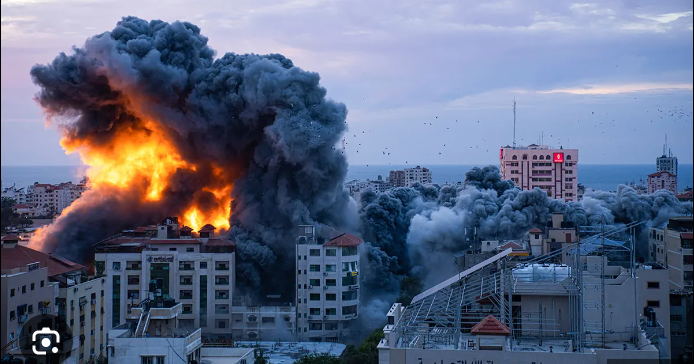
More than 20 000 Palestinians have been killed, mostly women and children, since the violence escalated on 8 October last year.
Lamola said the country’s legal team will request the ICJ to issue an injunction that will enable them to stop the state of Israel to continue with the genocide.
He is adamant that Pretoria will present a strong case.
“South Africa is taking a very strong case to the court, and with a very capable legal team, people that have participated in the processes of the ICJ, international law and to restore and assert human rights across the globe.
“We are confident that in terms of substance, and in terms of the technicalities related to the court, the country has got a good leg to stand on, and a case to take to the court,” said Lamola.
“He defended the country’s position in the court challenge, describing it as “a principled one that stood the test of time since the time of former president Nelson Mandela.”
Lamola highlighted that South Africa doesn’t want to regret not stopping the genocide in Gaza, like they did the Rwandan genocide in 1994.
“It is an important decision that South Africa has taken to The Hague, to stop the genocide that is currently happening in Gaza.
“So that the country does not have regrets in the future and the international community and the world, we must act in real time and now,” explained the Minister.
He added that all the substantive matters will be dealt at a later stage, and the urgent matter is to stop the genocide, restore the respect of the rule of the law in the international architecture of the law.
The country is represented by Professor John Dugard, Adila Hassim SC, Tembeka Ngcukaitobi SC, Max Du Plessis SC, and they’ll be assisted by other legal counsels.
The legal team will also receive external counsel from lawyers across the world.
South Africa’s legal challenge is supported by Turkiye, Malaysia and some human rights organisations.

