



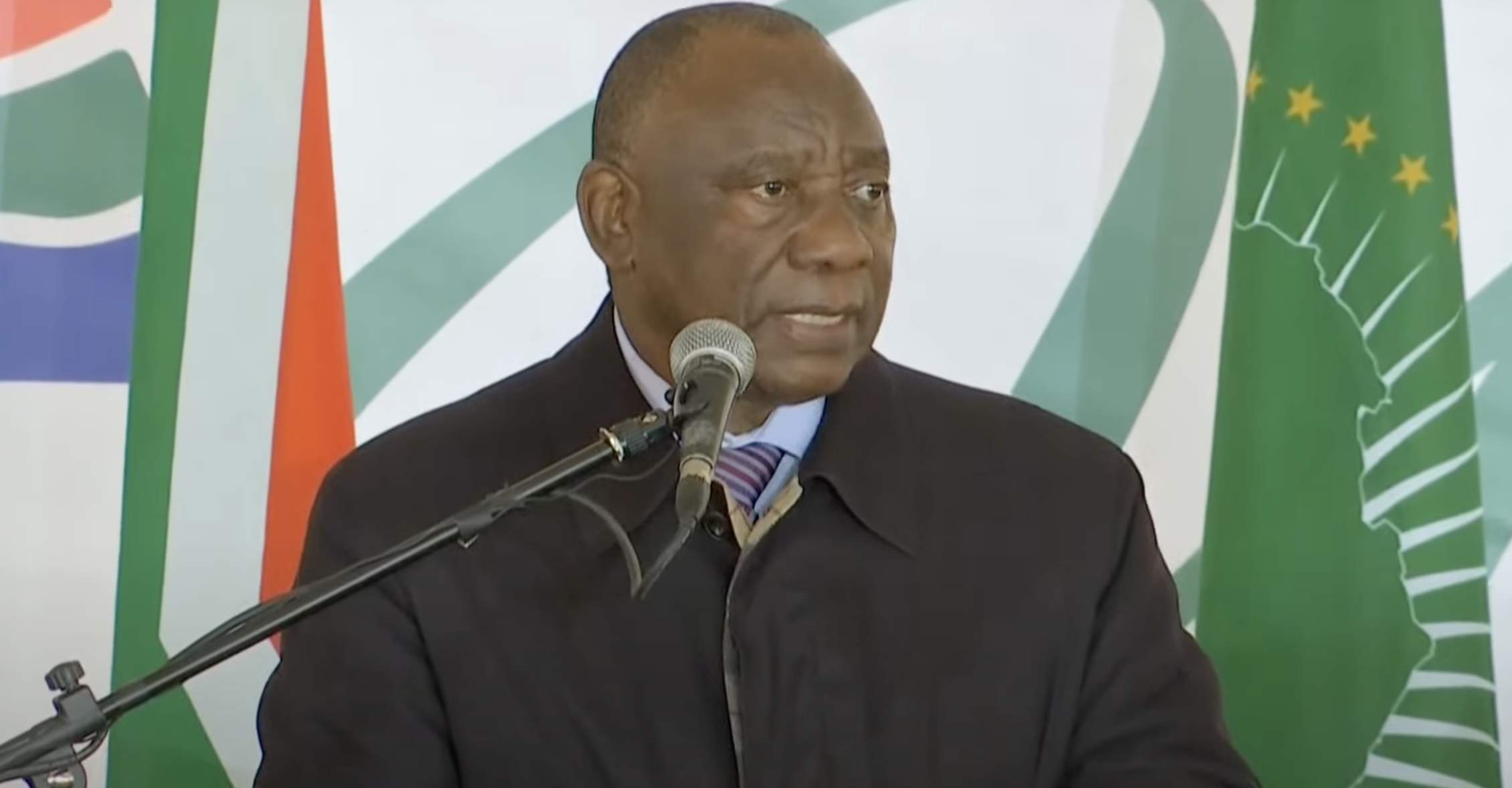
President Cyril Ramaphosa said women economic empowerment in the country must be accelerated, to help them overcome many socio-economic challenges they are facing.
Ramaphosa was speaking during the commemoration of Women’s Day in Pofadder, Northern Cape.
The day commemorates the historic march of more than 20 000 women to the Union Buildings on the 9th of August 1956 to protest against the extension of pass laws to women.
“To grow our economy and accelerate development, women must take their rightful place as active participants in the economy.
Women must be business owners, producers, employers, and employees.
We are working to ensure more women can own land, especially in rural areas.
This is so that they can farm and have assets they can use to build and grow businesses,” said Ramaphosa.
The president highlighted that poverty still has the face of a black woman, adding that black women are more likely to be unemployed, to be poor and to be unskilled.
Despite this, Ramaphosa said over the past 30 years, the government has done much to improve the status and circumstance of South African women.
“Women today are significantly represented in Parliament, in government and in the judiciary.
Thanks to our affirmative action policies, there are today more women in important positions in the workforce.
But more still needs to be done, especially in the private sector.
Women in South Africa enjoy the right to quality healthcare, including reproductive health care,” said Ramaphosa.
The president bemoaned violence against women and children, describing it as a betrayal of the constitution.
He referred to the national survey conducted by the Human Sciences Research Council on GBV prevalence.
He said the survey’s results, which measured issues like physical, sexual, emotional, and economic abuse, as well as controlling behaviour between intimate partners, will help guide the government’s response to GBV.
“Among other things, the survey found that around 7% of women aged 18 years and older had experienced physical or sexual violence in the past 12 months.
This rate was highest among young women, black women, women who completed secondary education, and women who are unmarried but live with a partner.
Seven percent may not sound like a lot, but this figure is the equivalent of 1.5 million women.
So, according to the HSRC survey, over the course of just one year, more than one and a half million women experienced physical or sexual violence in our country,” explained Ramaphosa.
To help eradicate this, Ramaphosa said the income gap between men and women must be addressed, creating more jobs and other economic opportunities for women, so that they’re less vulnerable to exploitation and abuse.

