


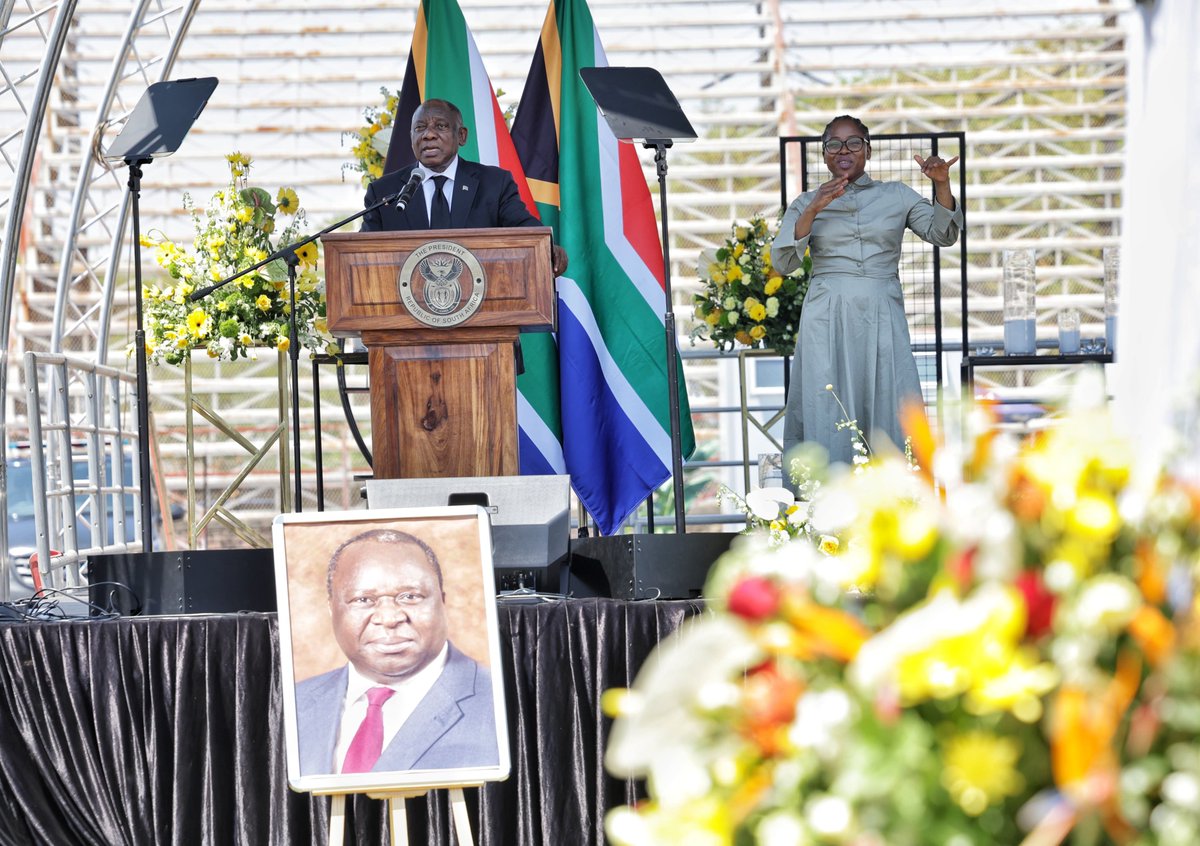
President Cyril Ramaphosa recently took a moment to reflect on the significant contributions of Tito Mboweni during the tumultuous period of state capture. Serving as the Minister of Finance from 2018 to 2021, Mboweni emerged as a steadfast figure amidst a political landscape rife with corruption and scandal, reinforcing the importance of transparency and accountability in governance.
Ramaphosa’s remarks, highlighting Mboweni as a “shining star,” resonate deeply, given the context of an administration grappling with vestiges of a painful past. The acknowledgment of Mboweni’s resilience and commitment to restoring financial integrity offers a glimpse into the government’s ongoing efforts to mend a fractured political system. Notably, Mboweni’s tenure witnessed a robust push for economic reforms aimed at revitalising South Africa’s struggling economy, which had been severely impacted by years of mismanagement and graft.
His whistleblower approach to matters of public finance, coupled with a disciplined fiscal strategy, paved the way for crucial discussions on economic sustainability. Mboweni’s reforms were lauded not only for addressing immediate economic issues but also for instilling a sense of hope among citizens disillusioned by rampant corruption.
As South Africa continues to navigate the challenging waters of state capture’s legacy, Mboweni’s role serves as a reminder of the critical need for ethical leadership within the public sector. “We have turned a corner, and it is figures like Tito Mboweni who have helped light the way,” Ramaphosa asserted during a recent address.
Mboweni’s legacy may well serve as a precedent for future leaders who aspire to uphold the principles of good governance.