



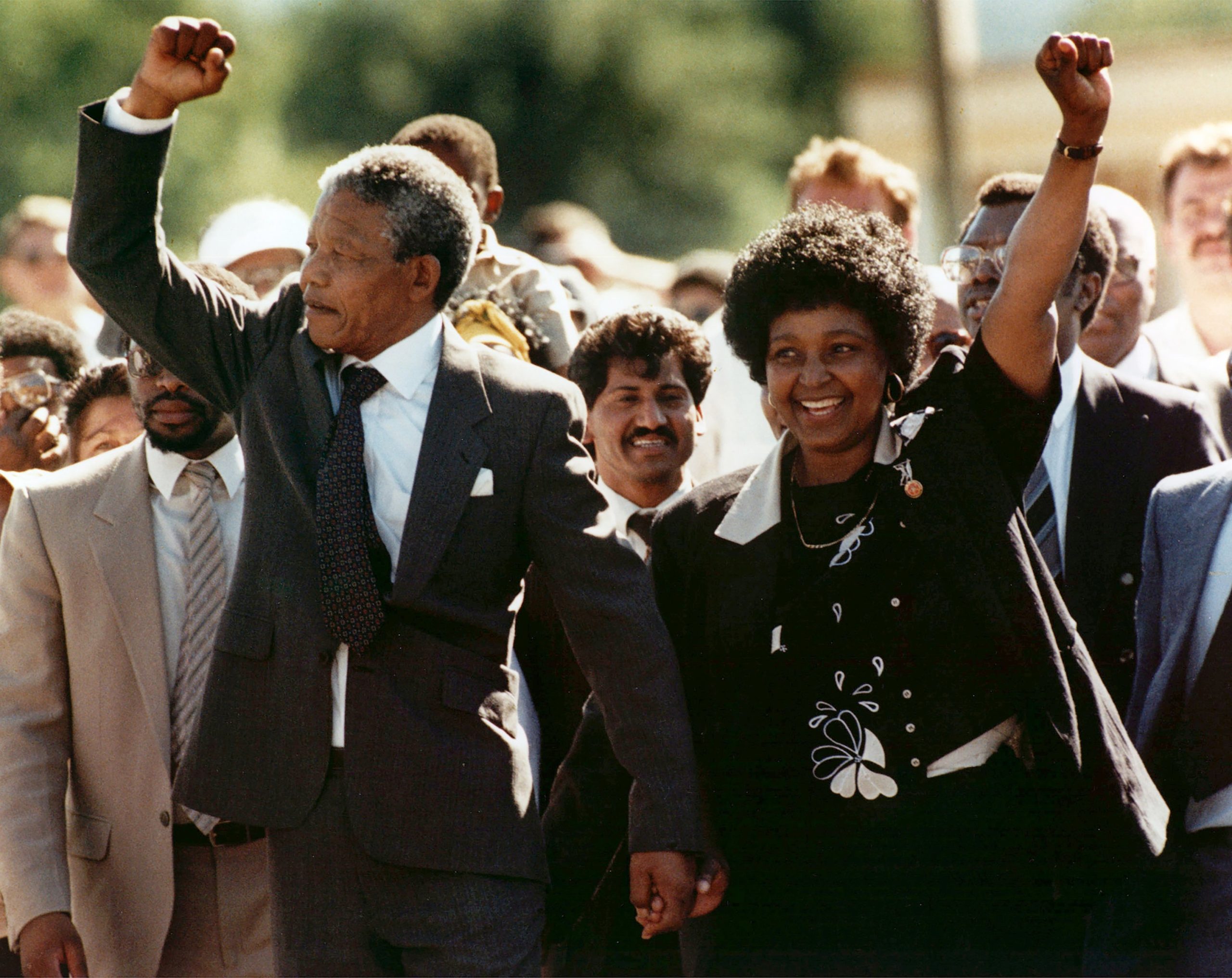
Today marks a significant milestone in South Africa’s history—35 years since the release of Nelson Mandela from Victor Verster Prison in Cape Town. His emergence from the confines of incarceration not only represented a personal victory for the man who had spent 27 long years as a political prisoner but also heralded the dawn of a new era for a nation yearning for freedom and equality.
Mandela was arrested in 1962 for his anti-apartheid activities and later convicted of high treason in 1964. His imprisonment on Robben Island is a chapter marked by suffering and sacrifice. For many years, he endured harsh conditions, confined to a tiny cell devoid of a proper bed, facing inadequate nutrition, and subjected to hard labour in punishing quarry work. Yet, through adversity, Mandela’s spirit remained unbroken, embodying unparalleled resilience and a steadfast commitment to his principles.
His release on 11 February 1990 was not merely a personal triumph; it was a watershed moment for South Africa. As Mandela walked out of prison hand-in-hand with his then-wife, Winnie Madikizela-Mandela, a throng of jubilant supporters filled the air with cries of joy and indignation, illustrative of a people invigorated by hope. Mandela’s historic stride into freedom was immortalised, encapsulating the promise of a future free from the shackles of apartheid.
The Nelson Mandela Foundation commemorated this day with a poignant statement, marking it as “a day that changed the course of our history forever.” In the years that followed, Mandela would rise to prominence, becoming the first elected President of the African National Congress (ANC) and later, the first black head of state of a democratic South Africa in 1994.
Mandela’s leadership was rooted in the principles of forgiveness, peace, and unity. His tireless negotiations with the apartheid government showcased his unyielding desire for racial reconciliation and a commitment to crafting an equitable society for all South Africans. “I have fought against white domination, and I have fought against black domination,” he stated in his inaugural speech. “I have cherished the ideal of a democratic and free society in which all persons live together in harmony and with equal opportunities. It is an ideal which I hope to live for and to achieve.”
Despite his passing at the age of 95 on 5 December 2013, Mandela’s legacy continues to resonate in contemporary South Africa. However, opinions remain divided on the extent to which his ideals have been fulfilled or overshadowed by the challenges facing the nation today. Amidst economic difficulties, political discord, and social inequality, many question whether the essence of Mandela’s vision lives on, or was buried alongside him.
As the nation reflects on Mandela’s journey and the values he championed, the teachings of Ubuntu—an African philosophy that emphasises communal solidarity and selflessness—continue to inspire individuals to embody his spirit of unity.

