


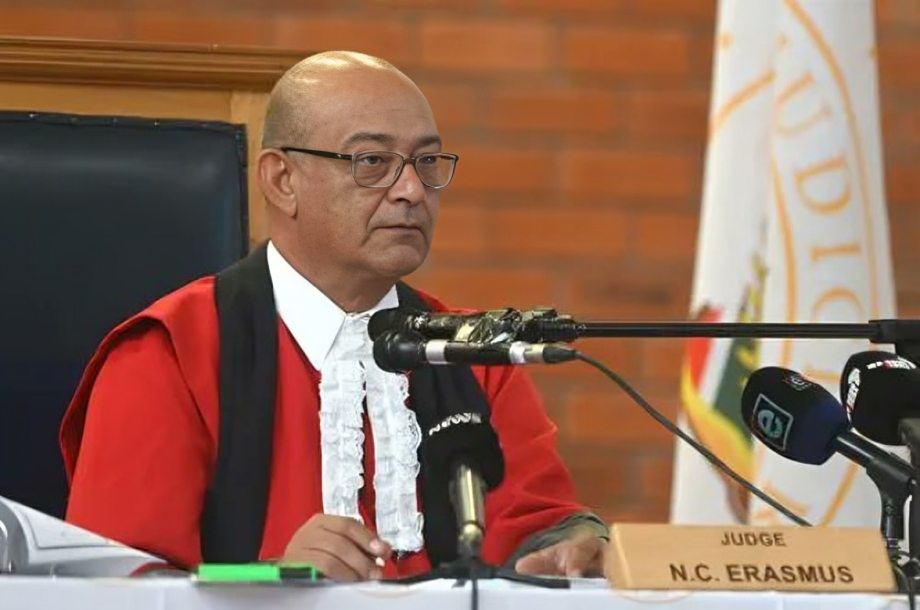
In the Joshlin Smith case at the Western Cape High Court, accused Steveno van Rhyn underwent rigorous cross-examination as the focus shifted from the prosecution’s case to the court’s obligation to ensure the accused’s rights were protected. Judge Nathan Erasmus, presiding over the case, took the unusual step of pausing proceedings to outline how questioning should be conducted, stressing the need for fairness, simplicity, and comprehension in the legal process.
As Senior Prosecutor Advocate Zelda Swanepoel began her cross-examination, she challenged Van Rhyn on inconsistencies surrounding his claims of torture and wrongful arrest in connection with the mysterious disappearance of six-year-old Joshlin Smith from Saldanha Bay. The little girl vanished from her home on February 19, 2024, after her mother, Racquel “Kelly” Smith, left her in the care of boyfriend Jacquen “Boeta” Appollis. Van Rhyn faces serious charges of kidnapping and human trafficking alongside Appollis, with another suspect, Maka Lima, having had the charges against her dropped just a week earlier.
Van Rhyn’s education—and lack thereof—also became a focal point of discussion in the courtroom. As Judge Erasmus directly addressed the accused, he urged consideration of Van Rhyn’s educational background, reminding all parties that he had not progressed beyond Standard 4 (Grade 6). “I am very conscious of your level of education,” the Judge stated, highlighting the potential for misunderstanding in legal discussions. “It doesn’t mean that you are not intelligent enough… your life is on the line here, literally,” he added, emphasising the gravity of the situation.
With Judge Erasmus steering the courtroom towards a more equitable exchange, he urged Swanepoel to simplify her language and adjust her approach, recognising the disparity between the experiences of seasoned witnesses and that of the accused. “The key is, Ms Swanepoel, we must remember that while your witnesses may be seasoned in court, Mr Van Rhyn is not,” he instructed, advocating for clarity to avoid any potential confusion during the proceedings.
Central to Van Rhyn’s testimony was his assertion that the police coerced him into making a false confession through brutal methods. He recounted a harrowing experience on March 4, 2024—a day that would change his life as he alleged that police failed to show him an arrest warrant or inform him of his rights before taking him to Jacobsbaai Beach. There, he claimed to have been handcuffed, assaulted, and tortured in what he described as a horrific scene. He painted a vivid picture of the alleged abuse, including being threatened with a firearm, assaulted, and subjected to physical humiliation in front of law enforcement officers.
During his testimony, Van Rhyn detailed how he was shown Appollis “hanging” in a separate room—a tactic he claimed was used to intimidate him. The accused reported being suspended between two chairs and forced to endure physical abuse, stating that he was choked with a plastic bag over his head while police accused him of feigning ignorance regarding Joshlin’s fate. His experience, as narrated in court, paints a troubling picture of interrogation practices that raise serious ethical and legal questions.
With the court currently engaged in a trial-within-a-trial over the admissibility of statements made by Van Rhyn and Appollis under alleged duress, the atmosphere within the courtroom continues to be tense.