


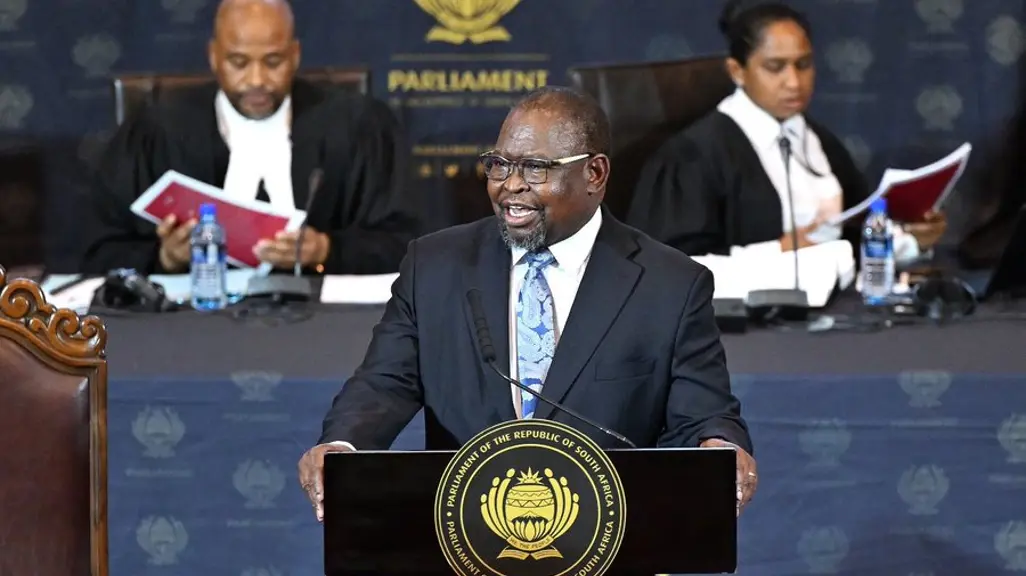
The Economic Freedom Fighters (EFF) has escalated its confrontation with Finance Minister Enoch Godongwana, demanding he shoulder the burden of R2.3 million in costs linked to his controversial Budget Speech, which was ultimately aborted due to political pressure. This demand comes just days after Godongwana, along with Parliament, incurred legal costs following a court battle initiated by the EFF and the Democratic Alliance (DA) over his initial attempts to increase the Value Added Tax (VAT).
Omphile Maotwe, EFF MP, described the R2.3 million expenditure—which included the costs of printing documents, catering, and translation—as not just regrettable but as wasteful expenditure that could have been avoided had Godongwana heeded the widespread public dissent against the VAT hike.
In a turn of events earlier this month, Godongwana had prepared to deliver the Budget Speech on February 19, 2025, but shocked the nation by announcing its postponement, yielding to mounting political pressure against the proposed VAT increase. Despite the financial preparation involving extensive logistics and resources—spanning from a live reads radio station to podcasts in English and Zulu—the minister’s sudden reversal left taxpayers grappling with the repercussions.
Following parliamentary questions posed by Maotwe regarding accountability for the financial losses, Godongwana’s curt reply of “N/A (not applicable)” drew further scrutiny from politicians and the public alike. Meanwhile, the National Treasury, despite receiving inquiries about the matter, has yet to respond.
Parliamentary spokesperson Moloto Mothapo sought to clarify the situation, highlighting that the costs associated with rescheduling the Budget Speech were minimal compared to the extravagant arrangements often required for other ceremonial gatherings. He stated, “Unlike the SONA, which involves joint sittings and special protocols, the Budget Speech requires no special arrangements beyond those already budgeted for routine sittings.”
Critics, however, continue to contend that the Budget directly impacts citizens and has far-reaching implications. Freedom Front Plus’s Dr Corné Mulder remarked on the “financial implications all round” and pointed out that the current disaster could have been averted through timely consultations within the governing coalition.
A recent ruling from three judges at the Western Cape High Court concluded that the resolution regarding the VAT increase should be set aside, affirming that the proposed tax hike could not proceed without proper parliamentary endorsement. The judges laid out provisions specifying that Godongwana shares the costs incurred by the DA and the EFF during the legal proceedings.
Rather than endorsing a tax increase, the DA has proposed alternative measures aimed at reducing expenditure, while the EFF continues advocating for tax bracket adjustments aligned with inflationary trends, aiming to safeguard workers against the relentless pressures of the rising cost of living. Meanwhile, the Umkhonto weSizwe Party has put forth its own suggestions for fiscal reform, including increased wealth taxes and a crackdown on corruption.
Economist Dawie Roodts aptly summarised the mishap, stating, “In the 40 years I have analysed this country’s budgets, I’ve never seen a finance minister make such a serious misstep.” Godongwana, feeling the heat of diminishing public confidence, reiterated that the decision initially aimed at increasing VAT was constitutional. In a statement following the court ruling, he articulated that the consensus reached with the DA and EFF was favourable, leading to the withdrawal of the VAT increase.
DA Federal Council chairperson Helen Zille welcomed the court’s ruling, underscoring the necessity for adequate oversight in governmental financial decision-making. She stated, “This shows that government decisions cannot be made without proper oversight and sets aside the unlawful support lent to this VAT hike by a number of parties.”