


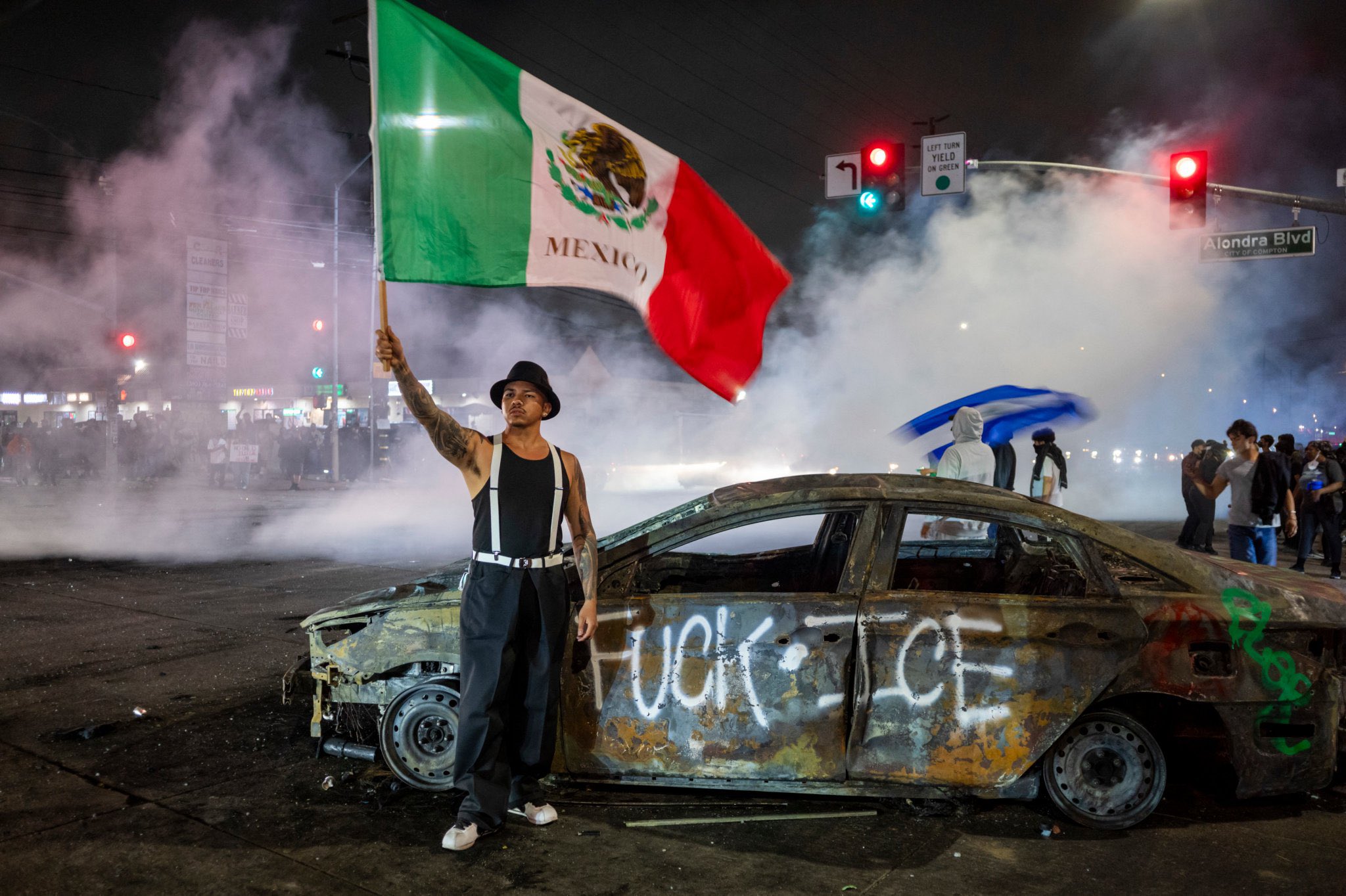
After a turbulent day of activism, a curfew has once again been imposed in downtown Los Angeles, where police used mounted units and tear gas to disperse crowds of protesters. The unrest followed a gathering near City Hall that police declared unlawful shortly before the curfew went into effect, marking the second consecutive night of escalating tensions in a city grappling with contentious immigration policies.
Los Angeles County District Attorney Nathan Hochman sought to address the media portrayal of the protests, stating, “There are 11 million people in this county; 4 million of which live in Los Angeles city. We estimate that there’s probably thousands of people who have engaged in legitimate protest, let’s say 4,000 people.” His comments reflect an effort to contextualise the scale of the demonstrations, amid widespread reports of violence attributed to the gatherings.
This unrest has found some of its roots in recent federal immigration actions. Los Angeles Mayor Karen Bass placed blame for the escalating situation squarely on the Biden administration, asserting that “unnecessary” raids aimed at rounding up “everyday Angelenos” seeking work have provoked instability. She lambasted the deployment of federal troops, framing it as a chaotic response that exacerbated tensions rather than alleviating them. “When you start deploying federalized troops on the heels of these raids, it is a drastic and chaotic escalation,” she added.
In an attempt to prepare for potential uprisings in response to similar immigration controversies throughout the state, Texas Governor Greg Abbott has mobilised the Texas National Guard to be on standby in San Antonio ahead of planned protests this week.
Further complicating the national landscape of immigration and distress, a federal judge recently ruled that the Trump administration can no longer detain Mahmoud Khalil, a Columbia University graduate and vocal Palestinian activist. Judge Michael E. Farbiarz’s order allows time for a possible appellate review, highlighting the ongoing legal battles that continue to connect the threads of activism and government policies.
In a political climate marked by turmoil, David Hogg announced he will not seek reelection for a vice-chair position at the Democratic National Committee after internal strife resulted in a decision to void and redo his election. This controversy follows the former Parkland activist’s criticism of complacent Democrats, further intensifying discussions on the party’s leadership and direction.
The fallout from the Trump administration continues to resonate, as all 12 members of the prestigious Fulbright program’s board have resigned in protest against what they describe as unprecedented political interference. Their resignation reflects a growing discontent with restrictions on academic scholarships, now affecting nearly 200 American scholars.
Former President Donald Trump made headlines for his appearance at the opening night of Les Misérables at the Kennedy Center, an event that saw a mix of boos and cheers from the audience. This was his first notable public appearance post-presidency and further highlights the polarised sentiments surrounding his legacy.
Meanwhile, Trump’s administration is reportedly discouraging global governments from attending an upcoming UN conference aimed at discussing a potential two-state solution for Israel and Palestine, according to a leaked US cable. This stance raises questions about the future of diplomatic efforts in one of the world’s longest-running conflicts.