


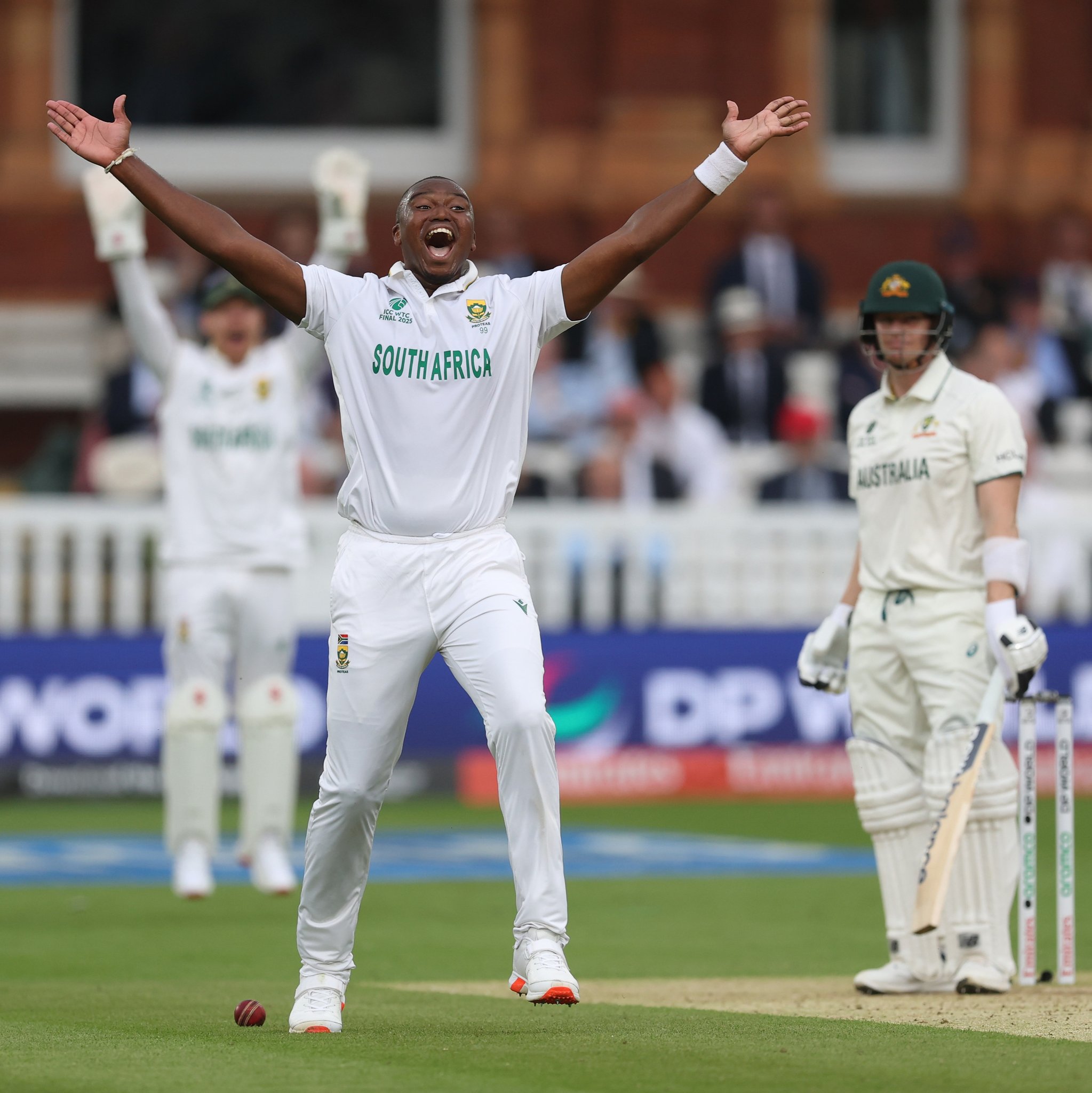
When Lungi Ngidi burst onto the international cricket stage, the nation’s hopes soared with the arrival of a 1.93-metre-tall fast bowler. His express pace, accuracy, and skill were a revelation, and as he joined forces with Kagiso Rabada, cricket lovers across South Africa began to envision a formidable duo capable of dismantling any batting line-up. This optimism soared further during Ngidi’s Test debut in January 2018, where he showcased his talent by claiming six wickets against India at SuperSport Park in Centurion, earning the Player of the Match award and igniting dreams of a bright future for the young bowler and the national team.
A year later, Ngidi took to the global stage during the ICC 2019 ODI World Cup in the United Kingdom alongside Rabada, where both accelerated hopes for the Proteas’ future. However, like many sports careers, the path was rife with challenges. Ngidi’s form began to wane; his speed diminished from the early 140s km/h to the low 130s, and fitness issues arose as his physique changed. This decline led to disappointing performances on tours of England and Australia, ultimately resulting in his exclusion from the Test squad under new coach Shukri Conrad, who expressed concerns regarding Ngidi’s place in the pecking order.
Competing against younger talents like Gerald Coetzee, who was not only faster but appeared to be the future of South African pace bowling, Ngidi’s prospects seemed bleak. Nevertheless, opportunity knocked once more when he was included in the squad for the recent series against India, stepping in after Coetzee was sidelined by injury.
As the Proteas prepared for the ongoing World Test Championship final against Australia at Lord’s, Ngidi’s selection raised eyebrows; many believed that Dane Paterson, who had played a crucial role in leading South Africa to the final, deserved the nod. However, captain Temba Bavuma favoured Ngidi’s height and pace over Paterson’s consistent performances.
On the opening day against the Australians, Ngidi’s performance was lacklustre, finishing the innings wicketless and leaking runs just when the South African team needed him to rise to the occasion. Critics were quick to question the decision to include him in the starting XI.
Yet, Ngidi showcased his resilience splendidly on day two, silencing doubters by capturing the prized wicket of Steve Smith—Australia’s most menacing bat in the first innings. Following this breakthrough, he dismissed Beau Webster lbw and bowled Pat Cummins, rounding off an impressive spell that concluded with figures of 3/35. His performance became a pivotal moment, sparking South Africa’s fightback in the match when they most required it.
With Ngidi once again standing tall amidst the contests of world cricket, South Africa is reminded of why they once placed immense faith in this right-arm fast bowler. As he continues to navigate the highs and lows of his career, Ngidi’s ability to perform under pressure may very well be the key to the Proteas’ aspirations in this decisive World Test Championship.