


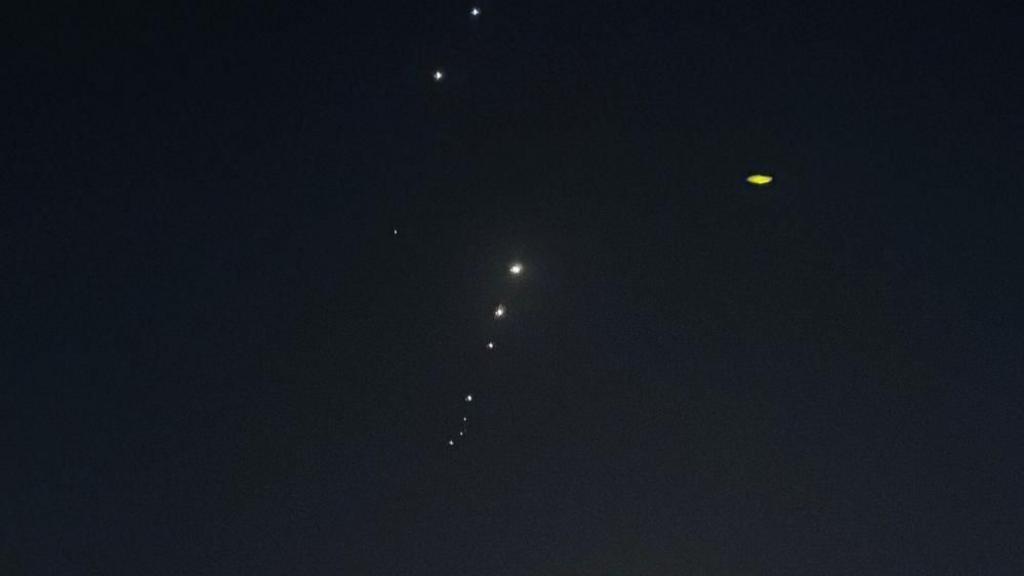
In a dramatic escalation of military tension, Iran has launched missiles targeting the US-run Al Udeid airbase in Qatar, a direct response to US airstrikes that struck Iranian nuclear facilities just days earlier. Qatar has condemned the attacks, labelling them a “flagrant violation” of its sovereignty, while Iran maintains that its response was measured, ensuring no casualties were inflicted on Qataris.
The missile strikes occurred on Saturday following a series of US air raids on three nuclear sites in Iran, which had significantly heightened tensions in the region. The Qatari Ministry of Defence reported that all missiles were intercepted, with no casualties reported among US or Qatari personnel, according to Pentagon sources.
In Washington, President Donald Trump and his top defence officials, convening in the Situation Room, are grappling with the aftermath of the Iranian response. Trump took to social media, describing Iran’s strike as “very weak” and expressing gratitude for what he deemed ‘early notice’ of the attack. “They’ve gotten it all out of their ‘system,’ and there will, hopefully, be no further HATE,” Trump stated, hinting at a possibility for de-escalation.
The situation has made waves beyond military circles. Rhodri Ogwen Williams, a Welsh expat in Qatar, described the alarming sight of missiles flying overhead while playing golf in Doha. “It’s a very worrying situation, not just for Qataris, but for surrounding Gulf countries,” he said, encapsulating the regional anxiety that pervades this newly destabilising scenario.
Ayatollah Ali Khamenei, Iran’s Supreme Leader, emphasized that Iran will not accept aggression from any entity. His statements underscore a firm stance in the face of Western military actions, asserting that they will maintain their right to respond to perceived aggressions. In a similar vein, reports from Iran stated their military action was executed without inflicting harm on Qatari civilians, aiming solely at US military targets.
As the dust begins to settle, analysts interpret Iran’s missile launch as a carefully calibrated strike intended to express discontent without provoking a wider conflict. Frank Gardner, a security correspondent, posited that this attack was choreographed in such a way as to signal displeasure while avoiding the kind of fatalities that might invoke a sweeping US response.
The ongoing tension has not only intensified the diplomatic relations in the Gulf but has also prompted increased security measures in the US and its allies. Lawmakers in Washington are expressing a mix of caution and readiness, underscoring the precarious state of affairs confronting the Trump administration as it weighs potential retaliation or efforts to engage Iran in negotiations.