


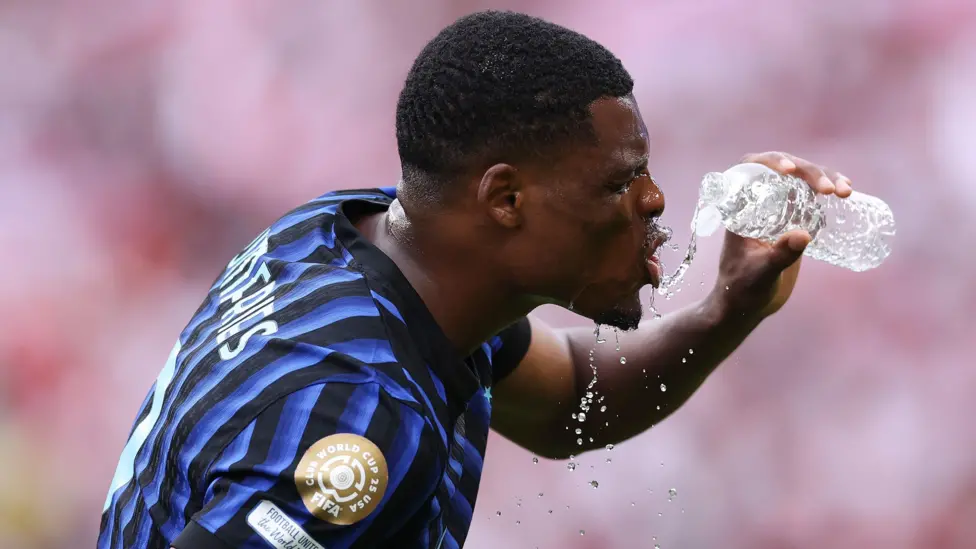
The ongoing Club World Cup in America, touted as a showcase for the best teams in global football, is facing mounting criticism over its impact on player welfare and the quality of the sport. Maheta Molango, chief executive of the Professional Footballers’ Association (PFA), has voiced serious concerns that the competition is devaluing football, especially as players grapple with extreme heat and an overcrowded fixture schedule.
Amid soaring temperatures and oppressive humidity, players have struggled to perform at their best, leading to unprecedented requests for substitutions. During a high-stakes match last Tuesday between Juventus and Real Madrid, ten Juventus players sought to be substituted, highlighting the adverse effects of competing in 30°C heat with 70% humidity. This follows reports that Borussia Dortmund’s substitutes had to spend the first half of their match against Mamelodi Sundowns in the dressing room, unable to withstand the sweltering conditions.
Molango warns that these issues are not mere inconveniences; they present a significant threat to the sport’s integrity in a critical year leading up to the World Cup in 2026, which will take place in the USA, Canada, and Mexico. “We’re devaluing the product. If I’m a US fan and that’s my first exposure to soccer, that’s not good,” he remarked. Furthermore, he argued that playing at inopportune times, such as 4pm in Mexico, renders it impossible for players to perform to their full potential. This drop in quality not only threatens player welfare but also discourages fans from attending matches, leading to dwindling crowds.
Even prominent figures within the sport, such as former Liverpool manager Jürgen Klopp, have weighed in, calling the Club World Cup “the worst idea ever implemented in football.” Molango echoed this sentiment, stating that the current fixture schedule creates a “nonsensical” accumulation of competitions. He anticipates the true cost of this schedule will become apparent later in the year as players suffer from fatigue and injuries.
Manchester City manager Pep Guardiola, while recognising the challenges, views participation in such competitions as a necessary by-product of success. “Would I love to have two months to prepare for next season? Yes. But it is what it is,” he said, reflecting the complexities faced by high-performing clubs as they navigate the pressures of success and player welfare.
In response to criticisms, FIFA has defended its approach, asserting that player welfare is paramount in its decision-making processes. They point to initiatives like allowing additional substitutes and permanent concussion protocols as evidence of their commitment to safeguarding players. However, they firmly dismiss suggestions that the Club World Cup has exacerbated fixture congestion, claiming that the slot for the competition simply replaced that previously held by the FIFA Confederations Cup.
The PFA, along with players’ unions from France and Italy, has previously launched legal action against FIFA over what they describe as an “overloaded and unworkable” football calendar. As these discussions continue, Molango expressed optimism that their case would attract interest from the European Commission, suggesting potential legal repercussions for FIFA could become more pronounced as the evolving calendar issues become increasingly pressing.