


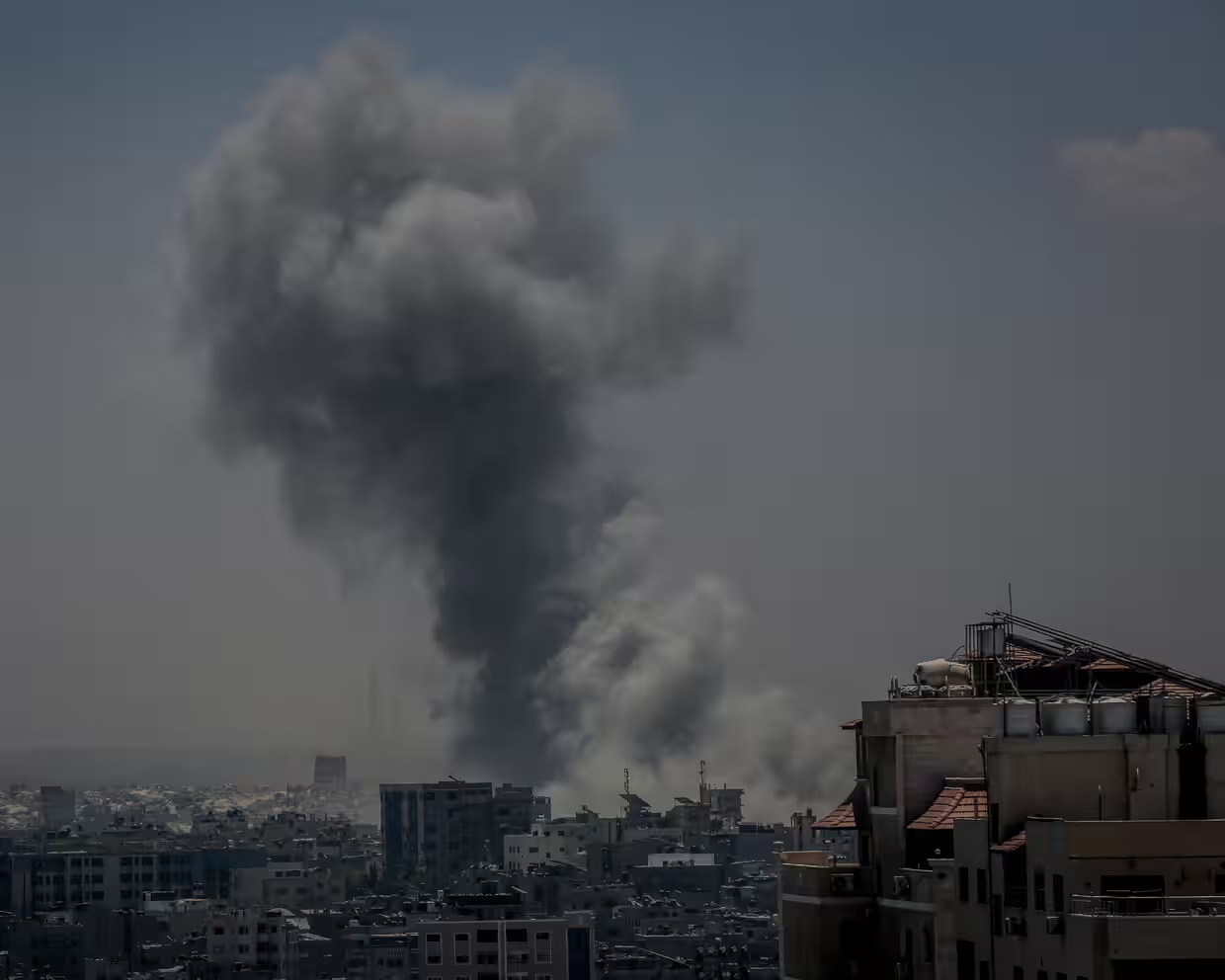
In a significant shift amid a prolonged conflict, Hamas announced on Friday that it was prepared to engage in negotiations regarding a ceasefire proposal brokered by the United States. This announcement came on the heels of US President Donald Trump revealing a “final proposal” aimed at establishing a 60-day ceasefire in a war that has stretched on for nearly 21 months, claiming over 6,000 lives in Gaza alone.
Hamas’s official website relayed the group’s readiness to “immediately enter a new round of negotiations on the mechanism for implementing” the ceasefire framework. Trump’s optimism radiated as he discussed the situation aboard Air Force One, indicating that a deal might materialise as soon as next week, although he warned that developments could change swiftly.
Reports from Israeli media confirmed receipt of Hamas’s response, which is currently under evaluation by Israeli authorities. A Guardian source noted that Hamas leaders are nearing acceptance of the ceasefire proposition, yet they seek stronger assurances that any halt in fighting would transition into a permanent end to hostilities.
The militant Islamist group has recently faced mounting pressure, suffering considerable losses within its military leadership and being pushed from operative strongholds in Gaza. In light of intensified Israeli airstrikes, which have resulted in the deaths of more than 250 Palestinians, including many innocent civilians, hardline factions within Hamas are recognising the necessity of a ceasefire to regroup and strategise a renewed approach to the conflict.
The urgency for a truce has escalated significantly since a prior ceasefire collapsed in March, with a severe humanitarian crisis worsening in Gaza. International efforts are gathering momentum, particularly following the successful cessation of a brief conflict between Israel and Iran secured by the US last month.
Trump disclosed that Israel has agreed to the conditions necessary to finalise the proposed ceasefire deal, suggesting proximity talks might commence in the next few days. Israeli officials have indicated preparations are underway for delegations to facilitate indirect negotiations, mediated by Qatar and Egypt.
Central to the proposal is the expected release of ten Israeli hostages taken during the controversial Hamas attack in October 2023, which precipitated the ongoing conflict, alongside the return of the remains of eighteen others. In exchange, negotiations would address the release of Palestinian prisoners currently held in Israeli jails.
Under the planned negotiations, immediate humanitarian aid will be allowed into Gaza, while the Israeli military will initiate a phased withdrawal from specific territories. Such a comprehensive agreement aligns with Hamas’s primary demand for increased humanitarian support, a topic made urgent following a devastating blockade enforced by Israel, which had only marginally eased under external pressure.
The contentious situation has also highlighted the role of humanitarian organizations in the region, with reports surfacing about allegations of misconduct by the Gaza Humanitarian Foundation, drawing scrutiny over its operations during the conflict.
In a recent rally, Israeli Prime Minister Benjamin Netanyahu pledged his commitment to ensuring the return of all hostages while facing criticism for perceived inaction following the devastating October 2023 attacks. Calling for clarity and resolution, he proclaimed, “I feel a deep commitment—to ensure the return of all of our hostages.”
As the spectre of peace negotiations looms, the backdrop of military casualties overshadows every dialogue. The escalating conflict has drawn fierce international attention and application of diplomatic pressure from multiple stakeholders eager to restore a sense of order amid the chaos.