


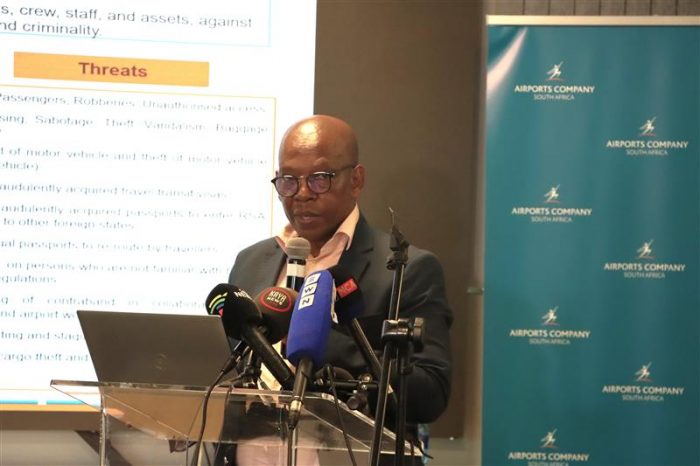
The Airports Company South Africa (Acsa) has taken a significant step by temporarily suspending its Group Executive for Enterprise Security and Compliance, Mzwandile Petros, following serious allegations of misconduct linked to a controversial R1 billion tender for Smart Security screening equipment. This decision, announced over the weekend, comes against a backdrop of alarming concerns that suggest manipulation of the X-ray screening contract, which allegedly compromised security at the OR Tambo International Airport by failing to maintain an effective tactical response team.
Sources within the organisation revealed to Business Report that Petros played a critical role in a problematic decision made in March to terminate contracts with all security providers—including major players such as Bidvest, Fidelity, Mafoko, Eagle Eye, Venus Securitas, and G4S. This ill-fated move aimed to insource security requirements by July, ultimately failing due to a lack of capacity and inadequate due diligence.
As a direct consequence of these missteps, the South African Civil Aviation Authority intervened to halt the insourcing process, citing Acsa’s non-compliance and ignorance regarding the screener certification process, which resulted in a R1.5 million fine imposed on the company. Following the failed insourcing at King Shaka International Airport (KSIA), Fidelity was urgently called back to manage the security situation.
Responding to inquiries, Acsa maintained that it is committed to preserving the integrity of the investigation, stating: “To ensure a fair and orderly process, we cannot provide further information until the investigation is concluded.” The company assured stakeholders that daily operations would not be affected, appointing Mary-Ann Joubert to act as the Group Executive: ESC during this turbulent period.
Reports of internal turmoil at Acsa have intensified over recent months, with allegations of executive misconduct and nepotism coming to the fore. These allegations have ignited public outcry over procurement irregularities and a perceived lack of transparency in governance practices.
Specific scrutiny has been directed at the procurement of X-ray and screening equipment, particularly due to images surfacing that appear to show Petros and the Group Head for Mechanical Maintenance, Peter Sibanda, visiting a bidder in Europe while being responsible for the tendering process. Such actions have raised suspicions of inappropriate relationships between Acsa executives and external contractors.
Additionally, accusations against Petros—which stem from his background as a former police commissioner—include claims of hiring former police colleagues into critical positions within Acsa’s security framework, alongside allegations of a questionable relationship with private security contractor, Eagle Eye Security (ESS). Johan Badenhorst, EES’s national general manager for support services, stated that the company respects Acsa’s internal investigation process, affirming: “At no point during our contractual engagement did Eagle Eye Security vacate the OR Tambo International Airport site without the required tactical support team being operationally present.”
Further complicating the narrative, insiders suggest that X-ray screening positions have been manipulated, leaving workers in precarious situations by forcing them to sign month-to-month contracts. This practice has allegedly circumvented the provision of crucial employee benefits such as unemployment insurance, medical aid, bonuses, and leave. “Because of this improper relationship between Acsa and Eagle Eye, workers are engaged on short-term contracts, sometimes leading to overlaps in securing staff for shifts,” said a source.
An incident noted by a minister, which occurred in late June, highlighted the gravity of the situation: Acsa was reportedly left without a tactical response team when Eagle Eye withdrew its personnel, resulting in only a contingent of retired policemen available for security duties at the international airport.
As the investigation unfolds, a systemic shift in the management of security personnel is evident, with both Acsa and Eagle Eye allegedly replacing trained staff with unqualified substitutes since the installation of the new X-ray and screening equipment. The growing concerns surrounding this dynamic call for immediate attention and raise pressing questions about the future integrity of security operations at one of Africa’s busiest airports.