

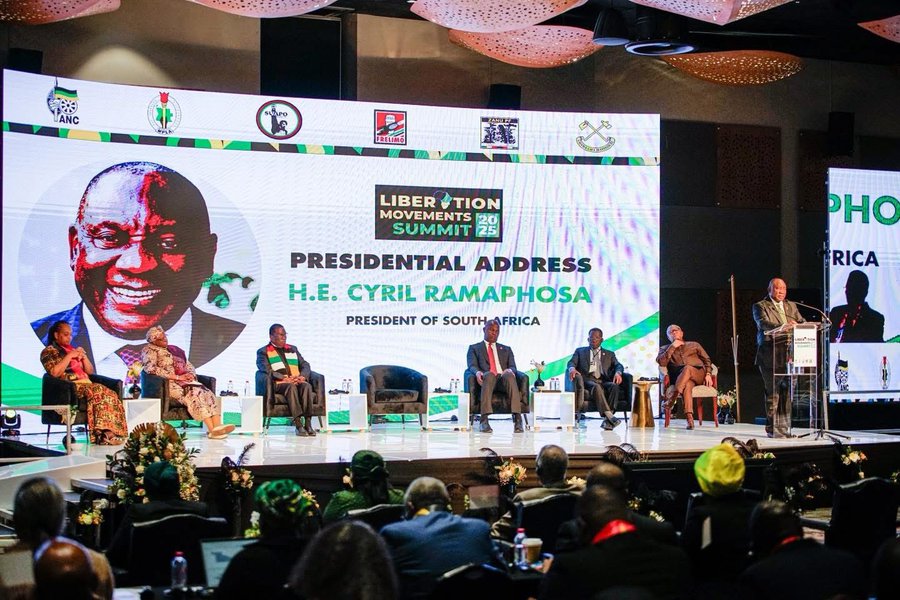
In a address at the three-day Liberation Movements Summit held in Kempton Park, Ekurhuleni, ANC President Cyril Ramaphosa underscored the urgent need for African nations to safeguard their sovereignty amidst escalating foreign interference. With an increasingly complex geopolitical landscape, Ramaphosa expressed concerns regarding the deliberate external attacks on Africa’s independence, development, and security.
Ramaphosa highlighted a disturbing trend: international actors are leveraging the legitimate grievances of people in developing economies as a means to destabilise and undermine progressive governments. “There is a renewed offensive against transformation, progressive policies and multilateralism,” he stated, warning that these actions represent a concerted effort to “divide and control Africa through transactional diplomacy and economic cohesion.”
The Democratic Alliance in South Africa is not the only one raising alarms; this sentiment resonates across many sectors of African society. The ANC leader’s remarks echoed a broader anxiety about the manipulative strategies employed by foreign entities, which not only threaten political stability but also impede developmental progress in many African nations.
At the core of this campaign for dominance lies a battle for control, one that Ramaphosa argues Africa cannot afford to ignore. In a strong call to action, he urged for “urgent, substantial and sustainable solutions to Africa’s challenges,” prompting leaders and movements gathered at the summit to reflect on collective strategies to bolster resilience in the face of foreign adversarial actions.
The Liberation Movements Summit is notable not only for its rich historical context but also for its potential to sketch a roadmap toward unity among African nations. As the summit continues, the pressing dialogues surrounding sovereignty and development initiated by Ramaphosa will linger in the air, leaving a lasting impact on how African leaders might respond to external pressures moving forward.