


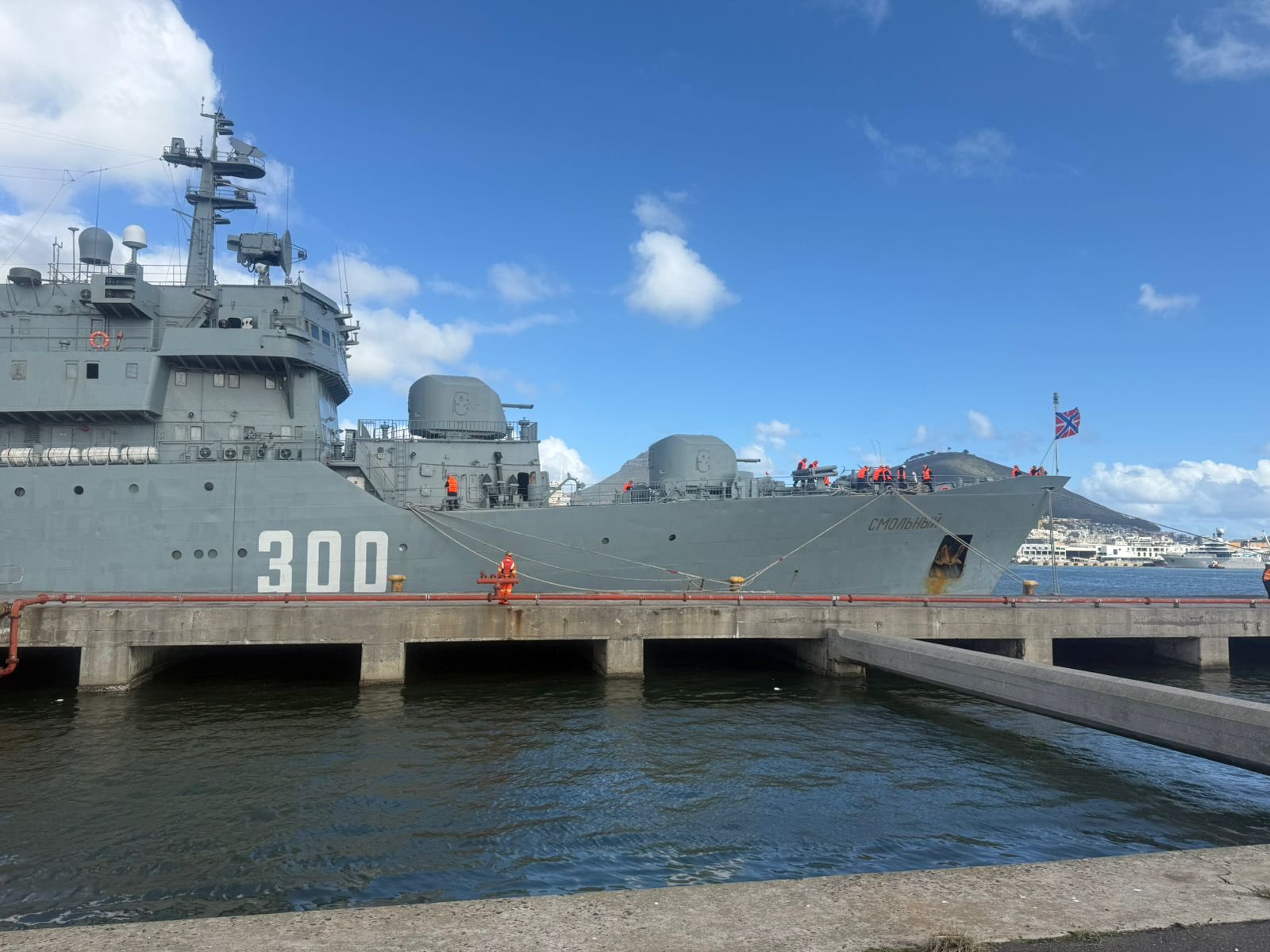
A new diplomatic controversy has erupted following reports that the Russian Navy training ship, Smolny, was denied access to disembark its sailors at the Port of Cape Town. The vessel, part of the Russian Baltic Fleet, was reportedly on a scheduled stop to restock, refuel, and resupply during its months-long training voyage around the globe. In a media frenzy, the MK Party has condemned this “short-sighted and dangerous” decision by the Government of National Unity (GNU), citing potential repercussions on South Africa’s long-standing partnership with Russia.
The MK Party’s National Spokesperson, Nhlamulo Ndhlela, described the GNU’s refusal of the Russian naval cadets’ port access as an “unnecessary international stand-off.” He warned that such a move undermines South Africa’s commitment to neutrality in global affairs and jeopardises longstanding bilateral ties with a key BRICS ally.
“Denying access to the port of entry in Cape Town can only strain diplomatic relations between South Africa and Russia,” stated Ndhlela, who went on to distance the party from the GNUs stance. “We cannot support a government that seeks to undermine our long-term bilateral ties and trading relations with the Russian state.”
The Smolny’s Visit and Broader Diplomatic Context
The Smolny has been on a global training mission with approximately 300 cadets and officers on board. The vessel’s itinerary involves stops in various countries, including Namibia, Angola, and Cameroon, aimed at reinforcing diplomatic and military training cooperation with nations regarded as friendly or non-aligned.
For the Russian Baltic Fleet, port calls serve not only practical purposes but are also symbolic, enhancing diplomatic goodwill and showcasing military camaraderie. However, the refusal to allow the sailors ashore has raised serious questions about South Africa’s diplomatic posture, particularly in light of its historical alliance with Russia during the anti-apartheid liberation struggle.
MK Party Accuses GNU of Undermining South Africa’s Neutrality
As the official opposition, the MK Party has called the GNU’s decision a betrayal of South Africa’s traditional stance of non-alignment in international matters. The party has accused the GNU of capitulating to Western powers, warning against what they termed a creeping “hegemonic influence.”
“The MK Party maintains a pro-Russia stance and stands in firm opposition to Western imperialism,” Ndhlela declared. “We support the Russian state and will never tire in defending the right to self-determination and a multipolar global world order.”
Highlighting their historical ties, Ndhlela recalled how Russia supported South African liberation movements during the oppressive years of apartheid, remaining a reliable ally when many other countries hesitated to provide assistance. “Russia has never sold out on the support and aid to South African liberation movements,” he emphasised. “It has been a loyal partner to South Africa, and this history cannot be discarded for short-term political convenience.”
Call for Ramaphosa to Intervene and Restore Diplomatic Balance
In a strong appeal, the MK Party has urged President Cyril Ramaphosa to urgently intervene and reverse the refusal thus far. The party has expressed concern over what they perceive as the President’s “continuous absence from leadership during critical moments,” warning that this incident could further weaken both the government’s credibility and the economy.
“This is an unnecessary international stand-off which South Africa cannot afford to wage as a battle,” they stated. “We demand that Mr Ramaphosa urgently intervenes in this matter.” Their call to action reflects growing anxiety among critics of the GNU who argue the government’s foreign policy decisions are increasingly swayed by diplomatic pressures from Western nations.
The BRICS Factor: A Test of Allegiances
This diplomatic incident occurs amidst heightened scrutiny of South Africa’s role within BRICS—comprising Brazil, Russia, India, China, and South Africa—where alignment with Russia and China is gaining strategic importance. By refusing Russian sailors entry into Cape Town, South Africa risks sending the wrong message to its BRICS partners, particularly after hosting a successful BRICS Summit in 2023 that emphasised support for multipolarity.
Foreign policy analysts caution that while South Africa strives for a neutral stance, inconsistent application—especially concerning Russia—may create diplomatic friction and economic ramifications.
A Legacy of Solidarity: Russia and uMkhonto weSizwe
Rooted in its historical identity, the MK Party sees Russia as a revolutionary ally. As a political formation emerging from the uMkhonto weSizwe military wing of the ANC, it continues to uphold Russia as a key strategic partner. “Our two nations share longstanding historical ties dating back to the 1960s, when Russia stood as a firm ally to uMkhonto weSizwe,” Ndhlela reiterated, as the party argues that denying port access to a training ship named after the Smolny Institute—a prestigious training venue—is not just an affront to Russia but also to South Africa’s own revolutionary history.
Broader Public and Political Reactions
While the MK Party has taken a strong pro-Russian stance, the broader political landscape reflects a varied response, with commentators urging caution amid recent controversies involving Russian vessels alleged to have engaged in unorthodox activities. The incident surrounding the Russian ship Lady R, which docked in Simon’s Town under contentious circumstances, remains fresh in public memory and has influenced the current discourse.