


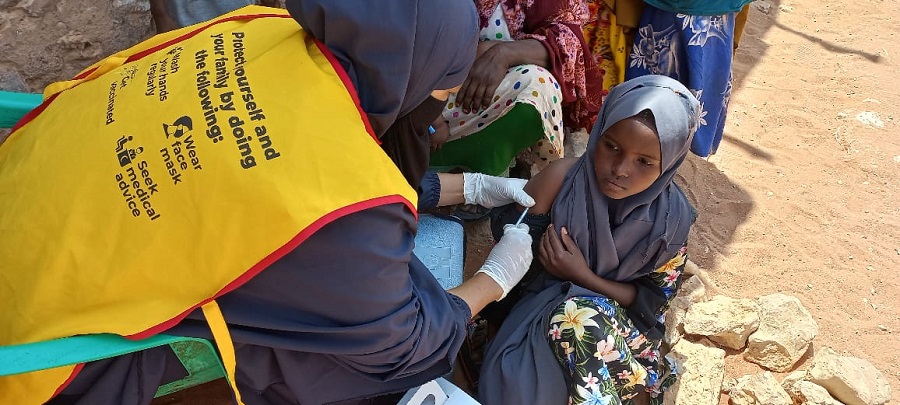
In a distressing rise of diphtheria cases and fatalities, Somali health officials report a significant spike in the bacterial disease this year, exacerbated by critical vaccine shortages and severe cuts in American humanitarian aid. The National Institute of Health’s General Director, Hussein Abdukar Muhidin, revealed that Somalia has recorded over 1,600 cases, including 87 deaths, a stark increase from last year’s figures of 838 cases and 56 deaths.
Diphtheria, which primarily affects children and manifests with symptoms such as swollen glands, breathing difficulties, and fever, is a preventable disease thanks to a vaccine that became widely accessible in the mid-20th century. Despite recent improvements in childhood immunisation rates over the past decade, hundreds of thousands of children across Somalia remain unvaccinated, leaving them vulnerable to outbreaks of this severe illness.
The heart-wrenching plight of families affected by diphtheria is brought into sharp focus through the story of Deka Mohamed Ali, a mother of four who fled the ongoing conflict in the central Somalia town of Ceeldheere. “My children got sick and I just stayed at home because I did not know it was diphtheria,” she shared from the hospital room of her three-year-old son, Musa Abdullahi, whose throat had swollen alarmingly due to the infection. While her nine-year-old daughter managed to recover, her eight-year-old son tragically succumbed to the disease. The two toddlers are currently receiving treatment in Mogadishu.
Somalia’s Health Minister, Ali Haji Adam, highlighted the dire circumstances of the country’s healthcare system. “We have struggled to procure enough vaccines due to a global shortage,” he said, attributing the challenges further to significant cuts in US aid. Previously, American support played a crucial role in Somalia’s healthcare funding, with the US being the leading donor prior to the substantial cuts enacted under former President Donald Trump. According to US government data, aid commitments for the current fiscal year stand at $149 million—down from $765 million last year. This sharp decline has left many health centres shuttered and mobile vaccination teams, which previously serviced remote areas, without the necessary funding to operate.
In response to inquiries about the impact of these cuts, a US State Department spokesperson asserted that “the United States continues to provide lifesaving foreign assistance in Somalia.”