


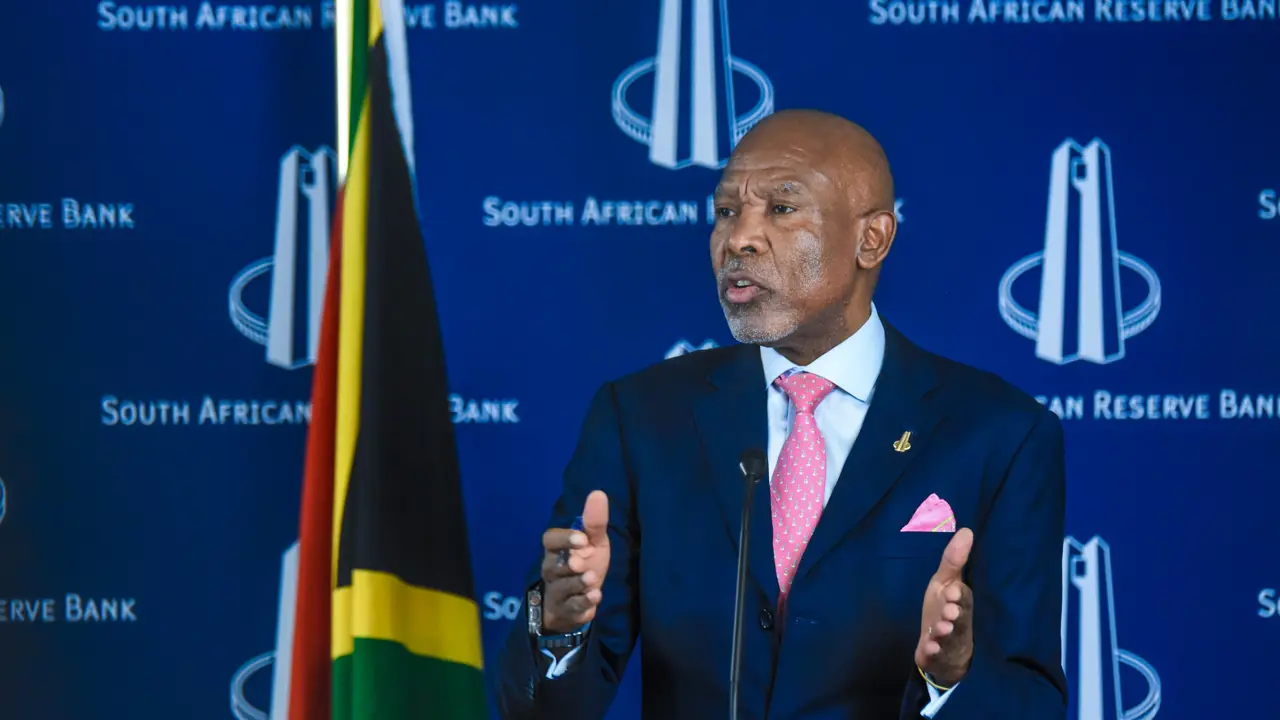
The South African Reserve Bank (SARB) announced a revised growth forecast for 2023, increasing it from 0.9% to 1.2% during its recent Monetary Policy Committee (MPC) meeting. This upward adjustment comes despite adverse conditions, including a weaker export outlook due to escalating tariffs, highlighting the bank’s cautious optimism in the current economic landscape.
SARB Governor Lesetja Kganyago, in a statement following the MPC meeting, underscored the significance of positive indicators observed in second-quarter outputs. “Last week’s GDP release surprised on the upside, showcasing the highest quarterly growth rate in two years,” Kganyago noted. The positive economic indicators prompted the MPC to reassess its growth projections, reflecting a sentiment of gradual economic resilience.
As part of the meeting, the MPC chose to maintain the benchmark repo rate at 7%, with the prime lending rate also holding steady at 10.5%. This decision aligns with the committee’s commitment to managing inflation and fostering stability within the economy. Kganyago expressed confidence in the economy’s potential for modest output gains over the coming years, bolstered by ongoing structural reforms.
“There are also some cyclical indicators, such as credit extension, which look positive,” Kganyago remarked, indicating an optimistic outlook. However, he cautioned that achieving a robust growth rate would necessitate significantly higher investment levels than currently observed.
The discussion surrounding inflation targets has also been a point of contention between SARB and the National Treasury. Following a controversial move to lower its inflation target to 3% on the lower end of its target band, the central bank faced accusations of making unilateral decisions. However, Kganyago remains engaged in ongoing dialogues with Finance Minister Enoch Godongwana to explore common ground on monetary policy enhancements.
“We are always talking and part of the reason why we referenced that joint statement was because it captured the conversations we have been having,” Kganyago stated, reflecting the aim to align monetary and fiscal policy more closely.