

The Information Regulator’s move to escalate its legal challenge against the publication of matric results in newspapers to the Supreme Court of Appeal (SCA) has drawn support from education activists, who view it as a crucial step toward clearer privacy protections for learners.
Education activist Hendrick Makaneta praised the decision, emphasising the need for regulatory certainty in balancing public access to information with learners’ rights.
“The Information Regulator’s decision to ask the Supreme Court of Appeal for guidance on the publication of matric results should be respected,” Makaneta said. “For many years, publishing results has helped families to get information quickly, especially where internet access is poor. At the same time, worries about privacy are real. Young people deserve dignity and care when their information is shared.”
He added that seeking judicial guidance is “a responsible way to balance access and privacy under the law,” calling for the process to be handled with “calm voices and open minds.”
The appeal follows a mid-December 2025 ruling by the Pretoria High Court, which dismissed the Regulator’s urgent bid to block newspaper publication of the 2025 National Senior Certificate (NSC) results. The court labelled the Regulator’s concerns—that even examination numbers could compromise privacy under the Protection of Personal Information Act (POPIA)—as “fanciful.”
In response, the Regulator applied for leave to appeal to the SCA, arguing that a higher court’s input is essential for resolving ongoing disputes over POPIA compliance. This application automatically suspends the High Court’s order and reinstates the Regulator’s 2024 enforcement notice, effectively prohibiting the Department of Basic Education (DBE) from sharing results with newspapers pending the appeal’s outcome.
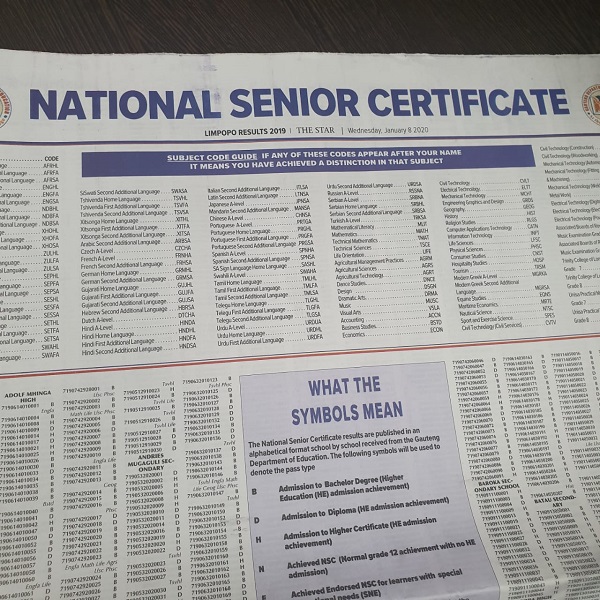
The longstanding tradition of publishing matric results in newspapers—using only exam numbers since 2022 to address initial privacy concerns—has been a point of contention. The Regulator maintains that this practice risks re-identification of learners in certain contexts, while supporters highlight its value for communities with limited digital access.
Umalusi, the council responsible for quality assurance in examinations, has confirmed that the 2025 matric results remain on track for release. Basic Education Minister Siviwe Gwarube is scheduled to announce the national outcomes on Monday, 12 January 2026, with individual results available to learners from 13 January 2026 via schools, SMS, USSD, or the DBE website.
As the SCA considers whether to grant leave and hear the full appeal, the outcome could set a precedent for future years, potentially reshaping how matric results are disseminated across South Africa. The DBE has indicated it will defend any further legal action, underscoring the tension between tradition, accessibility, and modern data protection standards.