


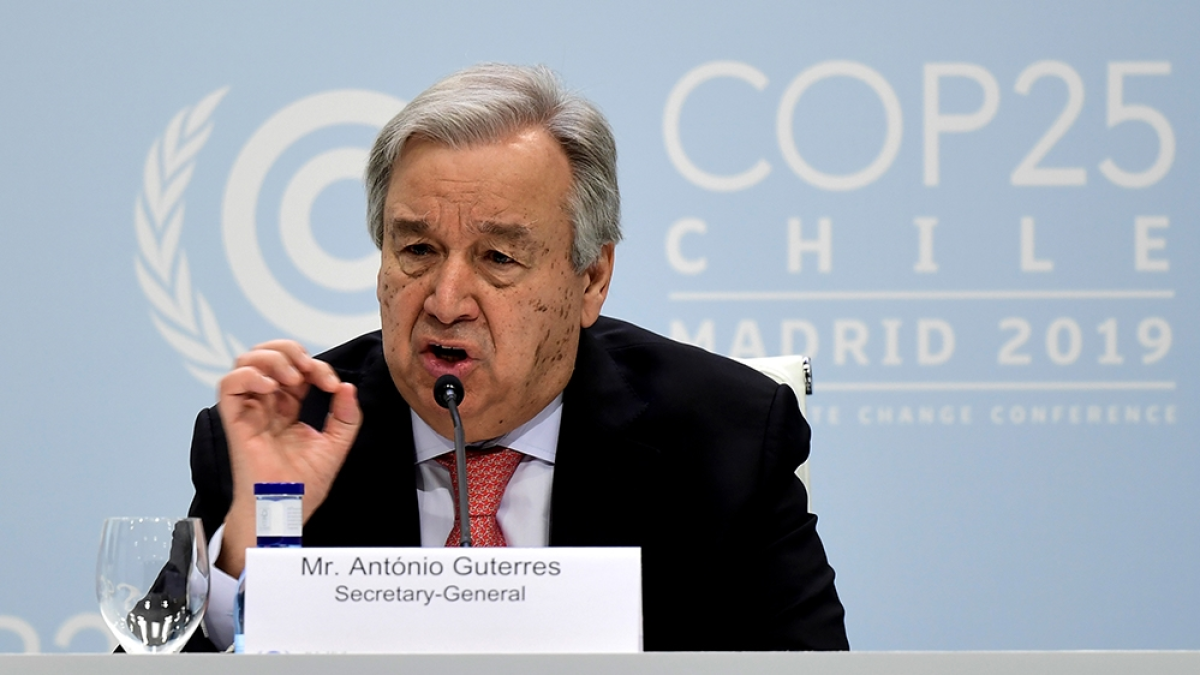
UN Secretary-General António Guterres on Monday called for strict adherence to international principles of state sovereignty and territorial integrity, amid global fallout from the United States’ military operation that captured Venezuelan President Nicolás Maduro and his wife, Cilia Flores.
In remarks delivered on his behalf by Under-Secretary-General for Political and Peacebuilding Affairs Rosemary DiCarlo during an emergency UN Security Council session, Guterres expressed deep concern over the US action.
“I am deeply concerned about the possible intensification of instability in the country, the potential impact on the region, and the precedent it may set for how relations between and among states are conducted,” the statement read, emphasizing “respect for the principles of sovereignty, political independence and territorial integrity of states.”
The meeting, the Security Council’s first of 2026, was convened at the request of Venezuela — relayed through Colombia, a current Council member — following the dramatic US strikes on January 3.
The operation, dubbed “Absolute Resolve,” involved airstrikes on military targets in Caracas, including Fuerte Tiuna and La Carlota airbase, disabling Venezuelan air defenses. US special forces then extracted Maduro and Flores from their residence in a raid lasting under 30 minutes. The couple was flown to the USS Iwo Jima in the Caribbean before being transferred to New York.
Maduro, 63, and Flores arrived in federal custody over the weekend and are scheduled to appear in Manhattan federal court later today to face longstanding charges, including narco-terrorism conspiracy, cocaine importation, and weapons offenses stemming from a 2020 indictment (updated and unsealed recently). A $50 million US bounty had been placed on Maduro’s arrest.
US President Donald Trump hailed the mission as a success, stating the US would temporarily “run” Venezuela during a transition period, with emphasis on accessing its vast oil reserves. The operation has drawn comparisons to past US interventions, such as the 1989 capture of Panama’s Manuel Noriega.
Reactions have been sharply divided: celebrations among Venezuelan diaspora communities and opposition supporters contrasted with condemnations from allies like Cuba, Russia, and Brazil, who decried it as a violation of international law. Guterres earlier described the action as setting a “dangerous precedent.”
As the Security Council debates the crisis, Venezuela’s future remains uncertain, with Vice President Delcy Rodríguez assuming interim leadership and calling for Maduro’s release. Regional stability hangs in the balance amid fears of broader instability.