



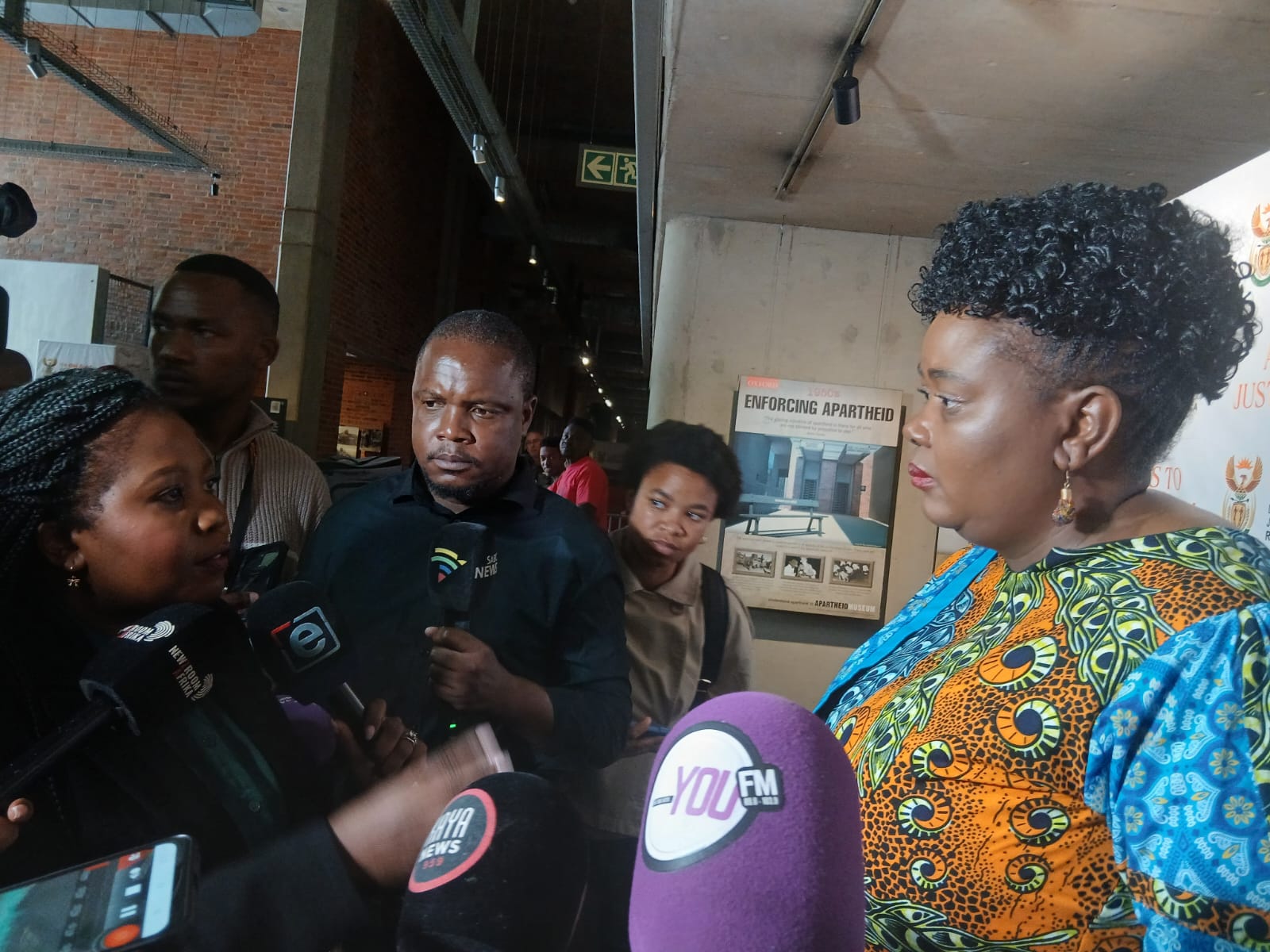
Justice and Constitutional Development Minister, Mmamoloko Kubayi, says the Constitution has, over the past 30 years, ensured that citizens enjoy dignity, equality, and freedom of expression. She was speaking at the national launch of the 30-year anniversary of the Constitution at the Apartheid Museum in Johannesburg, which also marked the commencement of Human Rights Month on Monday.
Addressing dignitaries including Deputy Minister Andries Nel, members of the judiciary, Chapter 9 institutions, civil society, and representatives of the United Nations, Kubayi said this year’s commemoration coincides with two historic milestones the 70th anniversary of the 1956 Women’s March and the 30th anniversary of the adoption of the Constitution.
She described the 1956 march to the Union Buildings as a courageous stand against apartheid oppression and said the adoption of the Constitution marked the triumph of decades of struggle against colonialism and racial domination.
Kubayi said the Constitution created a foundation for unity in diversity and strengthened respect for human rights and the rule of law.
She highlighted that South Africa’s constitution-making process was among the most inclusive in modern history, quoting Justice Albie Sachs’s description of a Constitution that should be authentic and reflective of the nation’s pain, hope and imperfections.
Kubayi said the Constitution stands as a testament to people of different races, religions and cultures coming together to build a country that belongs to all who live in it.
Reflecting on the past three decades, she said the constitutional project has reshaped South Africa’s political, legal and social landscape, even though the journey has not been without contradictions and challenges.
She noted that colonialism and apartheid entrenched racial hierarchy in law and governance, turning institutions meant to protect citizens into instruments of oppression.
Kubayi said the democratic transition of the early 1990s represented a “historic bridge” from injustice to democratic governance founded on universal human rights, culminating in the 1996 Constitution as the supreme law binding all arms of the state.
She emphasised that the Constitution was designed as a living framework capable of evolving with changing social and political realities and supporting ongoing transformation.
Kubayi pointed to key reforms that strengthened the justice system, including the rationalisation of the courts through the Superior Courts Act and the affirmation of the Constitutional Court’s authority as the apex court in constitutional matters.
She also highlighted expanded access to justice through legislation such as the Traditional Courts Act and the Land Court Act, which aim to align customary dispute resolution with constitutional values and address land-related disputes.
Kubayi said the Bill of Rights remains central to the constitutional order, placing civil and political rights alongside socio-economic rights such as housing, healthcare, water and education, all of which are enforceable in court.
She cited landmark Constitutional Court rulings, including the Grootboom and Treatment Action Campaign cases, which clarified the state’s obligation to progressively realise socio-economic rights within available resources.
Kubayi stressed that Chapter 9 institutions play a vital oversight role in strengthening constitutional democracy and ensuring accountability.
However, she acknowledged that corruption, resource constraints and uneven implementation have slowed progress in improving the material conditions of communities most affected by apartheid-era inequalities.
She said while the legal framework has advanced significantly, many South Africans have yet to experience meaningful socio-economic transformation.
Kubayi announced that the year-long commemoration will be held under the theme: “30 Years of the Constitution: One Constitution, One Nation — Reflect, Renew, Recommit.”
Activities will include public dialogues, civic education programmes, youth engagements, cultural events and commemorations at historic sites such as Sharpeville Memorial and Constitutional Hill.
An international conference on access to justice will also be hosted as part of reflecting on progress and renewing commitment to constitutional democracy.
Kubayi called on all South Africans to participate in the commemorations and recommit themselves to protecting and advancing constitutional values.
Quoting founding democratic president Nelson Mandela, she concluded that the Constitution represents the nation’s “compact with one another as citizens,” and a pledge that the laws of the land will never again be used to divide or oppress the people.

