


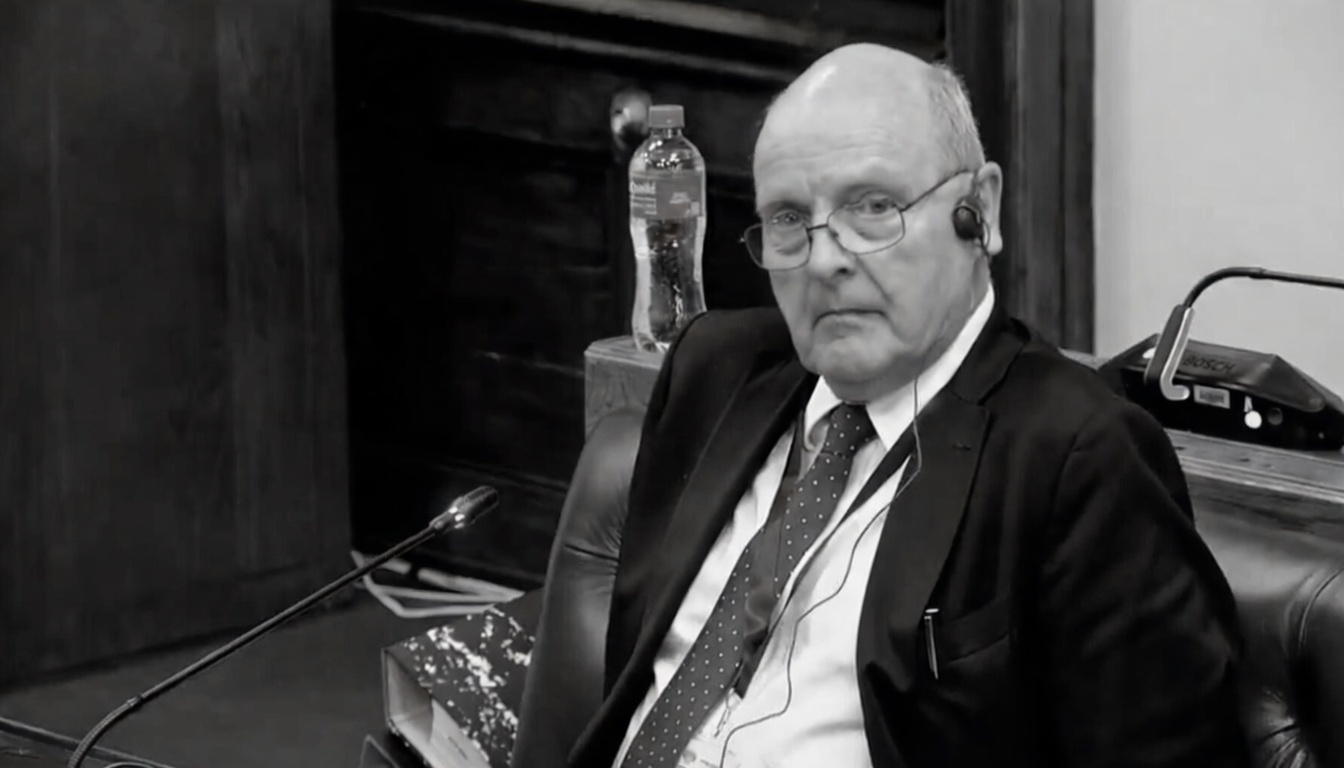
Forensic investigator Paul O’Sullivan has hit back at allegations suggesting he is immune from criminal prosecution, insisting that he has been the deliberate target of law enforcement agencies throughout his career.
O’Sullivan made his remarks on Thursday while concluding his testimony before the Parliamentary Ad Hoc Committee investigating corruption within the criminal justice system. His response comes after some Members of Parliament (MPs) implied that O’Sullivan operated as if he were “untouchable” because of his high-profile work in combating corruption.
“If that is the case, I’ve yet to see the evidence of that,” O’Sullivan said. “As I said previously, I spent 88 days on six trials; I was acquitted on four, the State withdrew one, and another was struck off the roll. I don’t think I was immune at all; in fact, I was a target.”
O’Sullivan’s testimony comes amid heightened scrutiny of his work. He has previously faced accusations from a former prosecutor for allegedly interfering in Independent Police Investigative Directorate (IPID) investigations, and the Economic Freedom Fighters (EFF) labeled him a “fugitive” and filed a criminal complaint following his exit from the parliamentary committee.
During his testimony, O’Sullivan detailed the challenges he has faced as a forensic investigator handling sensitive and high-profile corruption cases. He emphasized that his work has consistently put him under the microscope of law enforcement agencies, sometimes leading to legal battles against him personally.
Observers note that O’Sullivan has long been a polarizing figure in South Africa’s fight against corruption. While praised for his investigative expertise, his high-profile interventions in politically sensitive cases have attracted criticism and controversy.
O’Sullivan’s firm denial of immunity underscores ongoing tensions between forensic investigators, law enforcement agencies, and political structures overseeing the criminal justice system. His testimony also raises broader questions about the treatment of whistleblowers and investigators operating in high-stakes corruption cases.
As the Ad Hoc Committee continues its investigation, O’Sullivan’s statements are likely to fuel further debate about accountability, transparency, and the challenges faced by those working to expose corruption in South Africa.