


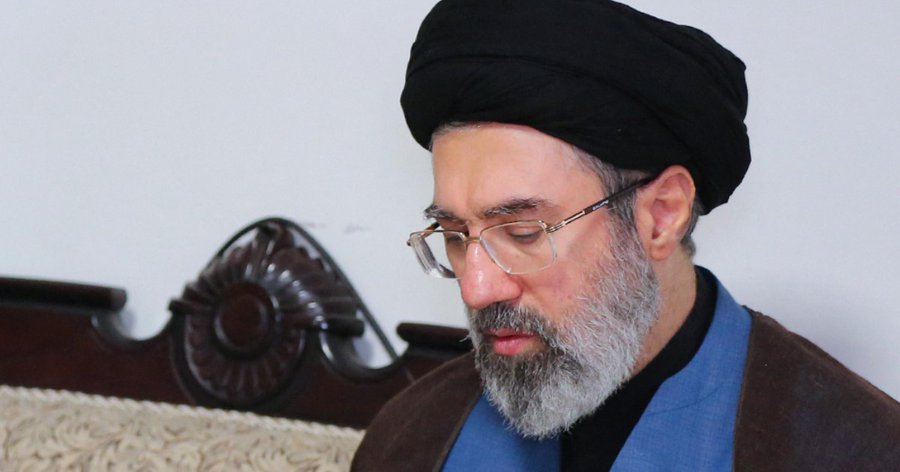
In a move signalling continuity in Iran’s hardline governance, Mojtaba Khamenei, the son of the late Supreme Leader Ali Khamenei, has been named the new head of the Islamic Republic. The 56-year-old cleric, known for his low-profile yet influential role, steps into the position after years of speculation about his behind-the-scenes involvement in the country’s power dynamics.
Despite holding no formal government position under his father’s regime, Mojtaba was widely believed to wield significant influence, particularly through his strong connections to conservative factions and the elite Islamic Revolutionary Guard Corps (IRGC). The IRGC was quick to declare its loyalty to the new leader, followed swiftly by endorsements from President Masoud Pezeshkian, the military, and the judiciary.
Mojtaba’s appointment came from Iran’s Assembly of Experts, the top clerical body, announced just after midnight on Monday (2030 GMT Sunday). This hereditary succession marks a departure from principles Ali Khamenei himself opposed in 2024, when the Islamic Revolution ended centuries of monarchical rule under the Shah.
Born on September 8, 1969, in the sacred city of Mashhad, Mojtaba is the only one of Ali Khamenei’s six children to enter the public sphere. His father, aged 86, perished in the initial US-Israeli airstrikes on Tehran that ignited the Middle East war on February 28.
Ties to Security and Controversy
A veteran of the 1980s Iran-Iraq War, Mojtaba sports a salt-and-pepper beard and the black turban signifying descent from the Prophet Mohammed. The United States sanctioned him in 2019 under President Donald Trump, alleging he acted on his father’s behalf without any elected or appointed role, advancing Iran’s regional ambitions and domestic policies through close collaboration with security forces.
Critics have linked him to the harsh suppression of protests following Mahmoud Ahmadinejad’s disputed 2009 re-election. A Bloomberg investigation, drawing on anonymous sources and Western intelligence, claimed Mojtaba controls assets exceeding $100 million, funneled from oil revenues into luxury properties in Britain, European hotels, and Dubai real estate via offshore entities.
Religiously, Mojtaba pursued theological studies in Qom, where he also taught, achieving the rank of Hujjat al-Islam before being elevated to ayatollah upon his ascension – a title shared by his father and revolutionary founder Ruhollah Khomeini.
Tragically, his wife, Zahra Haddad-Adel, was killed in the same airstrikes that claimed Ali Khamenei’s life, according to Iranian officials.
Israel has issued a severe warning to the new leader and the Assembly of Experts, stating that “the hand of the State of Israel will continue to follow any successor and anyone who seeks to appoint a successor.”
The 88-member Assembly of Experts, elected every eight years, has managed two leadership transitions: this recent one and Ali Khamenei’s selection in 1989 after Khomeini’s death.
In Tehran, demonstrators rallied on October 2, 2024, waving flags and holding portraits of Ayatollah Ali Khamenei and other fallen leaders, just a day after Iran launched missiles at Israel, underscoring the ongoing volatility in the region.