



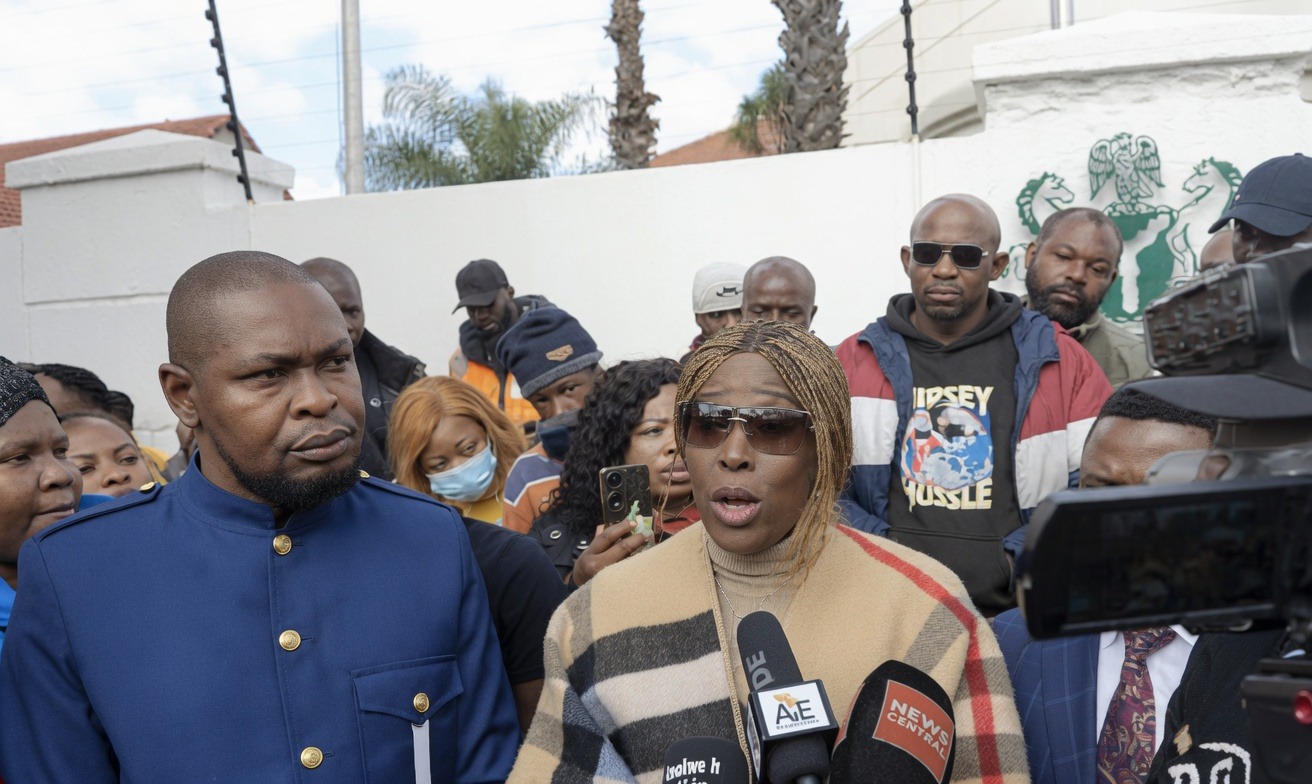
The Nigerian government has appealed to frustrated nationals stranded in South Africa to remain patient and appreciative of efforts being made to facilitate their return home.
Hundreds of Nigerians have been gathering daily outside Nigeria’s High Commission in Hatfield, Pretoria, since the 30 June deadline issued by pressure group March and March, which called on undocumented foreign nationals to leave South Africa.
Last month, the Nigerian government pledged to repatriate citizens wishing to return home. However, only one charter flight carrying just over 200 passengers has departed so far, leaving thousands still waiting and growing increasingly frustrated by the delays.
Addressing the crowd outside the High Commission, Nigerian Consular General Ninikanwa Olachi Okey-Uche acknowledged the hardships being endured by those stranded but insisted that government efforts to assist them remained ongoing.
“You all know that your government cares and is attending to your concerns,” she said.
“We understand that you want the process to be fast-tracked, and we appreciate your patience. The President has heard your cries, and the Ministry of Foreign Affairs, together with the mission in South Africa, continues to work towards resolving the situation.”
Okey-Uche urged citizens not to lose faith in the process, stressing that repatriation efforts were complex and required coordination between multiple government departments.
“What should be important to you is the confirmation that your government cares. We acknowledge the hardship many of our people are facing while waiting, and we sincerely regret the delays. However, we must remain focused on the goal of getting our people home safely and legally.”
Her remarks come amid growing concerns of a potential humanitarian crisis developing outside the diplomatic mission, where many Nigerians have been camping for weeks.
Several of those gathered accused their government of abandoning them after encouraging them to leave their accommodation in anticipation of imminent flights.
“We are homeless because our government told us they would take us home,” one man told the crowd.
“Every day there is a new explanation. We have women and children here, and some of them are sick. Many people left their homes weeks ago because they believed they would be leaving. Now they are sleeping on the streets.”
The Consular General maintained that the delays did not mean the repatriation effort had been abandoned.
“As the saying goes, delay is not denial,” she said.
“The situation facing our people is acknowledged and deeply regretted. We apologise for the inconvenience, but these processes are not always straightforward. The period between government approval and the arrival of a flight can often be lengthy.”
She warned against actions that could undermine the ongoing efforts.
“We see you, we hear you and we understand your anxiety. However, we must not send the wrong message or jeopardise the work that is being done on your behalf. The Presidency, the Ministry of Foreign Affairs, the High Commission and community leaders are all working around the clock to resolve this matter.”
South African-based Nigerian churches and community organisations have stepped in to provide food and basic assistance to those stranded outside the mission, including families with young children.
With little clarity on when additional flights will depart, tensions among those waiting continue to rise, with occasional disputes breaking out over positions in the growing queues outside the High Commission.
Meanwhile, in Durban, thousands of Malawian nationals are continuing to be processed by the Department of Home Affairs as part of ongoing repatriation and deportation efforts.