



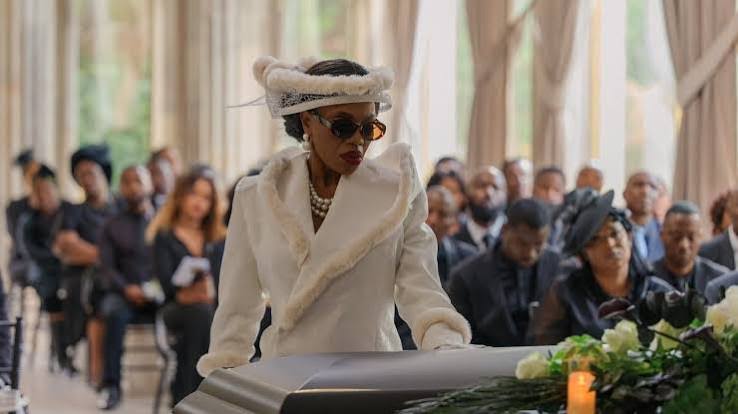
The creators behind Netflix hit series The Polygamist say the show’s overwhelming success lies in its ability to hold a mirror up to society and spark conversations many families have long avoided.
Based on the bestselling 2012 novel by author Sue Nyathi, the series has resonated with audiences in South Africa and across the globe, prompting discussions about polygamy, patriarchy, family dynamics, infidelity, abuse, economic dependence and the lasting impact of toxic relationships.
Speaking during an interview on Newzroom Afrika, Nyathi said that while many viewers have tried to identify a real-life inspiration for the central character, Jonasi, he is not based on any one individual.
“It’s not someone’s life that I cut and pasted,” she said. “Jonasi is an amalgamation of certain characteristics.”
She explained that although the series is titled The Polygamist, the story explores far more than polygamy alone.
“There are lots of themes in this book – family dynamics, power dynamics in relationships, how age and wealth affect relationships, culture, tradition, the father figure, adultery and infidelity. Those themes emerge as the story unfolds,” said Nyathi.
Executive producer Gugu Zuma-Ncube said the adaptation has struck a chord because many viewers recognise themselves, or people they know, in the characters.
“The emotions audiences are feeling are the same emotions we felt while writing the show. People were crying every week in the writers’ room,” she said.
Zuma-Ncube revealed that writers often drew from their own experiences, identifying with the wives, children and even aspects of Jonasi’s character.
“People had fathers, brothers, husbands, exes and family members who reminded them of these characters. That emotional connection found its way into the series.”
According to Zuma-Ncube, the response from viewers has been particularly rewarding because audiences are not merely entertained but deeply affected by the story.
“For some people it’s catharsis. For others it’s anger. For many, it brings up painful memories. But most importantly, it starts conversations.”
Both Nyathi and Zuma-Ncube believe the series has encouraged people to confront issues that are often hidden behind shame and silence.
Nyathi said many children and families affected by complicated relationships carry burdens that are not theirs to bear.
“No one starts out wanting things to go wrong. Sometimes people make choices that affect others, and sometimes people are simply born into difficult circumstances. What I hope people take away is that they should not carry shame that does not belong to them.”
The series also examines how harmful behaviour can be enabled within families and communities.
Nyathi noted that silence often allows abuse and toxic behaviour to continue unchecked, while Zuma-Ncube pointed to economic dependence as another factor preventing people from speaking out.
“The person who pays the piper often calls the tune,” said Zuma-Ncube. “It becomes difficult to challenge bad behaviour when your livelihood depends on that person.”
She added that the series has exposed the role of enablers in maintaining patriarchal systems and abusive environments.
“The show is holding up a mirror to society. People are triggered because they recognise themselves or someone they know.”
For Nyathi, one of the most rewarding aspects of the adaptation has been seeing a story she published 14 years ago reach a new generation of readers and viewers.
The author said the global visibility provided by Netflix has expanded the novel’s reach and created opportunities for translations and international recognition.
“It has amplified my work. People are looking for the book and engaging with the themes in ways I never imagined.”
Zuma-Ncube described the success of The Polygamist as a testament to the power of collaboration within South Africa’s creative industry.
“It takes a team. You bring together people with different talents and experiences, and the end result becomes bigger than the sum of its parts.”
While audiences continue debating the actions of Jonasi and those around him, both women agree that the true achievement of The Polygamist lies in the conversations it has inspired.
“I don’t just want people to read my books,” said Nyathi. “I want them to discuss them.”
And judging by the reaction from viewers across the world, that conversation is only just beginning.

