



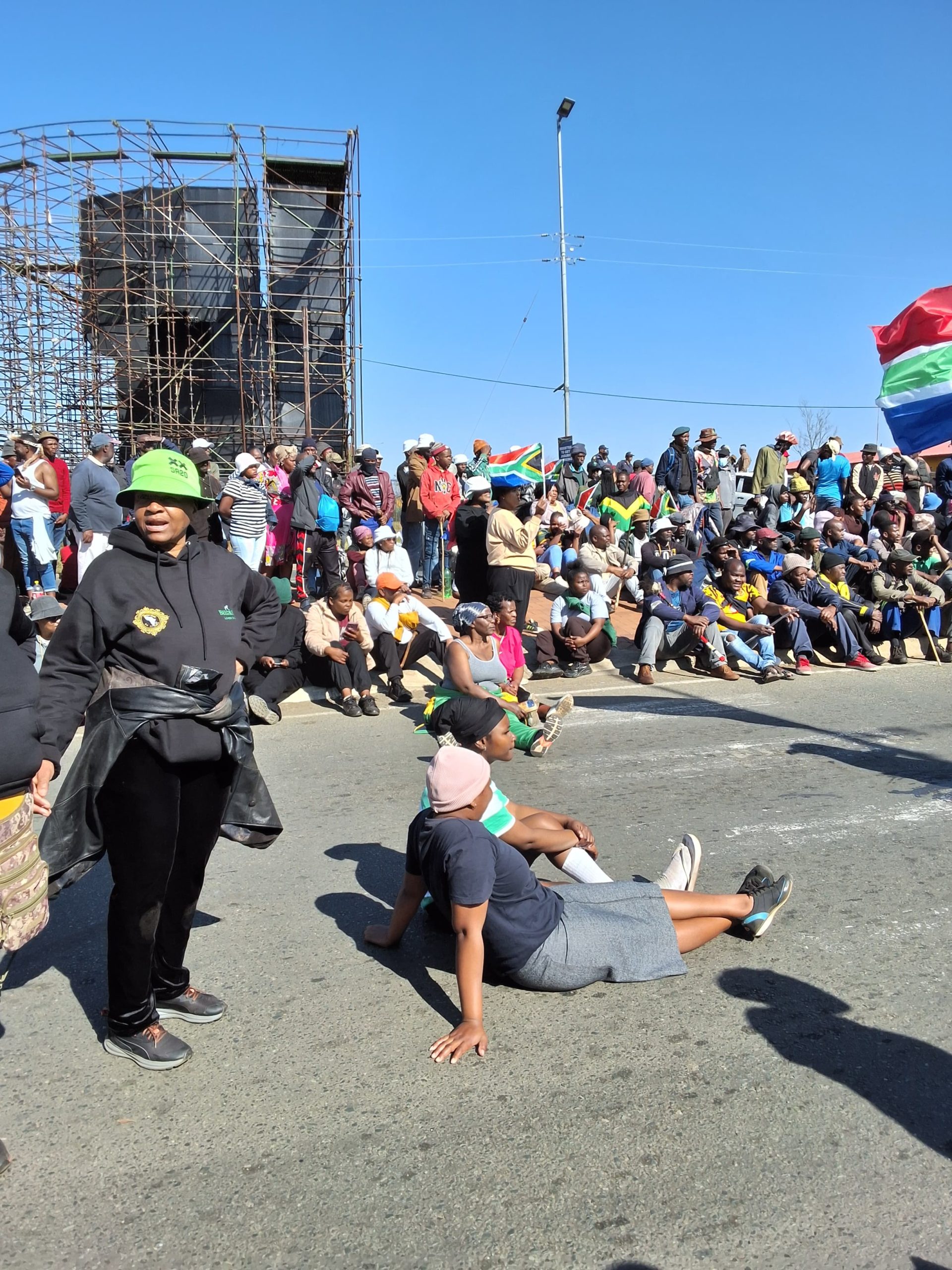
Community members and organisers from different parts of Soweto marched to Moroka Police Station on Sunday to hand over a memorandum of demands, saying they want government to address issues affecting townships, the economy and the future of local communities.
The marchers, who gathered at Walter Sisulu Square in Kliptown before proceeding to the police station, were joined by hundreds of residents. Many businesses in parts of Soweto remained closed during the demonstration.
Community leader Lumkile Mkhaliphi said he was encouraged by the support shown by residents for the campaign against illegal immigration.
“We don’t want immigrants who are not documented to be in the country, and we want South Africans to be the first priority,” he said.
Mkhaliphi accused undocumented foreign nationals of dominating many informal businesses in townships.
“They occupy most of the informal businesses in Soweto, including spaza shops and street vending.”
The Soweto march forms part of a series of demonstrations leading up to another protest scheduled for Monday at the Jabulani Amphitheatre, ahead of planned nationwide protests on Tuesday.
Meanwhile, a separate march took place in Orange Farm on Saturday, where residents from Tjovitjo, Evaton, Palm Springs and surrounding areas, under the banner March and March, handed memorandums to local police stations, raising concerns over crime and community safety.
March organiser Lwazi Sithole argued that communities have been left vulnerable by escalating social challenges and claimed the Constitution has failed to protect poor South Africans from the effects of illegal immigration.
“We want the Constitution to be reconsidered and reconfigured to reaffirm the promises of the Freedom Charter in terms of food security, housing and other basic needs. We can’t continue living like this.”
In a separate demonstration on Sunday, a group calling itself Vatsonga Machangani marched to the South African Human Rights Commission in Johannesburg to hand over a memorandum calling for greater recognition of their identity and culture.
One of the organisers, Nhlamulo Makhubele, said many MaTsonga people are often mistaken for foreign nationals, resulting in discrimination and harassment.
“We get attacked all the time because people confuse us with those from outside the country. We want government to create awareness that there are MaTsonga people who are South African citizens. Just because we speak the same language as people in Mozambique does not mean we are not South Africans.”
Pan-African expert Nhlamulo Makhubele from the University of Johannesburg also appealed for unity, warning against hate speech and division.
“Hating and dividing people and calling them names is what the MaTsonga people stand against. I cannot support that.”
The group said it supports efforts to tackle illegal immigration but insists that all law enforcement actions must be carried out within the confines of the law.

