



Former Investigating Directorate Against Corruption (IDAC) head Andrea Johnson came under further scrutiny at the Madlanga Commission, where commissioners questioned the legality and motives behind the arrests and prosecutions of senior police officials.
Johnson was pressed to concede that there was no sound legal basis for charging suspended National Police Commissioner Major-General Fannie Masemola alongside alleged underworld kingpin Vusimuzi “Cat” Matlala and other accused persons.
The commission heard that Johnson and her team were aware that charging Masemola alongside Matlala and the other accused could create the impression that the national commissioner was implicated in the alleged corruption surrounding a multimillion-rand South African Police Service (SAPS) tender awarded to Medicare24.
IDAC has maintained that Masemola was charged over alleged administrative failures, specifically non-compliance with the Public Finance Management Act (PFMA), and not with fraud or corruption.
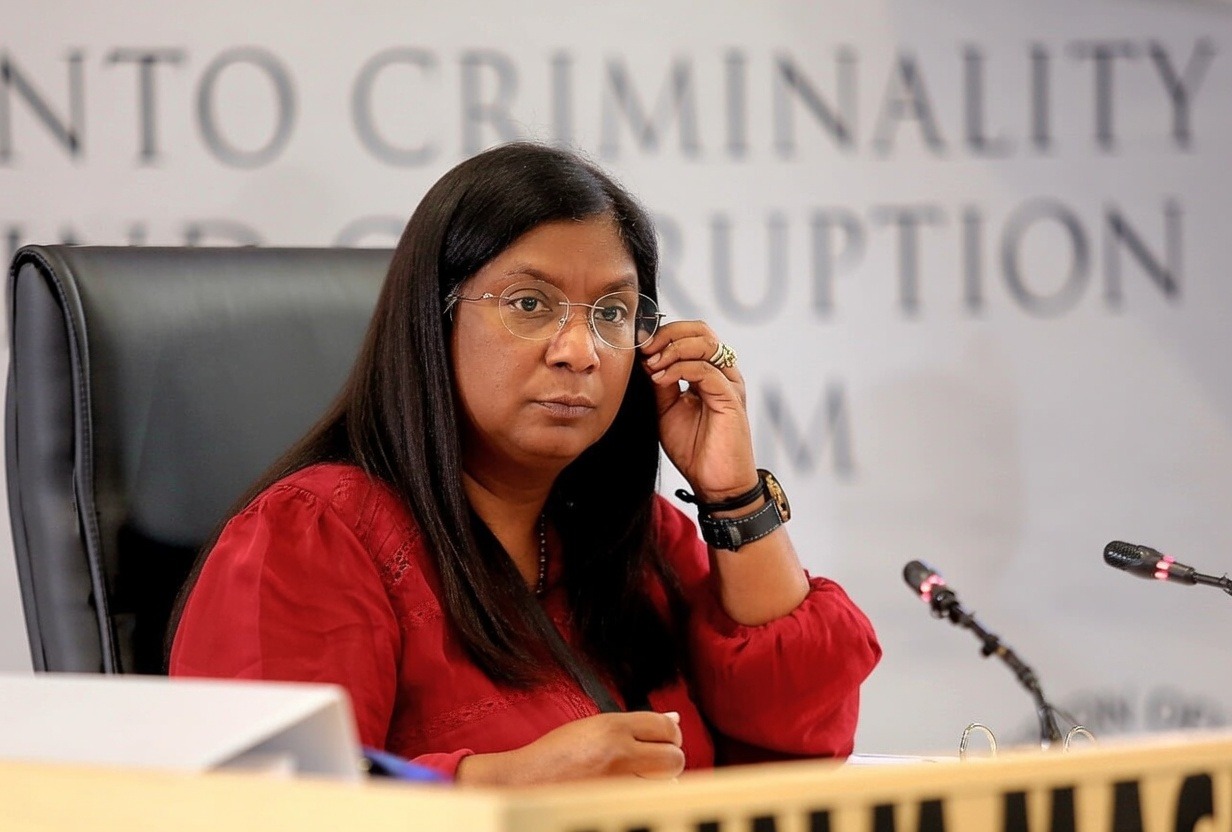
However, during questioning by Commissioner Sesi Baloyi, Johnson conceded that there was no sound legal basis for joining Masemola to Matlala and the other accused.
Baloyi suggested that the purpose of charging Masemola may have been to create a public spectacle around his arrest and place pressure on him to step down as national commissioner.
“That was never the real intention. In my view, the intention was, as I say, get him arrested with a spectacle that comes with it, get him charged with a consequence that naturally will follow, which is the minister, and hopefully even he, national commissioner, would say it’s untenable for me to remain in this position while I’m undergoing a criminal trial, and that was its only purpose. That’s what it looks like to me,” Baloyi said.
Johnson subsequently conceded the point.
The commission also questioned the circumstances surrounding the arrest of Crime Intelligence head Lieutenant-General Dumisani Khumalo, who was detained at OR Tambo International Airport shortly after returning from a flight.
Evidence before the commission suggested that the allegations against Khumalo were largely administrative. He was accused of establishing an interview panel that subsequently recommended the appointment of Dineo Mokwele as a brigadier in the SAPS, despite allegations that she did not meet the minimum requirements.
However, evidence presented to the commission indicated that Khumalo did not establish the panel. Instead, he participated as a panel member after being appointed to it by another official.
The commission also heard evidence that Mokwele was overqualified for the position in question.
Baloyi questioned why Khumalo had been subjected to what she described as a dramatic arrest when there was no indication that he posed a flight risk.
“It could not have been that they were arrested as a way of securing their appearance in court when, by your own admission — and you expressed that at the Ad Hoc Committee as well — they were never a flight risk,” Baloyi said.
“The real intention, in my view, was solely to embarrass them, which means you abused the power to arrest in that it was used for a purpose other than what it was intended for.”
Khumalo, Mokwele and others have already made representations calling for the charges against them to be withdrawn.
The commission’s questioning has raised broader concerns about the use of arrest powers by IDAC and whether criminal proceedings were pursued in cases involving conduct that may have amounted to administrative or statutory breaches rather than corruption or other serious criminal offences.