


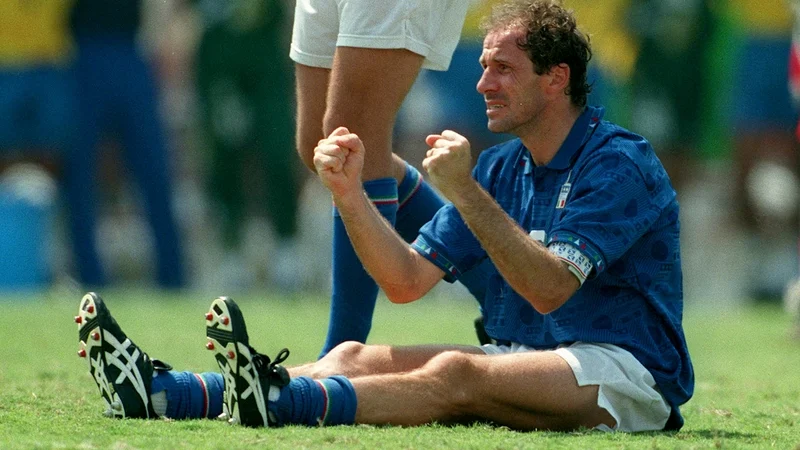
Franco Baresi’s legacy at AC Milan goes far beyond the trophies he won or the iconic number six shirt that was eventually retired in his honour.
The former Italy captain, who has died at the age of 66, spent his entire 20-year professional career with Milan, remaining loyal to the club through some of its darkest days before helping transform it into one of Europe’s dominant forces.
Baresi joined Milan as a teenager and stayed even when the club was relegated to Serie B twice in the early 1980s. On both occasions, he helped the Rossoneri return to the top flight.
That loyalty became one of the defining features of his career.
As Milan recovered from its struggles, Baresi developed into the leader of a defence that would become synonymous with the club’s golden era. Alongside Paolo Maldini, Alessandro Costacurta and Mauro Tassotti, he helped establish one of the most formidable defensive units in European football.
Under coach Fabio Capello, Milan’s defensive organisation, high line and offside trap became central to a side that went 58 Serie A matches unbeaten.
The team earned the nickname “Gli Invincibili” — The Invincibles.
Baresi was at the heart of it all.
He captained Milan for 15 seasons and won six Serie A titles and three European trophies during his career. When he retired in 1997, the club retired his number six shirt, making him the first Milan player to receive that honour.
His influence was not limited to club football.
Baresi earned 81 caps for Italy and was part of the squad that won the 1982 World Cup. Twelve years later, he captained Italy in the 1994 World Cup final against Brazil.
Italy ultimately lost on penalties, with Baresi among the players who missed from the spot. Yet his performance remains one of the defining moments of his international career. Just 25 days after undergoing knee surgery, he played the full 120 minutes of the final.
Known for his exceptional reading of the game, Baresi helped redefine the sweeper position. Rather than relying solely on physical strength, he combined anticipation, positioning and leadership with an ability to launch attacks from deep.
His understanding of the game allowed him to control a defence almost like a second coach on the pitch.
Milan later honoured that contribution by appointing him honorary vice president.
The club confirmed his death in a statement, saying his “example and integrity” would remain part of Milan’s identity.
Baresi’s passing marks the end of an era for one of football’s most celebrated defenders. His career was built not only on silverware, but on an extraordinary commitment to one club — a commitment that turned a Milan defender into a Milan institution.