


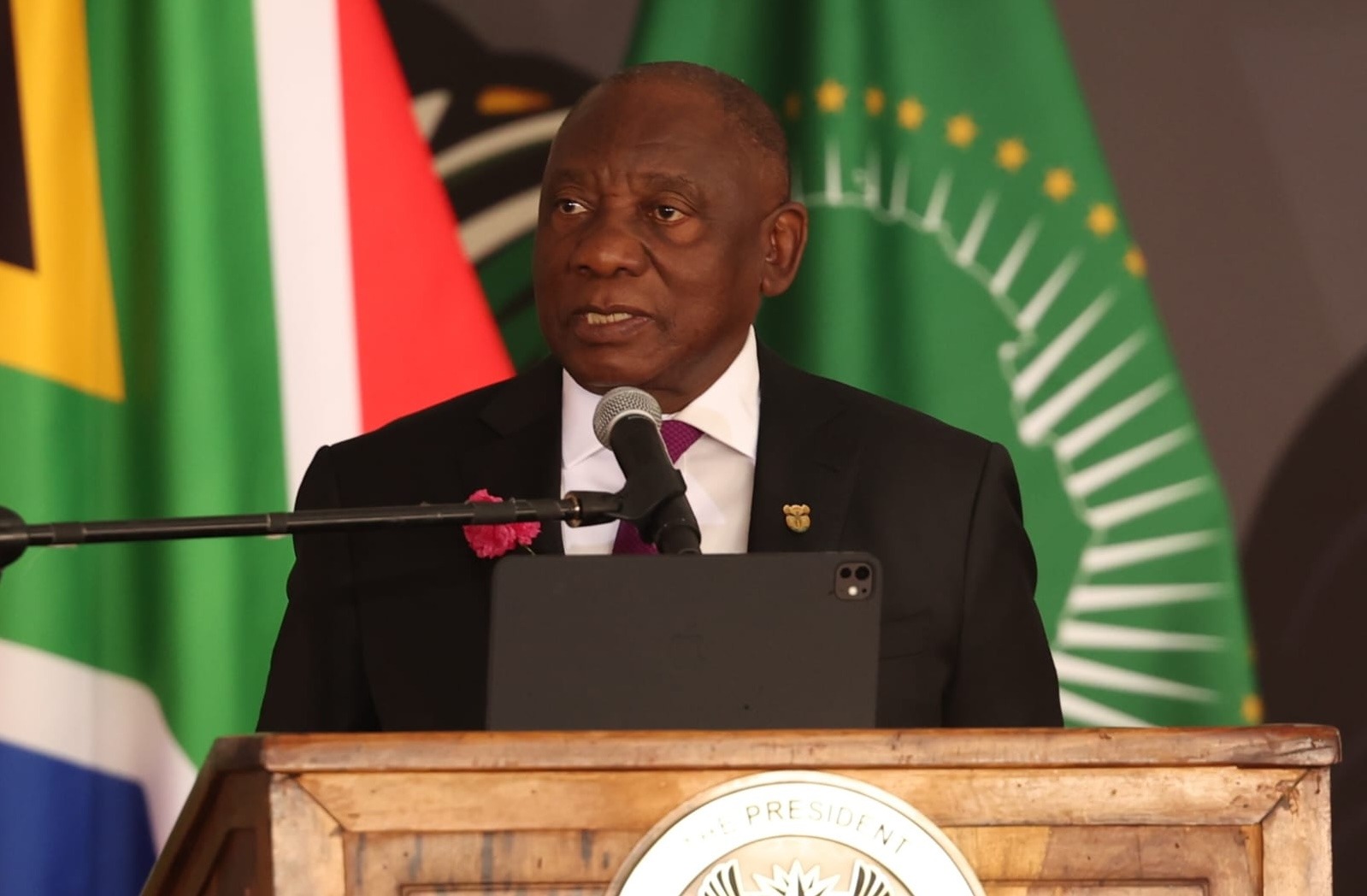
President Cyril Ramaphosa says South Africa’s struggle for women’s equality remains unfinished, with women still facing significant barriers to wealth, land and economic opportunities.
Speaking at the Women’s Day commemoration at the Union Buildings in Pretoria on Sunday, Ramaphosa reflected on the historic 1956 Women’s March, when 20,000 women marched against apartheid pass laws that restricted their freedom of movement.
Seventy years later, Ramaphosa said women have made significant progress but have yet to achieve an equal share of South Africa’s economic resources.
“Women are more than half of our population, but they do not yet hold an equal share of our country’s wealth, its land or its enterprises,” Ramaphosa said.
He also highlighted the continued challenges faced by women in the workplace and within households.
“Too many women are without work. Too many earn less than men for doing the same work. Too many carry the burden of caring for families and households, labour that goes unrecognised and uncounted. This must change,” he said.
Ramaphosa said government is working to address these inequalities and ensure that women have equal opportunities to participate in the economy.
The President’s remarks come as South Africa marks Women’s Day, a national commemoration of the thousands of women who marched to the Union Buildings on 9 August 1956.
The historic march remains a powerful symbol of women’s resistance and political activism. However, Ramaphosa’s comments underline that the fight for equality has moved beyond political rights to include economic empowerment, equal pay, employment and access to resources.
While women make up more than half of South Africa’s population, persistent economic disparities continue to affect their ability to participate equally in the country’s economy.
Ramaphosa said changing the status quo requires continued efforts to ensure that women have meaningful access to opportunities and resources.
His message on Women’s Day was therefore both a reflection on the achievements of women over the past seven decades and a call for greater action to address the inequalities that remain.