


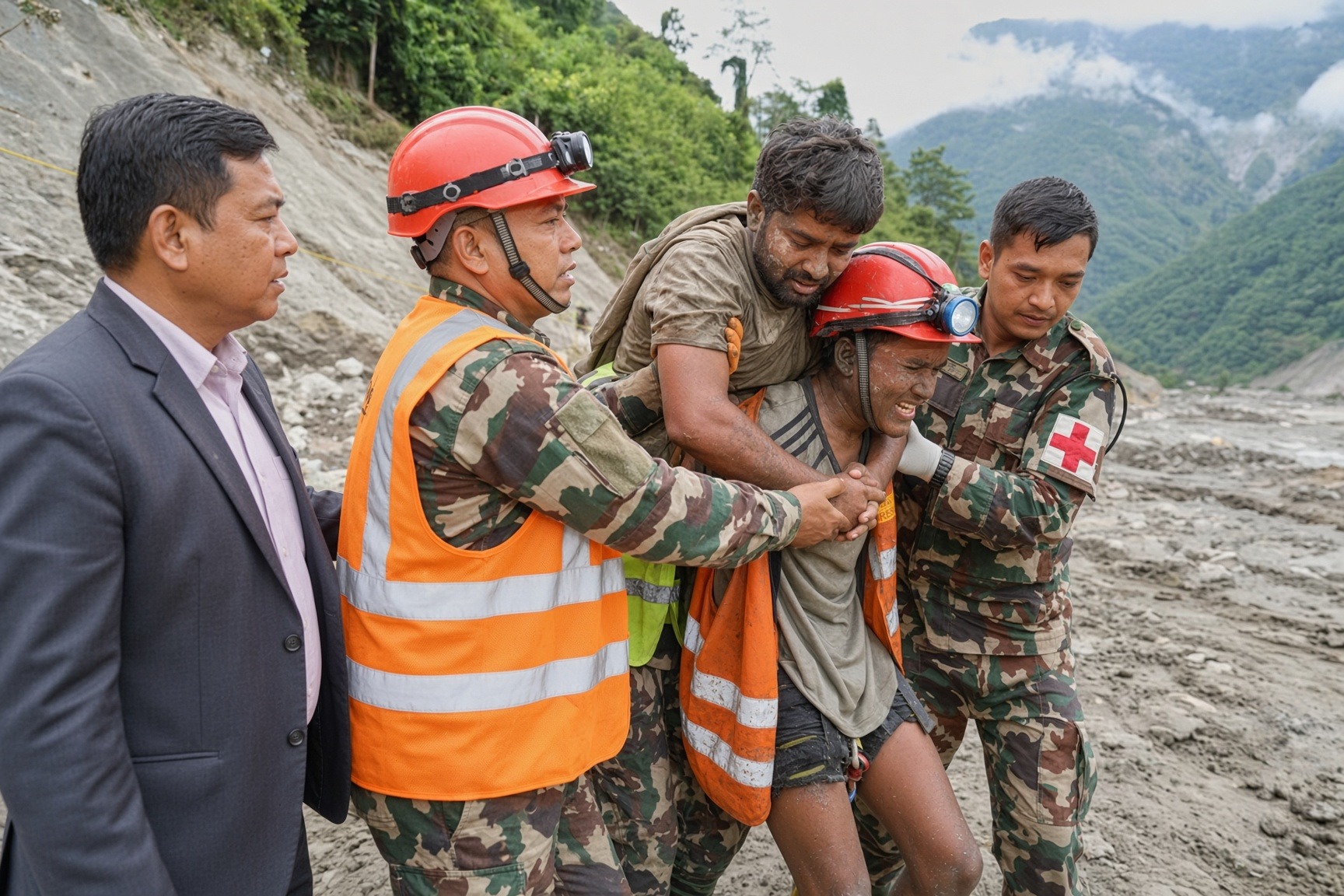
More than 11 days after a wall of water, ice and debris tore through Nepal’s mountain districts, rescuers are still searching underground for signs of life — encouraged by a string of extraordinary rescues but facing increasingly difficult conditions.
Four people have been pulled alive from the disaster zone in recent days, including three found inside hydropower tunnels, renewing hopes that others could still be trapped beneath the wreckage.
The latest rescues have shifted attention from recovery to survival as emergency teams continue searching tunnels and damaged infrastructure despite unstable terrain, severe weather and disrupted communications.
A Chinese national was rescued alive on Saturday after being found deep inside a hydropower tunnel. The same day, rescuers pulled 64-year-old Chandrika Shrestha from her mud-covered home.
Two Nepali hydropower workers had been rescued a day earlier from the Trishuli 3A tunnel, one of several underground sites where authorities continue to search.
Energy Minister Biraj Bhakta Shrestha said rescue operations were continuing despite the difficult geography and lack of connectivity.
At least 12 hydropower projects have been affected by the disaster, creating a second emergency for communities already struggling with destroyed roads, bridges and electricity infrastructure.
Authorities are using solar power to restore electricity to areas that remain inaccessible, while crews work to reconnect damaged networks.
The disaster struck on August 26, when a massive surge of icy water and debris swept through mountain communities along the China-Nepal border. The destruction has left entire areas cut off and severely complicated the delivery of humanitarian assistance.
Nepal’s disaster agency says 1,341 bodies have been recovered in the country and around 4,996 people remain missing. In Tibet, Chinese state media have reported another 31 deaths and 531 missing.
The combined death toll has reached at least 1,372, with more than 5,500 people missing.
The humanitarian crisis is being compounded by the difficulty of identifying victims. With morgues overwhelmed, hundreds of bodies have been buried in mass graves after DNA samples were collected for possible identification later. Only about 100 bodies have so far been identified and returned to relatives.
The United Nations has appealed for $50 million to support more than 84,000 people affected by the disaster.
Foreign Minister Shisir Khanal has described the catastrophe as a “Himalayan tsunami”, warning that rebuilding destroyed infrastructure could cost billions of dollars.
Yet amid the scale of the devastation, the recent rescues have provided a rare source of optimism.
Prime Minister Balendra Shah said the rescue of Chandrika Shrestha had given hope to the entire country.
For rescuers, that hope is also driving the continuing search underground. With workers still believed to be trapped in some of the affected hydropower facilities, teams are racing against time to reach areas buried or isolated by the collapse.
The disaster’s precise trigger remains unclear, but scientists have warned that rising temperatures are accelerating glacier melt and increasing the potential for dangerous events in the Himalayas.
As Nepal prepares for a national day of mourning, the country is facing a difficult dual task: recovering thousands of victims while continuing to search for those who may still be alive.