



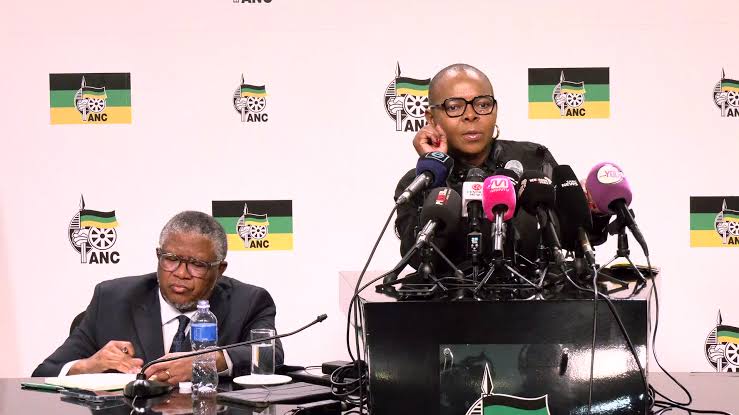
The African National Congress says it has taken its dispute with the Electoral Commission (IEC) over the lodgement of its candidates for the 2026 Local Government Elections to the Electoral Court.
ANC Secretary-General Fikile Mbalula says the party lodged 9,128 candidates across the country, with 8,947 currently registered with the IEC.
Mbalula was briefing the media in Johannesburg on Tuesday, as the party sought to explain what led to some of its candidates not being registered ahead of the 4 November local government elections.
He said 181 ANC candidates were received by the IEC’s electronic system on 28 August but did not complete the final electronic step.
Of these, 130 were proportional representation candidates and 51 were ward candidates.
The affected candidates are in six municipalities: Ngquza Hill, Port St Johns, Walter Sisulu and Sundays River Valley in the Eastern Cape, uMshwathi in KwaZulu-Natal and Mangaung in the Free State.
Mbalula said the ANC’s ward candidates remain on the ballot in Mangaung, uMshwathi, Walter Sisulu and Sundays River Valley, with the proportional lists being disputed in those municipalities.
Both ward and proportional representation ballots are affected in Ngquza Hill and Port St Johns.
The ANC approached the Electoral Court on Friday after the IEC rejected its request to process candidate information that the party says had already been uploaded onto the commission’s system before the deadline.
“We asked to add no name. We asked to change no list. We asked for no late nomination and no extension of any deadline,” Mbalula said.
The party wants the court to set aside the IEC’s decision and declare that its lists in the six municipalities were submitted timeously and validly.
Mbalula stressed that the ANC was not asking for an extension or special treatment, saying the relief sought should apply to all affected political parties.
According to the ANC, the IEC has recorded 2,274 candidates from 45 political parties as being in the same position.
Mbalula said 224 parties used the manual process to lodge their candidates, while 299 used the electronic system.
“Forty-five parties used one channel and had challenges,” he said.
The ANC leader also acknowledged failures within the party’s own candidate-selection and submission process.
He said an internal report had identified 252 incorrect identity numbers on ANC files before the electronic submission process began.
The party’s internal review has proposed measures including locking candidate lists seven days before the IEC deadline, improving verification of identity numbers and increasing the number of accredited users on the IEC system.
Mbalula said the party would also investigate claims that the Eastern Cape list was substantially altered.
“That matter is under forensic attention,” he said.
He maintained, however, that the ANC’s disagreement with the IEC was a legal dispute and not an attack on the electoral body.
“The ANC disagrees with the Commission on a point of law, and it has taken that disagreement to the court that Parliament created to hear it,” Mbalula said.
The Electoral Court will ultimately determine whether candidate information uploaded onto the IEC’s system before the deadline, but without completing the final electronic step, constitutes a valid submission.
Mbalula said the ANC would abide by the court’s decision.
The party has also called on the IEC to consider reforms to its electronic candidate submission system after the elections, including providing parties with electronic receipts and clearer confirmation that submissions have been completed.
The 2026 Local Government Elections are scheduled for 4 November.

