


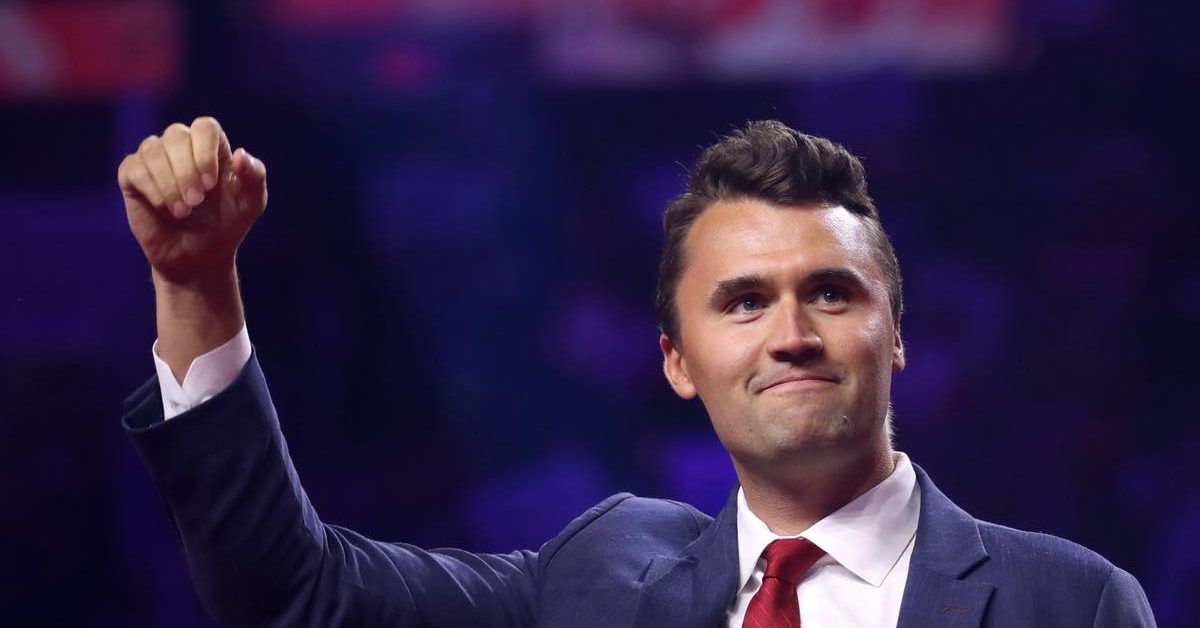
One year after Charlie Kirk’s death, the conservative movement he helped build is showing few signs of slowing down.
Kirk, the founder of Turning Point USA, was killed on September 10, 2025, while speaking at Utah Valley University during his American Comeback Tour. He was 31.
His death sent shockwaves through conservative politics, but it also raised an immediate question: could the organisation he built continue to expand without its founder?
The answer, according to Turning Point USA, has been yes.
Organisation expands after Kirk’s death
Following Kirk’s death, his widow, Erika Kirk, was appointed chief executive officer and chair of Turning Point USA.
She pledged that his political movement would continue, telling supporters that what her husband had built would not disappear with him.
The organisation says it has since expanded its reach to more than 5,000 high school and college campuses, with more than 8,000 church partners and over 1 million student members.
Turning Point USA also says more than 120,000 people contacted the organisation after Kirk’s death about joining or establishing chapters.
The figures point to an organisation attempting to turn the loss of its founder into a broader mobilisation of supporters.
From activist to political force
Kirk had already established himself as one of the most recognisable young conservative voices in the United States before his death.
Through campus debates, his podcast and Turning Point USA’s grassroots organising, he built a large following among young conservatives and became increasingly influential within Republican politics.
His close relationship with President Donald Trump and Vice President JD Vance further cemented his position within the conservative movement.
Trump later posthumously awarded Kirk the Presidential Medal of Freedom, highlighting the extent to which his influence had reached the highest levels of American conservative politics.
A legacy still tied to controversy
Kirk’s influence was not without controversy.
His campus appearances often attracted large crowds as well as protests, particularly over his views on abortion, immigration, guns and LGBTQ rights.
His death intensified debates over political rhetoric, free speech and violence, with supporters portraying him as a champion of open political debate while critics pointed to statements they considered inflammatory.
The aftermath also produced a wave of misinformation and conspiracy theories online, underscoring how politically charged his death had become.
Legal case continues
While his organisation looks to the future, the criminal case surrounding Kirk’s death remains unresolved.
Tyler Robinson, 23, has pleaded not guilty to seven charges, including aggravated murder and weapons-related offences. Prosecutors are seeking the death penalty.
A Utah judge has ruled that there is sufficient evidence for the case to proceed, but the ruling does not determine Robinson’s guilt. Prosecutors will still have to prove their case beyond a reasonable doubt.
As the legal proceedings continue, Kirk’s political legacy is already taking shape beyond the courtroom.
A year after his death, the organisation he founded says it has more members, a wider campus presence and a growing network of supporters — suggesting that his influence may continue to shape conservative politics even in his absence.