


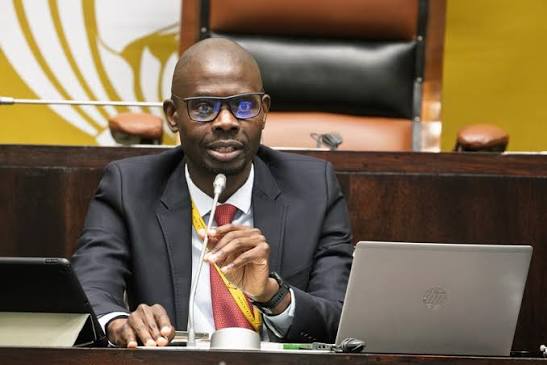
Parliament’s Impeachment Committee has put the consideration of further nominations for the evidence leader of the Section 89 inquiry on hold as it faces fresh legal challenges over its handling of the appointment process.
The inquiry is expected to examine matters surrounding the theft of foreign currency from President Cyril Ramaphosa’s Phala Phala farm.
The latest development follows the committee’s decision to reverse its recommendation of Durban advocate Thandazani Madonsela for the evidence leader position.
Legal challenges pile pressure on committee
The committee is now facing two court applications challenging its decision to rescind Madonsela’s recommendation.
The Economic Freedom Fighters (EFF) and the African Legal Professionals Association have challenged the committee’s decision-making process, arguing that the lawmakers acted unlawfully and unprocedurally.
The legal challenges have sparked renewed political tensions within the committee, with members divided over how Parliament should respond.
Committee chairperson Makashule Gana said he would work with Parliament’s legal team to oppose the review applications seeking to overturn the rescission decision.
Madonsela recommendation becomes political flashpoint
The dispute centres on the committee’s decision last week to recommend Madonsela for the evidence leader role before subsequently reversing that decision.
The committee upheld President Ramaphosa’s complaint that Madonsela could be conflicted because he had previously provided advice to the African National Congress (ANC) on the impeachment matter.
The decision to restart the nomination process has since come under intense scrutiny.
Opposition MPs who supported Madonsela’s appointment argued that the committee should allow the courts to determine whether its decision was lawful.
However, other members insisted that Parliament must defend the powers and independence of its committees.
Parties clash over parliamentary powers
The committee once again descended into political disagreement during Wednesday’s meeting.
Democratic Alliance (DA) MP George Michalakis argued that the committee should actively oppose the court applications, warning that allowing the challenges to succeed could have wider implications for parliamentary committees.
That will have a repercussion for parliamentary committees across the board,” Michalakis said.
Freedom Front Plus (FF Plus) MP Wouter Wessels also supported the committee’s position, arguing that committees can reconsider previous decisions when new information becomes available.
Meanwhile, ActionSA MP Athol Trollip accused parties forming part of the Government of National Unity (GNU) of using their numerical strength to protect the president.
Trollip said the committee was being “railroaded” into making decisions.
Evidence leader appointment remains unresolved
With the legal challenges now before the courts, the committee has decided not to proceed with considering additional nominations for the evidence leader position.
The delay leaves the appointment process unresolved and adds another layer of uncertainty to the Section 89 inquiry.
The evidence leader will play a key role in the proceedings, including assisting with the presentation and examination of evidence before the committee.