



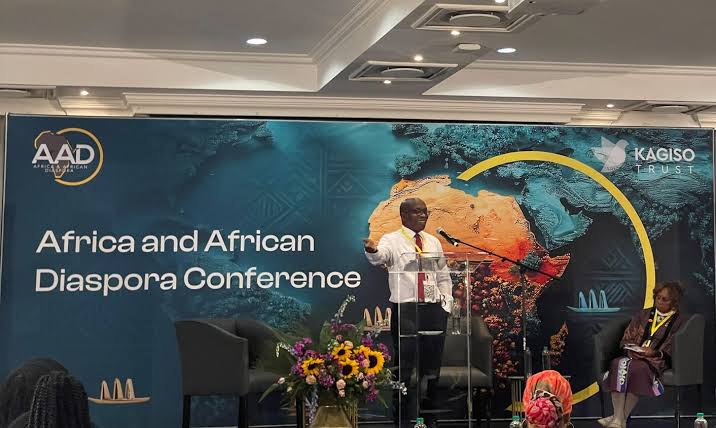
Calls for large-scale reparatory justice have intensified at the Second Africa and African Diaspora Conference in Johannesburg, South Africa.
Delegates highlighted the longstanding effects of historical injustices, particularly the transatlantic slave trade and colonialism, which they identified as major contributors to present-day inequalities.
The conference began on Monday and is expected to conclude on Friday under the theme, “The Return to Africa”. It brings together delegates from across the African continent, the Caribbean, Asia and Latin America.
The gathering serves as a unifying platform dedicated to advancing African sovereignty, reparatory justice and sustainable solidarity between the continent and its global diaspora.
Among the pressing issues identified at the conference were ongoing conflicts across the African continent, famine and migration pressures, with delegates emphasising the need to find lasting solutions.
Conference organiser Frank Chikane, a respected anti-apartheid activist and veteran public servant, set the tone for what is being viewed as an intensification of efforts to hold Western nations accountable for historical injustices, including conquest and colonisation.
“People of African descent and Africans have been meeting at various international conferences. Whenever we meet, we always find common ground.
“People were taken from this continent centuries ago and enslaved. Now they say, ‘We worked for you, we built your cities, and you left us in the Caribbean. We were colonised, and it is difficult to escape that situation.’
“We then said, ‘We need to come together.’ That is what this conference is about,” he said.
Over recent years, the African reparations movement has evolved from separate national advocacy initiatives into a broader global movement, supported by formal diplomatic programmes involving the African Union (AU) and the Caribbean Community (CARICOM).
Ghana has been tasked with championing the cause and has contributed to several developments, including the following:
1. Global diplomatic and UN recognition
In March 2026, a significant diplomatic development took place when the United Nations General Assembly adopted a resolution declaring the transatlantic slave trade and racialised chattel slavery the gravest crimes against humanity. Supported by 123 member states, the resolution marked a significant development in international discussions on historical accountability.
At its annual summit, the African Union also adopted a resolution classifying colonialism, deportation and slavery as acts of genocide against African peoples. It also established an official African Day of Tribute on 30 November to honour their victims.
2. Institutional frameworks and long-term commitments
Following the designation of 2025 as the Year of Reparations, the AU established a ten-year continental commitment covering the period from 2026 to 2036.
The initiative aims to institutionalise the campaign by incorporating reparatory justice into education, policymaking and trade frameworks.
The relationship between the AU and CARICOM has also been operationalised, with their respective mechanisms officially integrated.
3. Shift from symbolic gestures to structural demands
The campaign has expanded its definition of reparations beyond direct financial compensation to include structural economic reforms aimed at addressing centuries of underdevelopment.
Through the African Common Position, these demands include:
- Debt cancellation and the restructuring of unfair global financial systems.
- The restitution of stolen cultural artefacts held in Western museums.
- Direct investment by Western countries in African infrastructure, healthcare, technology and renewable energy.
4. Incremental commitments and acknowledgements of historical responsibility
Although a comprehensive settlement involving European powers has yet to be achieved, the campaign has secured several acknowledgements and commitments.
These include:
- The Church of England issued a formal apology for its historical links to slavery and established a £100 million social impact fund to address its legacy.
- Germany formally acknowledged its early 20th-century actions in Namibia as genocide and agreed to a $1.3 billion development framework, although it described the funding as moral grants rather than legal reparations.
- The UK Government previously paid $30 million in an out-of-court settlement to survivors of the Mau Mau uprising in Kenya.
The conference programme includes contributions from several prominent figures, including former South African President Thabo Mbeki, former Liberian President Ellen Johnson Sirleaf, Africa’s first female president, South Africa’s Minister of International Relations and Cooperation Ronald Lamola, and former Haitian President Jean-Bertrand Aristide.