



US President Donald Trump is facing a major political challenge after Democrats seized control of both chambers of Congress in the 2026 midterm elections, threatening to derail his legislative priorities and intensify scrutiny of his administration.
The sweeping Democratic victories represent a dramatic shift in Washington, with voters delivering a significant rebuke to the Republican Party just two years after Trump’s return to the White House.
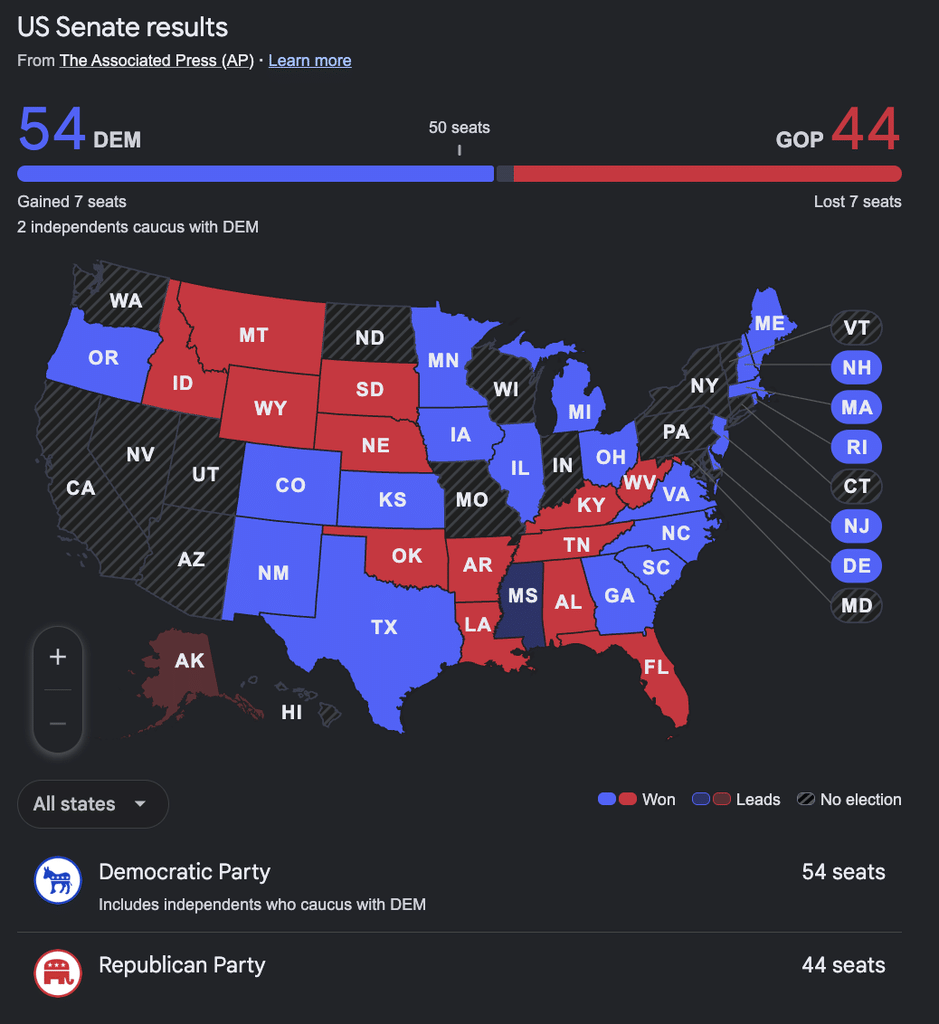
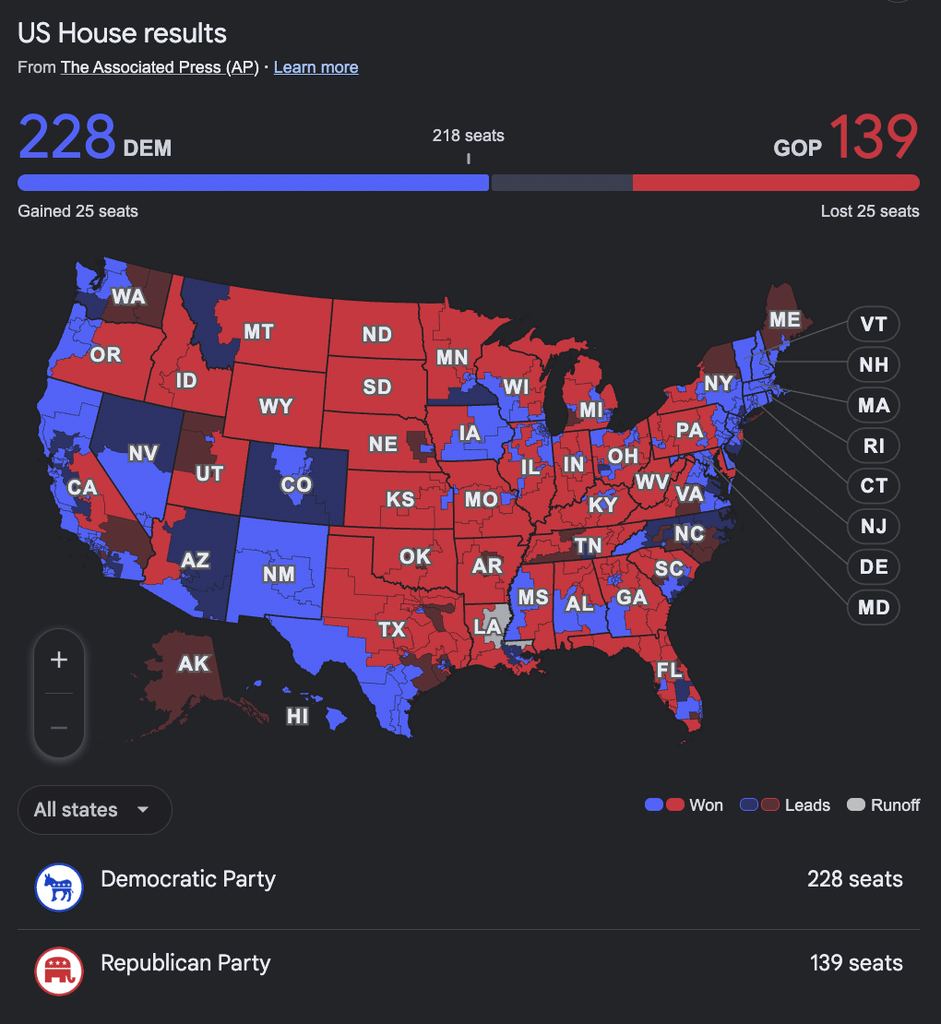
Democrats secured at least 54 seats in the Senate and 225 in the House of Representatives, comfortably exceeding the numbers needed to take control of both chambers.
The outcome marks a turning point for Trump’s presidency, potentially transforming the final two years of his administration into a period of political confrontation with an increasingly assertive Democratic opposition.
Trump’s legislative agenda faces fresh obstacles
Losing control of Congress will make it considerably more difficult for Trump to push through his domestic policy priorities.
Democrats will now have greater influence over legislation, congressional investigations and government spending negotiations.
The shift could also open the door to increased scrutiny of decisions made by the administration, with Democratic lawmakers already signalling their intention to investigate controversial policies and powerful political figures.
Trump, however, has indicated that he intends to continue governing despite the election setback.
Speaking to the New York Times, he said he was willing to accept the results and work with Democratic leaders, although he warned that he would veto legislation he opposed.
Republican strongholds deliver stunning defeats
Perhaps the most damaging aspect of the results for Republicans was the scale of Democratic success in states traditionally considered Republican territory.
James Talarico’s Senate victory in Texas ended a decades-long Democratic drought in the state, while Adam Hamilton secured a historic Democratic Senate win in Kansas, the party’s first there since 1932.
Democrats also reclaimed Ohio’s Senate seat through Sherrod Brown and defeated long-serving Republican senator Susan Collins in Maine.
These victories suggest that Republican difficulties extended beyond individual candidates and became part of a broader national political backlash.
Historic victories add to Democratic momentum
The election also produced several historic milestones.
Abdul El-Sayed became the first Muslim elected to the US Senate after defeating Republican Mike Rogers in Michigan.
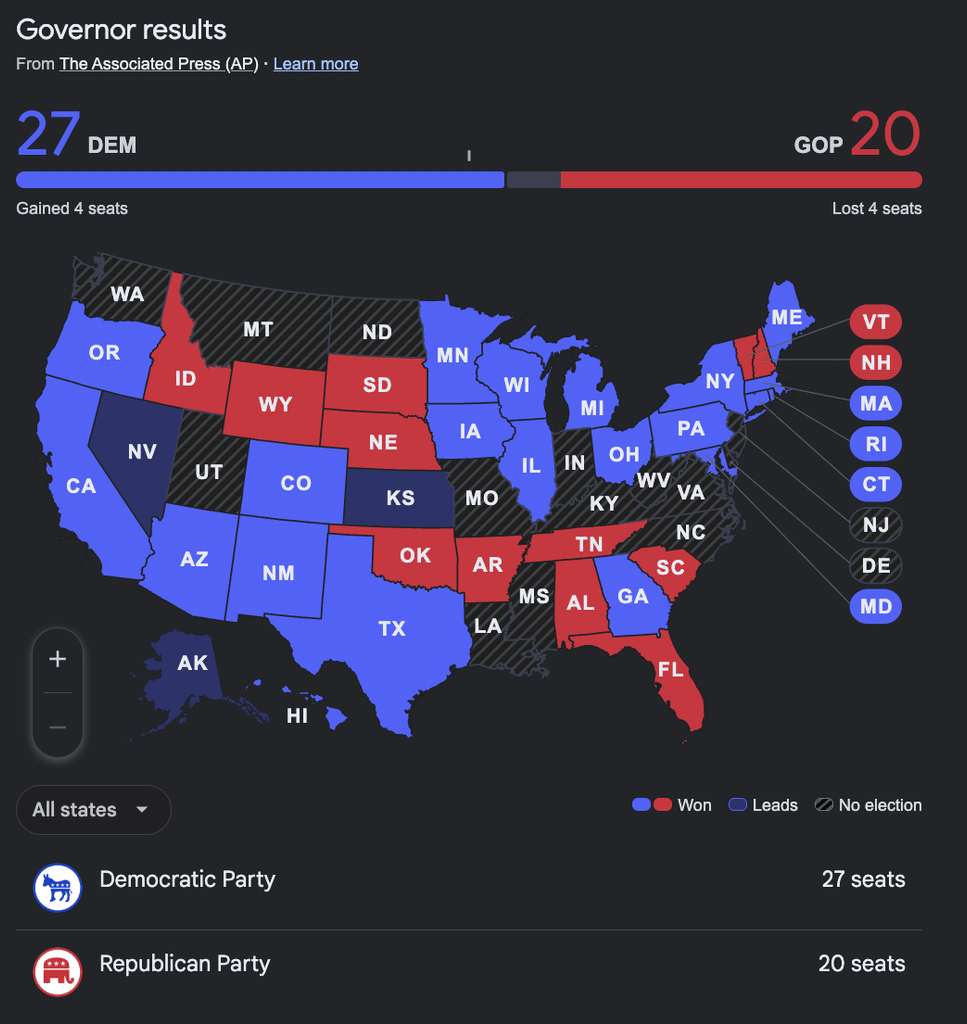
In gubernatorial contests, Keisha Lance Bottoms became the first Black woman elected governor in American history after winning in Georgia.
Texas elected its first Latina governor, Gina Hinojosa, while Wisconsin chose David Crowley as its first Black governor.
The victories strengthened the impression of a broad Democratic resurgence across federal and state politics.
Two years of political confrontation ahead?
The election result raises serious questions about how effectively Trump will be able to govern with Democrats controlling Congress.
While the president retains executive authority, congressional control gives the opposition significant opportunities to challenge his policies, scrutinise his administration and influence the legislative agenda.
The results also provide Democrats with momentum ahead of the next presidential election, although translating midterm success into a national presidential victory will be a separate challenge.
For Trump, the message from voters is difficult to ignore: his party has lost control of Congress, and the political environment surrounding his presidency has changed dramatically.
The coming months will reveal whether the president can adapt to the new balance of power or whether Washington is heading towards an extended period of political deadlock.
*Results mathematically projected as per Associated Press (AP).