



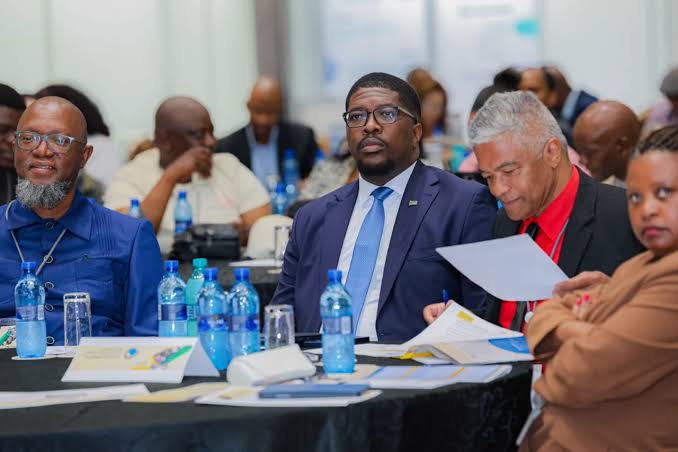
The second Continental Trade and Transport Conference, hosted by the Cross-Border Road Transport Agency (C-BRTA), concluded in Johannesburg with a clear message from the agency’s Chief Executive Officer, Lwazi Mboyi: Africa cannot trade its way to economic growth if its trucks remain stuck at border posts.
The two-day conference, held in Fourways, Johannesburg, brought together ministers, chief executives, regulators, financiers and trade experts from across the continent to explore practical solutions to the infrastructure challenges hindering cross-border trade and transport movements.
The conference was hosted by Mboyi, with Transport Minister Barbara Creecy delivering the keynote address on the opening day.
The problem: delays cost money
In interviews ahead of the conference, Mboyi outlined the key challenges facing cross-border transport operators.
Heavy traffic, delays and stoppages at border posts, driven by the sheer volume of trucks crossing between countries, increase operating costs and reduce efficiency. Crime targeting trucks is another significant factor contributing to delays and higher costs.
Mboyi said this was why the conference needed to address infrastructure and financing challenges directly, rather than focusing solely on policy.
“Understanding the cross-border environment is key. These delays increase costs and reduce efficiency,” he said.
He added that South Africa could not achieve economic growth in isolation, as it both exports to and imports from the rest of the region. Efficient cross-border trade between countries and regions is therefore essential.
That sense of urgency was echoed by Minister Creecy during the conference. She noted that Africa’s economy is valued at US$3.2 trillion, with a population of more than 1.5 billion people, yet intra-African trade accounts for only about 15% of the continent’s total trade.
Mboyi’s central theme for the conference was the modernisation and decarbonisation of Africa’s trade infrastructure to accelerate the implementation of the African Continental Free Trade Area (AfCFTA), with a particular focus on trade corridors, border efficiency and regional integration.
Speaking at the conference, he highlighted the progress already made in modernising cross-border transport through digital permitting systems and the development of new border infrastructure.
He said the introduction of digital systems had reduced the administrative burden on transport operators, who previously had to queue in person to apply for cross-border permits.
The shift from paper-based applications and queues to digital permits forms part of a broader effort to make border processes faster, more transparent and less costly for operators, particularly small businesses that cannot afford to lose days at border posts.
New border infrastructure to ease congestion
Alongside digital reforms, Mboyi identified new border infrastructure as another key priority.
At the conference, Minister Creecy announced that South Africa and Botswana were advancing plans to construct a new bridge linking the two countries at the Groblersbrug/Martins Drift Border Post. The project aims to ease congestion and improve the movement of goods and people.
The Department of Transport, through the C-BRTA, is working with the Botswana government on the project as traffic volumes along the corridor continue to increase.
The conference was designed as a platform to turn ambition into concrete commitments and action, bringing together chief executives, regulators, financiers and trade experts to share progress, strengthen partnerships and accelerate AfCFTA implementation.
For Mboyi, the real test is not how many speeches are delivered, but whether trade corridors become faster, border processes improve and African businesses can trade with one another more cheaply and safely.
The overarching message from Johannesburg was that Africa’s trade future will be determined not by trade agreements alone, but by the practical work of modernising permits, building bridges, securing trade corridors and decarbonising transport.
As Mboyi has argued, the conference is ultimately about enabling cross-border road transport across Africa, ensuring that the vast market promised by the AfCFTA can become a reality.