


US President Donald Trump has defended his close relationship with Russian President Vladimir Putin, describing it as “fantastic” and insisting that maintaining good relations with world leaders is essential to resolving international conflicts.
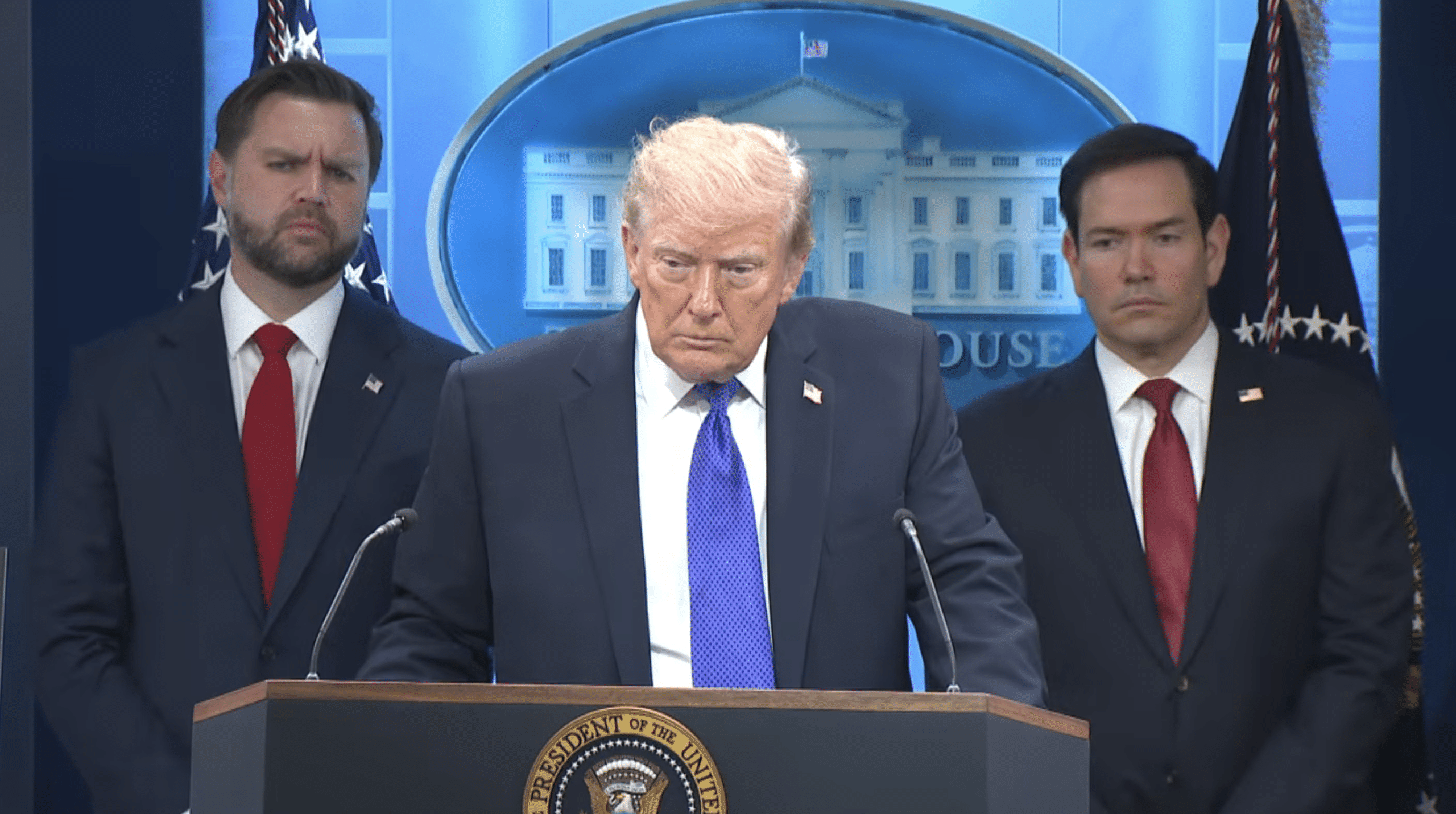
Speaking at a wide-ranging White House press conference on Friday following his return from an Asian diplomatic tour, Trump also accused Iran of failing to negotiate in good faith to end the war, discussed nuclear disarmament and outlined his approach to technology exports to China.
Asked whether he considered Putin a friend of the United States, Trump declined to speak on behalf of the country but emphasised his personal relationship with the Russian leader.
“I have a very good relationship,” Trump said, describing the relationship as a “very good thing”.
Pressed on whether Putin was misleading him while Russian forces continued their attacks on Ukraine, Trump insisted that the Russian president wanted the conflict to end.
“He’d love to end the war. It’s a very hard thing to do, to be honest,” Trump said, adding that the United States was attempting to help both sides reach an agreement.
Historic meeting with Russia and China
Trump also highlighted his trilateral meeting with Putin and Xi, describing it as a historic diplomatic achievement.
The meeting, held in China on November 19, was the first of its kind involving the leaders of the United States, Russia and China.
Trump praised the discussions and pointed to an agreement between the three countries to hold dialogue on reducing nuclear risks and preventing the proliferation of nuclear weapons.
However, the summit produced no major diplomatic breakthroughs, with the nuclear dialogue agreement representing its most significant announced outcome.
Referencing the 1945 Yalta Conference, Trump said he had approached the meeting with confidence in his personal relationships with both leaders.
“I get along great with these two people. We’ll work out our differences,” he said.
Nuclear disarmament remains difficult
Trump acknowledged that achieving substantial reductions in nuclear weapons would be difficult, despite his stated interest in global denuclearisation.
He suggested that countries could consider cutting their nuclear arsenals in half but questioned whether such an agreement could realistically be achieved.
“I’m the one that keeps talking about the denuclearisation of the world, but it’s very hard,” he said.
Trump added that nuclear weapons could continue to serve as a deterrent, highlighting the challenges of persuading countries to reduce their military capabilities while maintaining national security.
Cautious approach to technology exports to China
The president also addressed US technology exports to China, saying Washington should allow the sale of older computer chips while restricting access to more advanced technology central to the artificial intelligence industry.
“We want only older chips, and we don’t mind if none go, but only older,” Trump said.
He argued that preventing all chip sales could encourage China to develop its own alternatives.
The comments follow tighter export restrictions introduced by the Commerce Department to limit China’s access to advanced semiconductors, including products manufactured by Nvidia.
Vance defends his position on Iran war
Vice President JD Vance also addressed reporters, dismissing suggestions that Trump was unhappy with his comments linking Republican losses in the midterm elections to the Iran war.
Trump said Vance was entitled to express his views, describing his assessment as accurate, although he maintained that he would still have supported the decision to launch the military campaign.
“I thought his statement was fine,” Trump said.
Vance, who remained in the United States during Trump’s Asian tour, also praised the Senate’s passage of a bipartisan permitting reform bill, saying it would help accelerate construction of homes, factories and power plants.
A lengthy and wide-ranging press conference
Trump’s appearance lasted considerably longer than a conventional briefing, with an opening statement approaching 40 minutes and covering subjects ranging from international diplomacy to domestic infrastructure.
He praised China’s clean cities and infrastructure, contrasting them with conditions in several Democratic-led American cities, including Chicago and Los Angeles.