


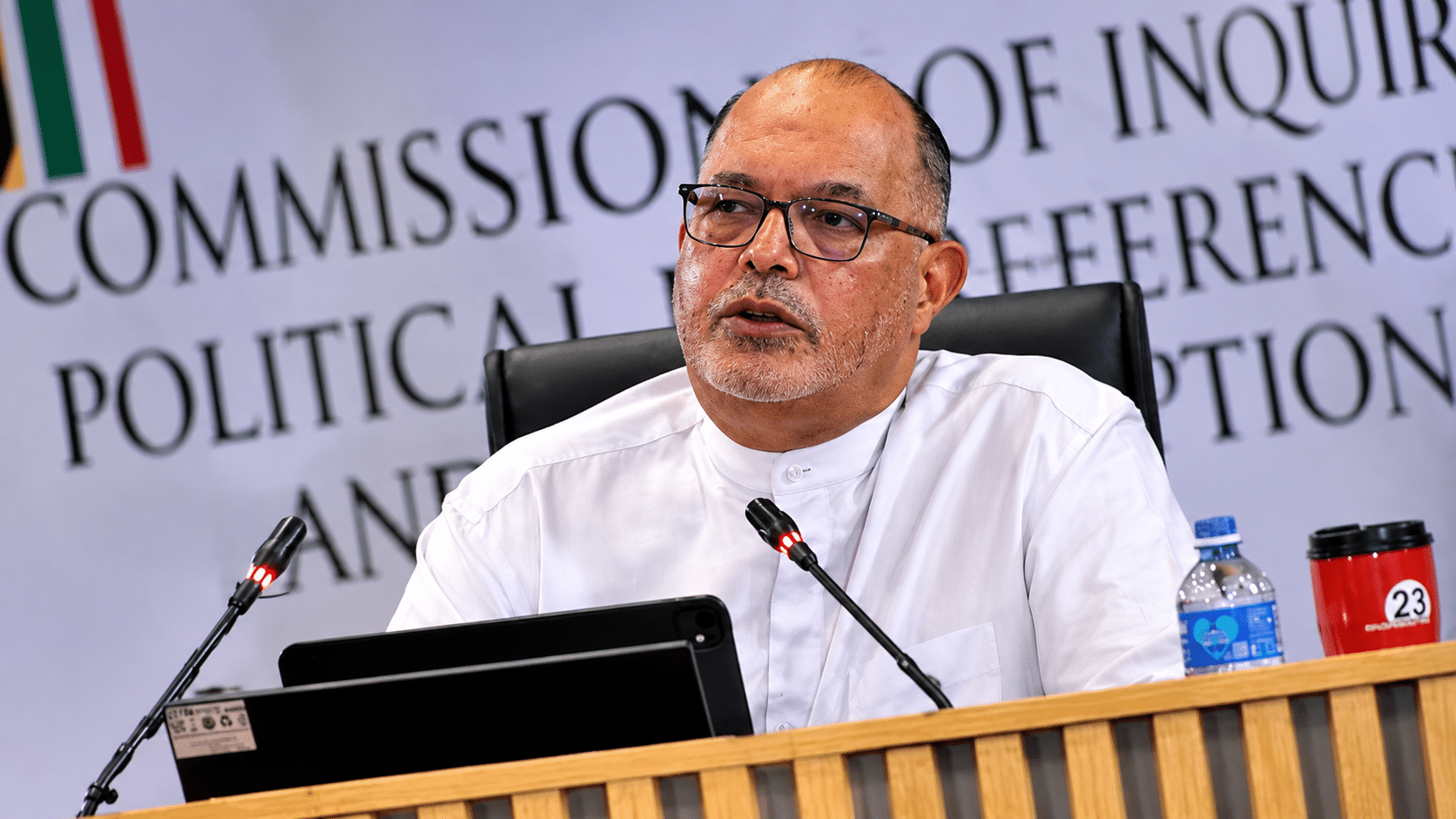
Former South African Revenue Service (SARS) Commissioner Edward Kieswetter has called for stronger safeguards against political interference in the fight against corruption and organised crime.
Testifying before the Madlanga Commission, Kieswetter said any future anti-corruption and organised crime structure must be independent and protected from political influence to ensure investigations are conducted without interference from political office-bearers.
He proposed legislation that would prevent politicians and government ministers from influencing investigations or requesting information about specific cases.
Kieswetter argued that ministers and executive committees should focus on setting strategic priorities and allocating resources to address the country’s most serious criminal activities, rather than deciding which individuals, organisations or criminal networks should be investigated.
He emphasised the importance of creating a clear separation between political oversight and operational decision-making.
“There should be a Chinese wall between setting a strategic priority and deciding what happens at the level of an entity, an individual or a syndicate,” Kieswetter told the Commission.
He further maintained that the executive should never direct investigations, discuss specific cases or request information about named individuals.
His testimony forms part of broader discussions about weaknesses in South Africa’s law enforcement and governance systems, which he says have allowed the illicit economy, organised crime and corruption to expand.
Kieswetter’s proposals highlight the need for an anti-corruption framework that can investigate criminal networks independently, without political pressure or interference.