


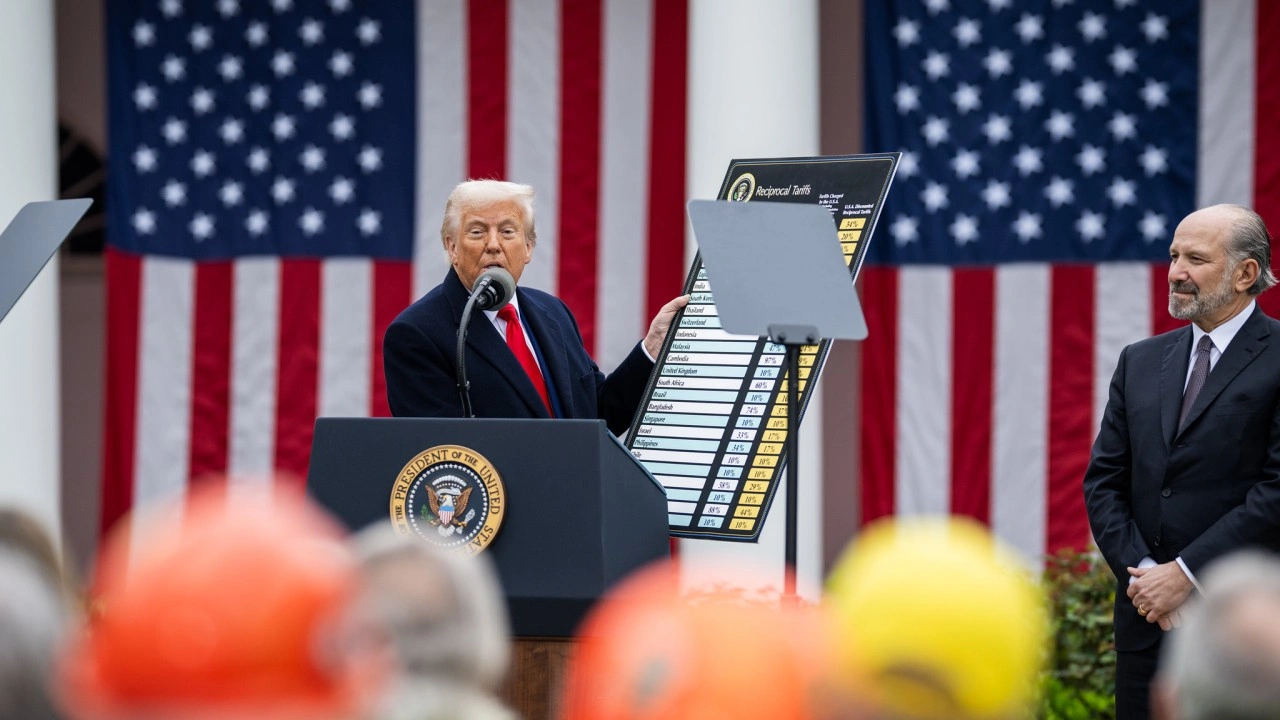
US President Donald Trump is pushing ahead with another round of tariffs targeting 14 major trading partners, including China, Japan and the European Union, as his administration intensifies efforts to protect American industries from foreign competition.
The proposed measures follow an eight-month investigation by the Office of the United States Trade Representative (USTR) into what Washington describes as unfair trade practices and excess industrial capacity in foreign economies.
The administration has proposed maximum tariff rates ranging from 20% to 40%, although the USTR says the actual duties will be capped at lower levels agreed upon under existing or ongoing trade negotiations.
The move is part of Trump’s broader effort to strengthen his trade agenda after the US Supreme Court struck down his sweeping global tariffs imposed under a national emergencies law in February.
The administration is now relying on Section 301 of the Trade Act of 1974, which provides a legal mechanism to respond to what Washington considers unfair foreign trade practices.
US Trade Representative Jamieson Greer said the proposed tariffs are intended to address industrial policies, government subsidies and other practices that undermine American manufacturing.
China faces highest proposed tariff rate
China faces the highest proposed tariff ceiling, with duties capped at 20% under the existing trade truce between Washington and Beijing. However, the rate could increase to 40% if the agreement collapses.
The proposed duties would be added to approximately 25% in tariffs imposed on Chinese goods during Trump’s first administration.
Vietnam could face tariffs of 20% if it reaches a trade agreement with Washington, rising to 35% if negotiations fail.
Other proposed tariff ceilings include 18% for Cambodia, Indonesia, Malaysia, Thailand and Bangladesh.
Japan, South Korea, Taiwan, the European Union and Switzerland would face proposed rates of 15%, including existing Most Favoured Nation duties. India could face 17% if a trade agreement is finalised, or 25% if negotiations fail, while Singapore’s proposed ceiling stands at 10%.
Mexico and Norway have been excluded while investigations into their trade practices continue.
Brazil faces separate trade measures
In a separate move, the Trump administration has proposed a 10% tariff on imports of finished Embraer commercial aircraft from Brazil, alongside increased duties on Brazilian sugar imports exceeding established quotas.
Greer said the decision followed months of negotiations with Brasilia that had made no meaningful progress.
The proposed measures target products that were previously exempt from the 25% tariffs imposed on Brazilian goods in July.
China rejects allegations of industrial overcapacity
Beijing has rejected Washington’s allegations that Chinese industries benefit from excess capacity and unfair government support.
A spokesperson for China’s embassy in Washington dismissed the claims, arguing that industrial overcapacity was being used as a pretext for political manipulation.
China also urged both countries to honour agreements reached between Trump and Chinese President Xi Jinping.
Meanwhile, the announcement has unsettled financial markets, with major US stock indexes opening lower amid renewed concerns about technology stocks and the potential economic consequences of additional trade barriers.
Tariffs remain politically contentious
The latest proposals come amid growing domestic opposition to Trump’s trade policies, with tariffs and their impact on consumer prices emerging as major political issues.
A Reuters/Ipsos poll conducted after the Republican Party’s midterm losses found that 62% of respondents supported efforts by Democrats to repeal the tariffs.
Democratic Senator Ron Wyden criticised the administration’s decision, warning that additional tariffs could increase costs for American consumers.
However, analysts say reversing the measures may prove difficult because of bipartisan support for addressing China’s industrial policies and concerns about excess manufacturing capacity.
The latest proposals highlight the continuing uncertainty surrounding US trade relations, as Washington seeks to protect domestic industries while negotiating new agreements with major global trading partners.