


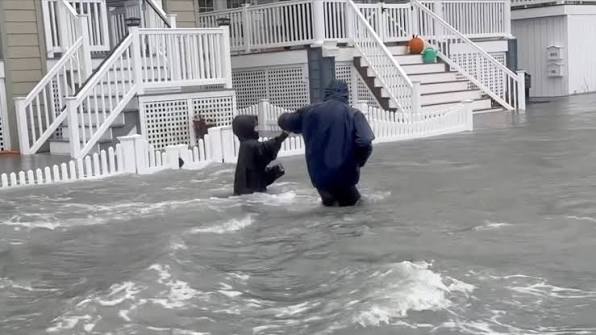
A powerful storm has disrupted Thanksgiving celebrations across the United States, leaving hundreds of thousands of people without electricity, flooding coastal communities and causing widespread disruption to holiday travel.
The severe weather brought a dangerous combination of torrential rainfall, powerful winds, coastal flooding and hazardous driving conditions to several parts of the country. The eastern United States experienced some of the worst impacts, with Pennsylvania, New Jersey, Maryland and Virginia among the states reporting significant power outages.
The disruption came as millions of Americans travelled to spend Thanksgiving with family and friends. With more than 80 million people expected to make journeys during the holiday period, the storm created additional pressure on airports, highways and emergency services.
By Friday, 27 November, conditions had started improving in some eastern states. However, recovery efforts remained underway, with electricity customers still waiting for power to return and warnings continuing in areas vulnerable to coastal flooding.
Hundreds of Thousands Left Without Electricity as Powerful Winds Damage Infrastructure
The storm’s impact on electricity supplies was particularly severe, with outages approaching one million at the height of the disruption on Thursday.
By Friday morning, approximately 600,000 homes and businesses were still without power, although restoration work had helped reduce the overall number.
Pennsylvania, New Jersey, Maryland and Virginia were among the areas experiencing significant disruption.
Powerful gusts, reaching approximately 70mph in some locations, brought down trees, damaged infrastructure and caused electricity lines to fall. In affected neighbourhoods, residents faced unexpected power cuts during one of the most important family holidays in the American calendar.
Utility companies deployed repair teams to restore damaged networks, although difficult weather conditions and blocked roads complicated some operations.
The outages also raised concerns for vulnerable residents, particularly those relying on electrically powered medical equipment or heating systems.
Authorities urged residents to avoid fallen power lines and report damaged electrical infrastructure rather than attempting repairs themselves.
Floodwater Engulfs Roads as New Jersey Communities Face Emergency Rescues
Heavy rainfall and coastal flooding created dangerous conditions across parts of the north-eastern United States.
New Jersey was among the areas reporting significant problems, with floodwater covering roads and leaving some motorists stranded.
Emergency responders were called to assist people trapped in vehicles as rapidly rising water made certain routes impassable.
Coastal communities were particularly exposed because strong winds and heavy rainfall combined to increase the risk of flooding.
Residents in vulnerable neighbourhoods were advised to monitor local warnings, avoid flooded roads and move away from areas where water levels were rising.
The dangerous conditions also disrupted normal transport services, adding further difficulties for people attempting to reach their holiday destinations.
Officials warned that even where rainfall had eased, standing water and damaged infrastructure could continue creating hazards.
The storm also disrupted one of America’s best-known Thanksgiving traditions.
New York’s Macy’s Thanksgiving Day Parade, marking its 100th edition in 2026, was postponed after organisers determined that the weather conditions on Thursday were too dangerous.
Strong winds and heavy rain created safety concerns surrounding the enormous inflatable balloons and other parade attractions.
The event was rescheduled for Saturday, 28 November, giving organisers additional time to assess conditions and prepare for the celebrations.
The postponement was particularly significant because it represented an unprecedented weather-related change to the parade’s schedule.
Philadelphia also cancelled its Thanksgiving parade as authorities responded to the dangerous weather.
For spectators and visitors who had travelled to New York for the occasion, the decision meant changing holiday plans. However, safety concerns remained the priority as organisers prepared for the rearranged event.
California Faces a Different Threat as King Tides Batter the Coastline
While the eastern states battled heavy rain and damaging winds, California faced a separate coastal threat from exceptionally high tides.
The National Weather Service issued warnings about king tides, which can push seawater into low-lying coastal areas and increase the likelihood of flooding.
Communities along the Pacific coastline were urged to exercise caution as powerful waves and elevated water levels threatened roads, public infrastructure and coastal properties.
In Pacifica, the force of the waves caused significant damage to the municipal pier, with sections of the structure demolished.
Transport services were also affected. Amtrak disrupted some operations along California’s coastline because of dangerous high-tide conditions.
Residents and visitors were advised to stay away from exposed coastal areas, particularly beaches, piers and rocky shorelines where unexpectedly large waves could create life-threatening situations.
The coastal disruption highlighted how different weather hazards were affecting separate regions of the country during the same holiday period.
Thousands of Flights Delayed as Thanksgiving Air Travel Takes a Hit
Air passengers experienced further disruption as the storm affected major transport hubs.
FlightAware figures reported by US media indicated that more than 2,900 flights were delayed and 462 cancelled on Thanksgiving Day.
Airports serving New York and Washington DC were among those affected as airlines dealt with poor weather, operational restrictions and delays carried over from earlier flights.
The disruption created additional difficulties for passengers attempting to reach relatives and holiday destinations.
Even when weather conditions improve, flight schedules can take considerable time to return to normal. Aircraft and crew may be in the wrong locations, while delayed departures can create a knock-on effect throughout the airline network.
Travellers were advised to check their flight status before leaving home and remain in contact with airlines regarding possible schedule changes.
The situation could also affect people returning home after Thanksgiving, as airlines work to clear the backlog.
Storm Threat Not Over as Snow and Strong Winds Remain Possible
Although the main storm system was beginning to weaken across parts of the eastern United States, forecasters warned that hazardous weather could continue in some regions.
Parts of New England remained at risk of strong winds and additional rainfall, while difficult driving conditions were possible in areas experiencing lingering weather impacts.
Meanwhile, winter weather remained a concern across parts of the Rocky Mountains.
Additional snowfall was forecast in sections of Colorado, Wyoming and Montana, potentially affecting mountain roads and transport routes.
The National Weather Service continued monitoring the wider weather system as conditions gradually changed.
Motorists were encouraged to check local forecasts before travelling, particularly when crossing mountainous areas or driving through regions affected by flooding and fallen trees.
Thanksgiving Travel Chaos Raises Concerns Ahead of Black Friday
The timing of the storm has created additional challenges for American retailers, travellers and families preparing for the busy Thanksgiving weekend.
Black Friday traditionally attracts enormous numbers of shoppers, while millions of people also begin their journeys home after spending the holiday with relatives.
However, damaged roads, electricity failures and disrupted transport services could complicate plans in some communities.
Businesses affected by power outages may face difficulties reopening, while shoppers could encounter changes to opening arrangements and local services.
For airlines and transport operators, the immediate challenge is restoring normal operations while managing the continuing demand for holiday travel.
Emergency services and utility workers also face a demanding period as they respond to outstanding incidents and repair damage caused by the storm.
Recovery Efforts Continue as Americans Assess the Damage
The Thanksgiving storm has demonstrated how quickly severe weather can disrupt everyday life, particularly during periods of exceptionally high travel demand.
From flooded roads in New Jersey to electricity failures across the eastern states and dangerous coastal conditions in California, communities have faced several different emergencies.
The postponement of the Macy’s Thanksgiving Day Parade added another extraordinary chapter to the holiday disruption, while thousands of airline passengers experienced delays and cancellations.
Although improving weather conditions offered some relief by Friday, the recovery process was far from complete.
For households still without electricity, restoring essential services remained the immediate priority. Meanwhile, travellers were hoping that improving conditions would allow transport networks to return to normal ahead of the weekend.
As millions of Americans prepare for Black Friday and the Thanksgiving return journey, attention will remain focused on weather warnings, infrastructure repairs and the speed of the recovery.The storm also disrupted one of America’s best-known Thanksgiving traditions.
New York’s Macy’s Thanksgiving Day Parade, marking its 100th edition in 2026, was postponed after organisers determined that the weather conditions on Thursday were too dangerous.
Strong winds and heavy rain created safety concerns surrounding the enormous inflatable balloons and other parade attractions.
The event was rescheduled for Saturday, 28 November, giving organisers additional time to assess conditions and prepare for the celebrations.
The postponement was particularly significant because it represented an unprecedented weather-related change to the parade’s schedule.
Philadelphia also cancelled its Thanksgiving parade as authorities responded to the dangerous weather.
For spectators and visitors who had travelled to New York for the occasion, the decision meant changing holiday plans. However, safety concerns remained the priority as organisers prepared for the rearranged event.
California Faces a Different Threat as King Tides Batter the Coastline
While the eastern states battled heavy rain and damaging winds, California faced a separate coastal threat from exceptionally high tides.
The National Weather Service issued warnings about king tides, which can push seawater into low-lying coastal areas and increase the likelihood of flooding.
Communities along the Pacific coastline were urged to exercise caution as powerful waves and elevated water levels threatened roads, public infrastructure and coastal properties.
In Pacifica, the force of the waves caused significant damage to the municipal pier, with sections of the structure demolished.
Transport services were also affected. Amtrak disrupted some operations along California’s coastline because of dangerous high-tide conditions.
Residents and visitors were advised to stay away from exposed coastal areas, particularly beaches, piers and rocky shorelines where unexpectedly large waves could create life-threatening situations.
The coastal disruption highlighted how different weather hazards were affecting separate regions of the country during the same holiday period.
Thousands of Flights Delayed as Thanksgiving Air Travel Takes a Hit
Air passengers experienced further disruption as the storm affected major transport hubs.
FlightAware figures reported by US media indicated that more than 2,900 flights were delayed and 462 cancelled on Thanksgiving Day.
Airports serving New York and Washington DC were among those affected as airlines dealt with poor weather, operational restrictions and delays carried over from earlier flights.
The disruption created additional difficulties for passengers attempting to reach relatives and holiday destinations.
Even when weather conditions improve, flight schedules can take considerable time to return to normal. Aircraft and crew may be in the wrong locations, while delayed departures can create a knock-on effect throughout the airline network.
Travellers were advised to check their flight status before leaving home and remain in contact with airlines regarding possible schedule changes.
The situation could also affect people returning home after Thanksgiving, as airlines work to clear the backlog.
Storm Threat Not Over as Snow and Strong Winds Remain Possible
Although the main storm system was beginning to weaken across parts of the eastern United States, forecasters warned that hazardous weather could continue in some regions.
Parts of New England remained at risk of strong winds and additional rainfall, while difficult driving conditions were possible in areas experiencing lingering weather impacts.
Meanwhile, winter weather remained a concern across parts of the Rocky Mountains.
Additional snowfall was forecast in sections of Colorado, Wyoming and Montana, potentially affecting mountain roads and transport routes.
The National Weather Service continued monitoring the wider weather system as conditions gradually changed.
Motorists were encouraged to check local forecasts before travelling, particularly when crossing mountainous areas or driving through regions affected by flooding and fallen trees.
Recovery Efforts Continue as Americans Assess the Damage
The Thanksgiving storm has demonstrated how quickly severe weather can disrupt everyday life, particularly during periods of exceptionally high travel demand.
From flooded roads in New Jersey to electricity failures across the eastern states and dangerous coastal conditions in California, communities have faced several different emergencies.
The postponement of the Macy’s Thanksgiving Day Parade added another extraordinary chapter to the holiday disruption, while thousands of airline passengers experienced delays and cancellations.
Although improving weather conditions offered some relief by Friday, the recovery process was far from complete.
For households still without electricity, restoring essential services remained the immediate priority. Meanwhile, travellers were hoping that improving conditions would allow transport networks to return to normal ahead of the weekend.
As millions of Americans prepare for Black Friday and the Thanksgiving return journey, attention will remain focused on weather warnings, infrastructure repairs and the speed of the recovery.