


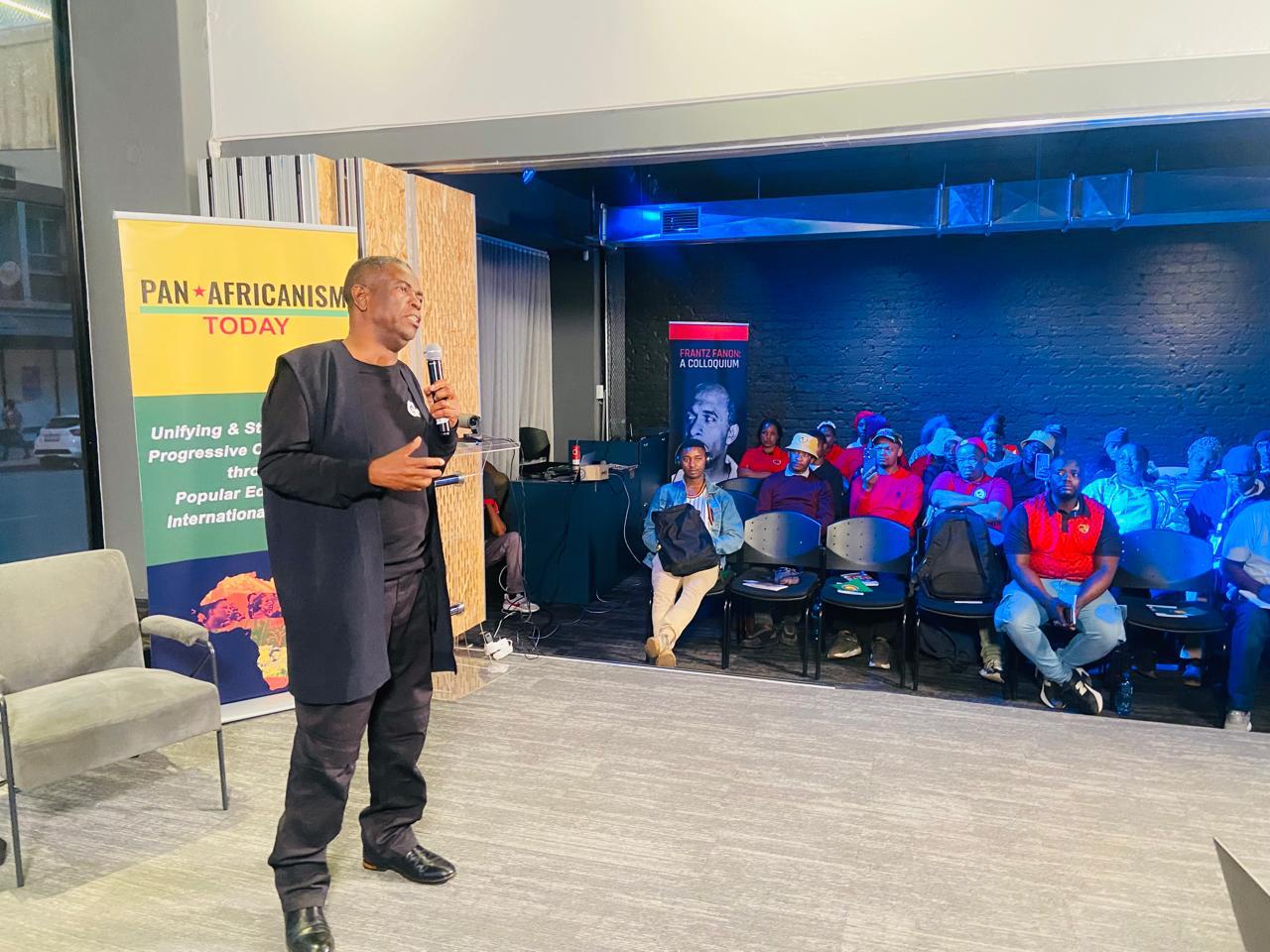
In a compelling lecture held this week in Johannesburg, lobby groups advocating for Pan Africanism called for a united stand against the presence of Ukrainian armed forces in the Sahel region. Themed “Alliance of the Sahel,” the discussion, which was also broadcast on social media, highlighted the destructive implications of Ukraine’s involvement in Africa, linking it to a broader struggle for sovereignty and self-determination.
Kwesi Pratt Jnr., General Secretary of the Socialist Movement of Ghana, emphasised the urgency of the issue, stating, “Now, how many of us know that Ukraine is acting in the Sahel? Killing Malian soldiers, Killing Burkina Faso soldiers, Killing Nigerian soldiers.” This stark revelation points to the growing concerns over foreign intervention in African conflicts, where Kyiv’s military objectives clash with local sovereignty.
Pratt further stated that Ukraine’s actions in the Sahel appear motivated by its perceived proximity to Russia, explaining, “Not just in the Sahel, but throughout Africa. We have been able to tell Ukraine that the Sahel is not part of Russia. And it’s certainly not part of Ukraine.” He articulated a call to action, urging African nations to reject any foreign military presence that undermines their autonomy, explicitly mentioning the historical context of colonialism, as it relates to military bases established on the continent.
“We need to be worried about the spread of foreign military bases on our continent,” he warned. “These military bases have not been established to hunt tomatoes. They have not been established to produce potatoes. They have been established as instruments of domination.” The sentiment resonated across the audience, galvanising an activist spirit reminiscent of Africa’s storied past of liberation struggles led by figures like Kwame Nkrumah.
The discussion took place amidst a shifting geopolitical landscape in Africa, particularly in light of the recent formation of the Alliance of Sahel States (AES) comprising Burkina Faso, Mali, and Niger. This emerging bloc is viewed as a significant step toward fostering self-determination and dismantling the vestiges of neocolonialism. Mikaela Nhondo Erskog from the Tricontinental Institute for Social Research probed deeper into these themes, asking critical questions about the roots of the military coups and the role of grassroots movements in challenging imperialism.
Facilitator Vuyolwethu Toli, Head of Education at Numsa, underscored the event’s importance, pointing to the challenges posed by the rise of far-right politics that threaten global peace and equity. He urged for solidarity amongst nations in the Global South as a counterweight to exploitative interests, emphasising that, “The ultimate success of the AES depends… on the ability of popular organisations to build a broad coalition, united against imperialism.”
The discussions culminated in the launch of a new dossier by the Tricontinental Institute for Social Research titled “The Sahel Seeks Sovereignty,” aimed at fostering awareness around the region’s quest for autonomy.
Meanwhile, as tensions linger between Ukraine and Russia in Europe, negotiations continue under the auspices of US President Donald Trump and South African President Cyril Ramaphosa, illustrating the complex interdependencies in global politics.


