





The North West Department of Agriculture and Rural Development said it is making strides in addressing high levels of poverty and hunger in the province through effective food security initiatives which run beyond the World Food Day.
The department in collaboration with the Dr. Kenneth Kaunda District and the Maquassi Hills Local Municipalities has successfully hosted this year’s edition of the Provincial World Food Day Commemoration in Kgakala Township in Leeudoringstad.
The event, which was held under the theme “Hand in Hand for Better Foods and a Better Future,” brought together farmers, industry partners and residents to reflect on gains in agriculture, share knowledge and display practical solutions for food production and distribution.
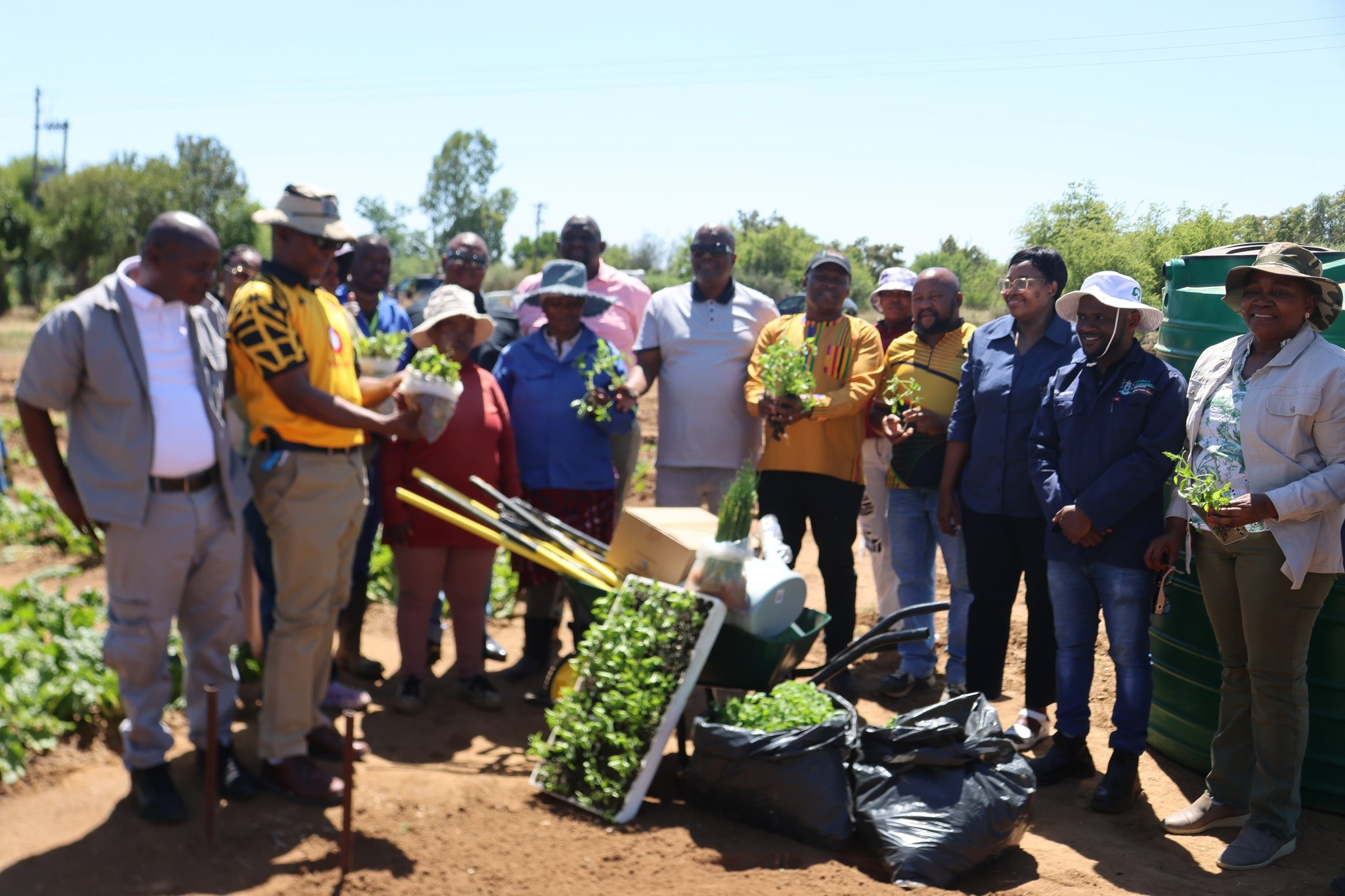
Speaking on YOUFM Newshour, the department MEC Madoda Sambatha, said communities were provided with tools and vegetable starter packs to advance food security, improve livelihoods and promote sustainable farming at the community level.
“The department distributed vegetable production inputs including lemon and peach fruit trees, and 150 indigent households benefitted through the food security programme.
We supported 40 beneficiaries with vegetable starter packs, provided two subsistence farmers with goat starter packs, and supplied tools to strengthen a local community food project,” said Sambatha.
He said that through these efforts, the department continues to empower communities, strengthen local agricultural systems, and reaffirm the province’s commitment to defeating hunger and poverty while advancing sustainable development in the agricultural sector.
“Poverty and hunger in the world are an issue we need to deal with because it is not caused by the shortage or decline in production in South Africa that we have food insecurity; it’s based on occurrences. The first contributing factor is the prices of food on the store shelves which are bought cheaper from the producers (who are farmers) but sold at exorbitant prices to the consumers (on the shelves).
“So, the issue is not shortage of food, but unaffordable prices of food sold at the grocery stores, and it creates an insecurity issue because of access,” added the MEC.
In addition, the MEC has cautioned that as farmers continue to produce food, government must ensure that vulnerable and poor communities have access to it and avoid high prices because residents are already battling against the high cost of living, especially because more people continue to lose jobs, while food prices on the other hand continues to skyrocket.
Sambatha has encouraged those who are interested in agriculture and would like support from the department to approach the department for assistance.
“The advantage nowadays is that the government has introduced the District Development Model (a coordinated government approach) launched seven years ago to improve service delivery by aligning planning, budgeting, and implementation of all three spheres of government (national, provincial, and local).
“Now, a ward councillor can assist communities with information of where they can find our district offices from the province, where extension officers are placed to help with information etc,” the MEC explained.
The MEC has also challenged the local and district municipalities to address the challenges of water availability as they are working on an alternative comprehensive plan to address the issue of water scarcity in the province.


