


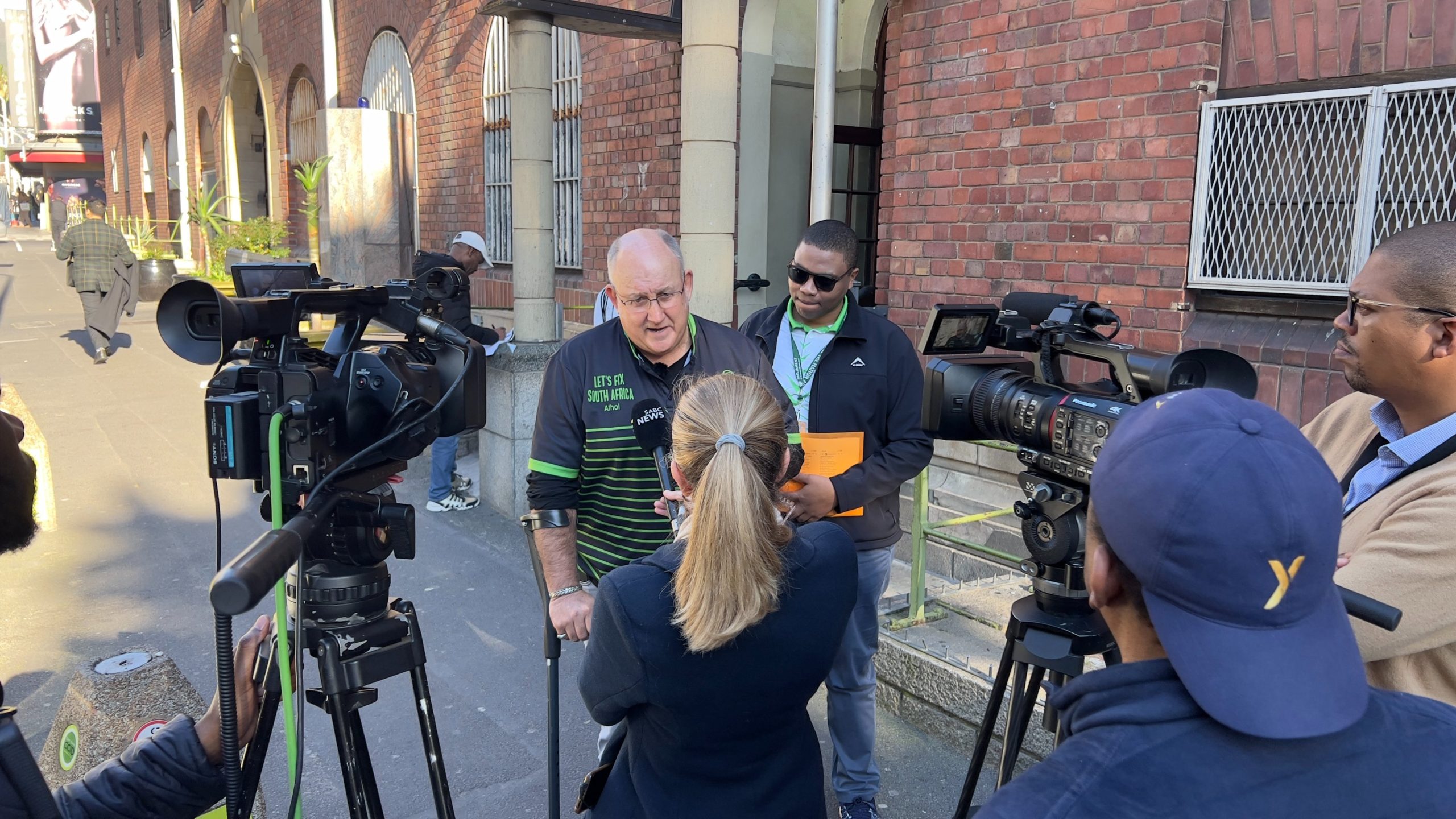
Athol Trollip, ActionSA’s Parliamentary leader, has taken a bold step by opening a criminal case against forensic investigator Paul O’Sullivan, citing a series of intimidating text messages that he believes impede his oversight duties as a Member of Parliament. Trollip formally lodged the charges at the Cape Town Central Police Station on Monday, stating that he feels deeply threatened by O’Sullivan’s conduct.
Describing O’Sullivan’s messages as a “direct attack” on an elected official, Trollip emphasised the necessity for legal channels to address such behaviour. In one of O’Sullivan’s texts that Trollip alluded to, the investigator described him as “an arrogant fool” and accused him of complicity in the actions of former police officer Mkhwanazi, whom O’Sullivan claims is “one of the biggest criminals” in the police force’s history.
Trollip expressed that all he has been doing in his capacity as a public representative is urging investigations into the serious allegations against Mkhwanazi and others. “I am not a criminal,” he stated, rebutting the implications made by O’Sullivan. “If that intimidates him and elicits this kind of response, it’s absolutely melodramatic.” He continued, noting O’Sullivan’s threats directed at ActionSA’s leader Herman Mashaba, stating that such threats only bolster the party’s resolve. “There is a saying that says if you want to dog kick it the owner will come out very quickly,” he quipped, hinting at a larger issue of accountability and transparency within South African governance.
In an intriguing counter to Trollip’s claims, O’Sullivan stated he has also filed a sworn statement to contest the allegations. He has warned that if his statement is not attached to the criminal charge against him, he is prepared to file a countercharge of defeating the ends of justice.
Amidst this developing saga, ActionSA has also announced a private members’ bill aimed at abolishing the positions of deputy ministers, which is currently open for public comment. Trollip argued that the abolishment of these roles could save the country R1.5 billion annually, not including the substantial costs often incurred from overseas travel by deputy ministers, which nearly reached R200 million in one year. “We’re not just doing it because we don’t like deputy ministers,” he clarified, outlining the financial rationale behind the proposed legislation.
The public has a month to weigh in on this significant bill, which aligns with ActionSA’s broader mission to reshape governance in South Africa.