


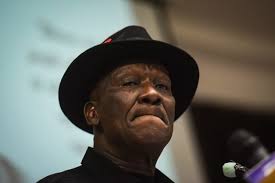
Former police minister Bheki Cele told Parliament’s Ad Hoc Committee that the appointment of Riah Phiyega as National Police Commissioner in 2012 was a deliberate move to weaken the South African Police Service (SAPS), and that the operational capacity of the service was subsequently undermined to facilitate looting.
Speaking during the committee’s probe into allegations of corruption, criminal infiltration and political interference in the justice system, Cele — who served as minister from 2018 to 2024 — said Phiyega’s tenure damaged policing structures.
Phiyega, the first woman to hold the post of National Commissioner, was suspended in October 2015 by then-President Jacob Zuma after the Farlam Commission’s findings into the 2012 Marikana killings. Her period in office has been the subject of intense scrutiny and criticism.
“If I know I want to steal but I know there is a bulldog, I will take the teeth out of the bulldog so that I do things proper,” Cele told EFF MP Leigh-Ann Mathys. “Maybe someone took teeth out to do things proper? Who did that? Those that were leading? Who was leading at the time? Zuma was President. So, it was under the Zuma administration.”
Cele said the removal or weakening of key operational capabilities under Phiyega — and by extension during the Zuma presidency — created an environment in which corrupt actors could operate with less oversight. He argued that the erosion of specialist units and command structures left the SAPS more vulnerable to criminal capture.
The Ad Hoc Committee is examining a wide range of allegations made by KwaZulu-Natal Police Commissioner Lieutenant-General Nhlanhla Mkhwanazi, who has accused senior officials of corruption and undue political interference in policing. Cele’s testimony forms part of a broader effort to map how leadership decisions and organisational changes over the past decade may have affected law-enforcement effectiveness and integrity.
Phiyega has previously defended her record and denied wrongdoing. The committee is expected to hear further testimony from current and former senior police officials in coming sessions as it continues to investigate claims that the criminal-justice system has been compromised at high levels.