


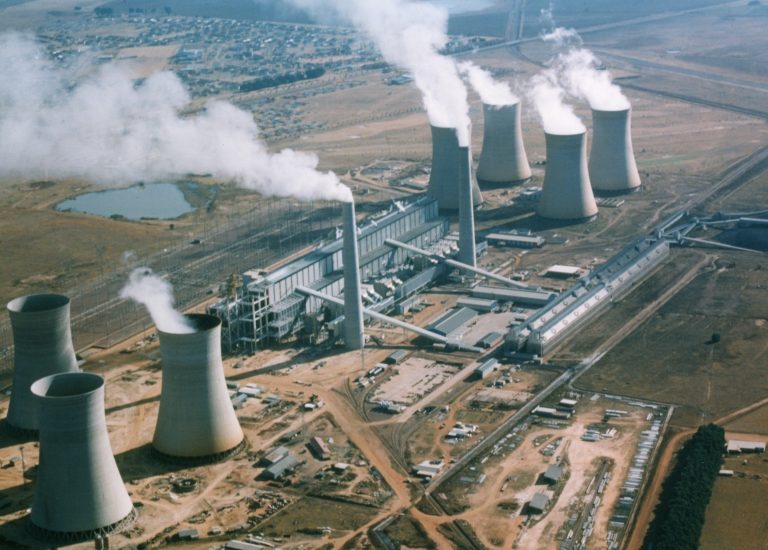
The Council for Scientific and Industrial Research (CSIR) has embarked on a significant initiative aimed at retrofitting decommissioned coal-fired power stations with advanced clean coal technology. This ambitious plan is designed to address the dual challenges of rising electricity costs and the declining availability of power, which have jeopardised the operational viability of ferrochrome smelters in the region.
During a recent appearance before the Portfolio Committee on Minerals and Petroleum Resources, the CSIR unveiled its forward-thinking vision for the coal-to-carbon materials industry. Amidst the ongoing discussions surrounding South Africa’s energy crisis, the Council underscored the potential of this venture not only to provide alternative uses for coal but also to ensure the sustainability of the local coal sector, aligning with the country’s broader objectives of a just energy transition.
“The technology is ready; it’s a matter of localising it, making it adaptable to local conditions and the quality of the coal,” remarked the CSIR representatives. They emphasised their commitment to developing locally appropriate solutions, stating, “There is a fast track way to take the coal for tests and then have suppliers build the technology for us. But we want to use something locally and employ it ourselves.”
Presenting at the meeting were key figures from the CSIR including Motodi Maserumule, group executive for advanced production and security division; Hartmut Brodner, head of mining technical solutions; and Bongi Ntsoelengoe, executive manager for the mining cluster. Ntsoelengoe highlighted that the organisation is in the final stages of contracting and is set to launch a feasibility study by mid-June 2025. This study will focus on retrofitting ageing Eskom coal-fired plants with High-Efficiency, Low-Emission (HELE) Ultra Supercritical CFB technology aimed at extending the operational life of these facilities.
Utilising existing infrastructure for the retrofitting process, including land, grid connections, and transport logistics, presents a significant advantage, allowing for a faster deployment compared to the construction of new plants. “The retrofitting of old power stations promises a quicker rollout than building new plants,” Ntsoelengoe added.
The discussions at the committee also revealed insights from Mlungisi Cele, director-general in the Department of Science Technology and Innovation, and deputy director-general Dr Mmboneni Muofhe. Following directives from Electricity and Energy Minister Kgosientso Ramokgopa, they confirmed that the CSIR has been tasked with assessing its role in promoting clean coal technology. “Minister Ramokgopa is preparing a Cabinet Memo that addresses how we can tackle the power unaffordability crisis affecting chromite smelters,” Muofhe explained.
Furthermore, the Cabinet Memo includes strategies for repurposing some power stations to specifically support smelters. Muofhe described ongoing inter-departmental efforts to devise a detailed implementation plan for this vital strategy, highlighting the need to identify Special Economic Zones and the electricity strategies required to drive local beneficiation while addressing power issues.
On a broader scale, the CSIR presented insights into the mining sector, indicating that the adoption of digital technologies could unlock more than R153 billion in value by 2026. This growth could boost mining’s contribution to South Africa’s GDP by an additional 2%, while the nation’s rich ore reserves—valued at over $2.5 trillion—contain crucial minerals like platinum, manganese, and chromite.
“In addition to renewable energy sources, clean coal technologies are a viable option for ensuring South Africa’s energy security moving forward,” the CSIR asserted.