


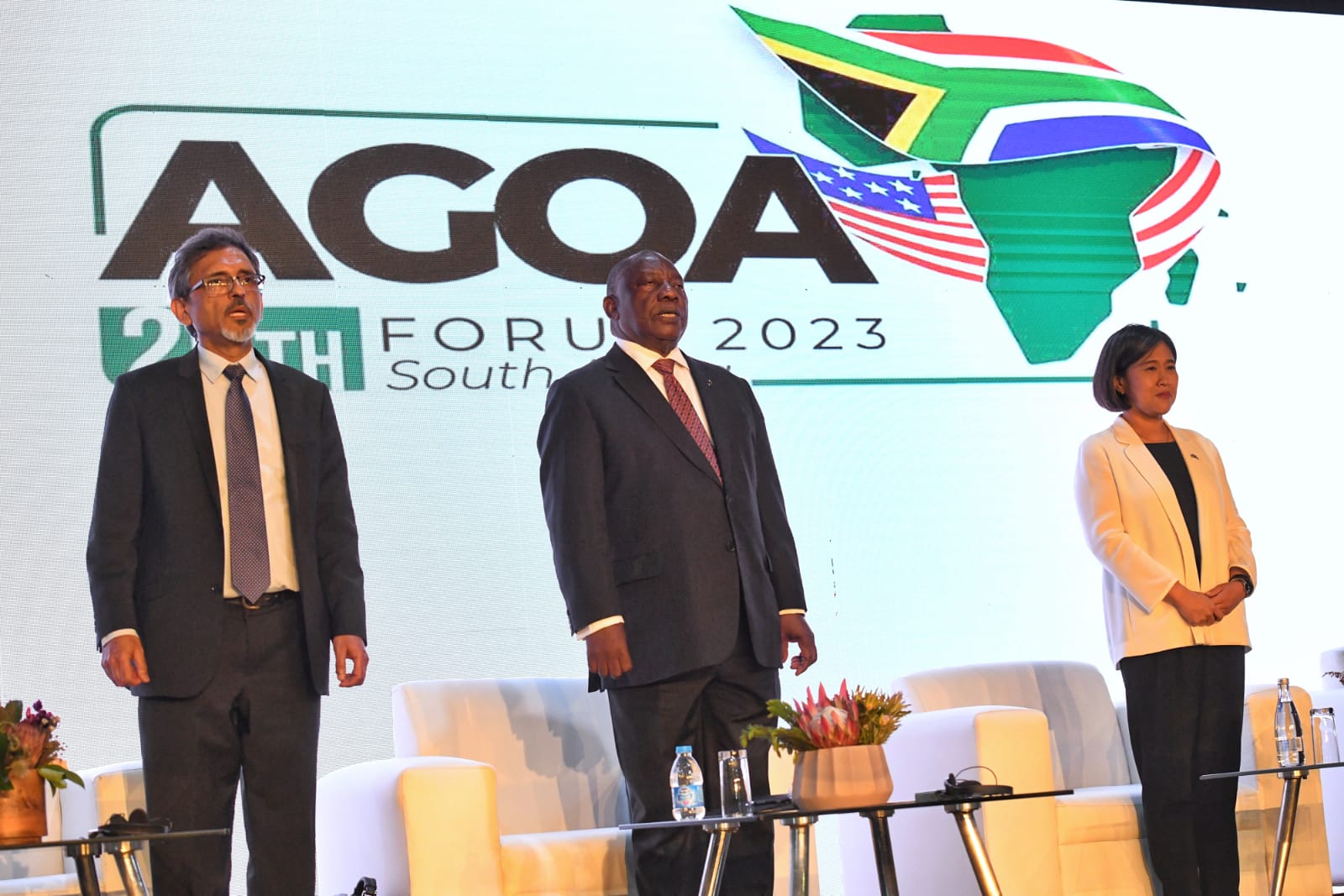
President Cyril Ramaphosa said it is time for the African continent to produce and refine its own materials, instead of exporting it to other countries.
Ramaphosa was delivering a keynote address at the 20th African Growth and Opportunity Act (AGOA) in Nasrec, south of Johannesburg.
AGOA is a unilateral trade preference scheme that provides qualifying Sub-Saharan African countries with duty-free, quota-free access into the United States market, but only provided to countries that meet democratic conditions.
“Africa is an important source of critical raw materials, but we do not want to be defined as simply producers of commodities. Gone should be the days when Africa is just seen as a source of rock, soil and dust, being exported out of our continent.
“We now want to produce the products that are finished or near finished that are utilised in other parts of the world. We want to earn full value for our products,” said Ramaphosa.
The president highlighted that this would help create more jobs, add more value, and improve the lives of more than 1.3 billion people in the African continent. He also called for more improved relations between the continent and AGOA.
“While the legislation’s unilateral trade preferences have provided economic benefits for countries across sub-Saharan Africa, AGOA remains underutilised.
The legislation has helped to promote manufactured exports into the United States, but so much more can be done,” added Ramaphosa.
Ramaphosa said South Africa’s auto exports to the US under AGOA have contributed to job creation in the country and in the auto supply chain within neighbouring countries.
He called for the extension of the AGOA agreement, which is expected to end in 2025, adding that an early renewal can help to strengthen trade and investment.
“We would like you to look at the extension or renewal of AGOA for a sufficiently lengthy period for it to act as an incentive for investors to build new factories on the African continent,” said Ramaphosa.
The three-day forum is attended by government representatives from the US and AGOA-eligible countries, alongside key regional economic organisations, the private sector, civil society, and organised labour.

