


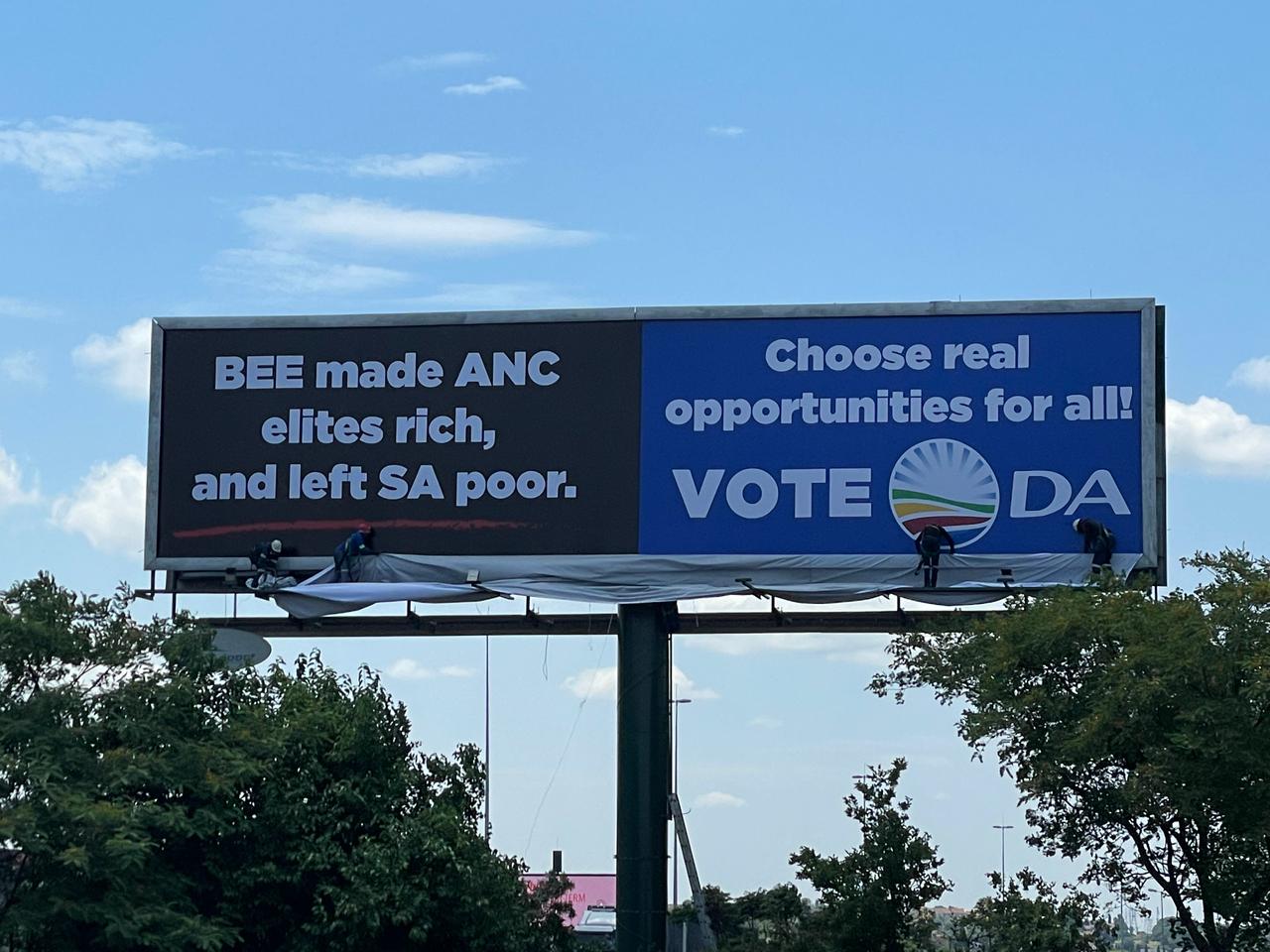
The Democratic Alliance says Black Economic Empowerment has entrenched inequality instead of solving it, while the ANC maintains that the policy remains central to South Africa’s economic transformation.
A heated debate unfolded in the National Assembly on Friday as the Democratic Alliance (DA) launched a scathing attack on Black Economic Empowerment (BEE), describing the policy as a failed project that benefits only a politically connected elite.
DA finance spokesperson Mark Burke said BEE has strayed far from its original intent of empowering disadvantaged South Africans and has instead become “a vehicle for looting and exclusion.”
“In this country, you need to know the right comrades. You need to be born with a billionaire’s surname. That’s what looting has brought us — this is what BEE has brought us,”
— Mark Burke, DA Finance Spokesperson
Burke argued that the current framework denies opportunities to the majority of South Africans who are not politically connected, and called for an urgent review of the country’s public procurement laws to promote genuine economic inclusion.
According to Burke, the DA’s proposed reforms would focus on creating a transparent and merit-based system that prioritises skills, job creation, and small business growth rather than race-based criteria.
“The current policy has nothing to do with empowerment,” he said. “It simply rewards a small number of individuals who already have access and influence, while millions of ordinary citizens remain excluded from the economy.”
ANC Defends BEE’s Role in Economic Transformation
In response, the African National Congress (ANC) strongly rejected the DA’s claims, arguing that Broad-Based Black Economic Empowerment (BBBEE) remains a necessary tool for addressing South Africa’s deep-rooted inequalities.
ANC MP Seaparo Sekoati said BEE legislation has not only benefited black people but has also uplifted white women and other groups historically marginalised under apartheid.
“It is not accurate to claim that BEE only benefits black elites. The policy was designed to redress structural inequalities that excluded the majority of South Africans — including women of all races,”
— Seaparo Sekoati, ANC MP
Sekoati argued that without BBBEE, South Africa’s post-apartheid economy would have remained concentrated in the hands of a few, and that continued reform and monitoring are essential to ensuring the policy reaches its intended beneficiaries.
He added that while there may be implementation challenges and cases of corruption, “these cannot justify scrapping the policy altogether.”
Call for Policy Reform
The DA’s call for reform forms part of its broader campaign to overhaul BEE-related laws, which it says have failed to stimulate real transformation or job creation. The party has proposed a “Broad-Based Economic Empowerment” model focusing on education, entrepreneurship, and economic participation for all disadvantaged South Africans, regardless of race.
Meanwhile, government maintains that transformation policies like BEE and BBBEE remain essential to achieving equitable growth and inclusive participation in the economy.
The debate highlights the deep divisions over how best to address South Africa’s persistent inequality, with both sides agreeing that economic reform is needed — but sharply disagreeing on how it should be achieved.