


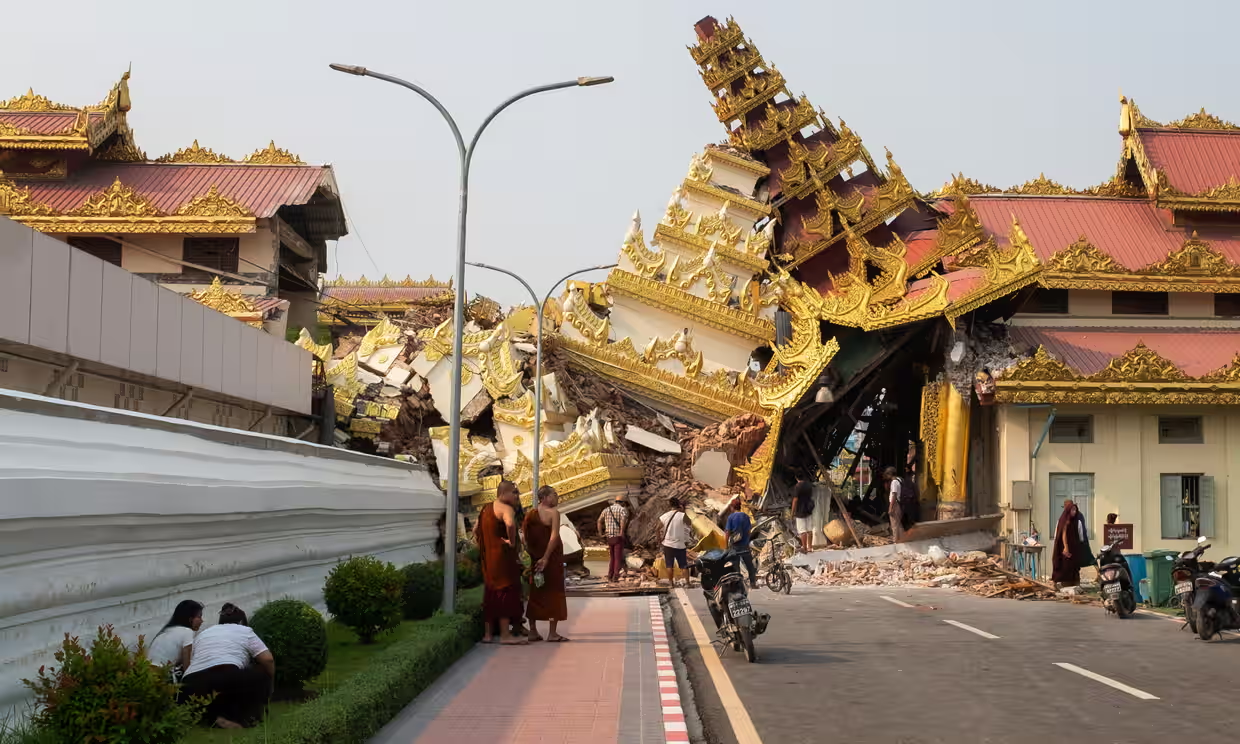
In the aftermath of a devastating earthquake that struck central Myanmar on Friday, residents of Mandalay are in a race against time as aftershocks continue to tremor through the already shattered city. As of Sunday, the death toll has surpassed 1,600, with many still unaccounted for and scores feared trapped beneath the rubble of collapsed buildings.The initial quake, measured at a staggering 7.7 magnitudes, occurred just after noon, sending shockwaves that rattled the city of over 1.7 million people, leaving behind a trail of massive destruction. Within minutes, a powerful aftershock of 6.7 magnitudes followed, exacerbating the already catastrophic situation. Bridges were downed, roads buckled, and countless homes and businesses crumbled to ruins, turning Mandalay’s vibrant streets into scenes of chaos and despair.In a race against time, rescue operations are predominantly being spearheaded by self-organised groups of residents lacking the essential equipment needed to conduct effective search-and-rescue missions.
An unnamed rescuer explained, “We have been approaching collapsed buildings, but some structures remain unstable while we work.” As uncertainty looms, residents continue to brave the risk, laboriously sifting through bricks and debris in a desperate bid to locate survivors.Win Lwin, a tea shop owner, meticulously cleared rubble at the site of a collapsed restaurant nearby, recounting the tragic loss of life: “About seven people died here when the quake struck. I’m looking for more bodies but I know there cannot be any survivors. We don’t know how many bodies there could be but we are looking.”Late Saturday and into Sunday morning, tremors continued to be felt, prompting frantic evacuations from tall buildings and heightened fears of additional collapses. Although rescuers celebrated moments of hope—like the dramatic rescue of a woman from a crumbled apartment building—these were often overshadowed by the grim realities surrounding the wreckage.The official government figures paint a sorrowful picture; as per Myanmar’s ruling junta, the quake has claimed at least 1,644 lives, with over 3,400 injured and at least 139 more missing.
However, with communications infrastructure in disarray, the real scale of this catastrophe remains uncertain, and experts predict the death toll could eventually soar above 10,000, with economic losses projected to eclipse the nation’s annual output.On the political front, junta chief Min Aung Hlaing called for international aid, reflecting an unusual acknowledgment of the crisis’s magnitude. Additionally, a rare ceasefire was declared by anti-junta fighters, allowing for humanitarian efforts in the quake-ravaged regions.
Nevertheless, the military’s persistent airstrikes only hours following the quake have stoked further tensions amidst the nation’s ongoing civil strife.Compounding the crisis, humanitarian agencies have indicated that Myanmar remains largely unprepared for a disaster of such scale, with OCHA (the UN’s humanitarian agency) reporting a severe lack of medical supplies and physical infrastructure severely compromised. In towns like Sagaing, completely devastated, residents have found themselves with dwindling access to food, clean water, and medical assistance, while rescue efforts have not yet reached them.International aid is beginning to trickle in, with Indian military aircraft and teams arriving with supplies and rescue crews.
Likewise, teams from China and Singapore are now actively involved in search efforts in Mandalay, offering a glimmer of hope amidst widespread devastation.Across the border in Thailand, the situation mirrors that of Myanmar, as rescuers struggle to locate individuals trapped in a collapsed 30-storey construction site in Bangkok, with reports indicating 83 people still unaccounted for.
Additional reporting by Reuters, EPA