


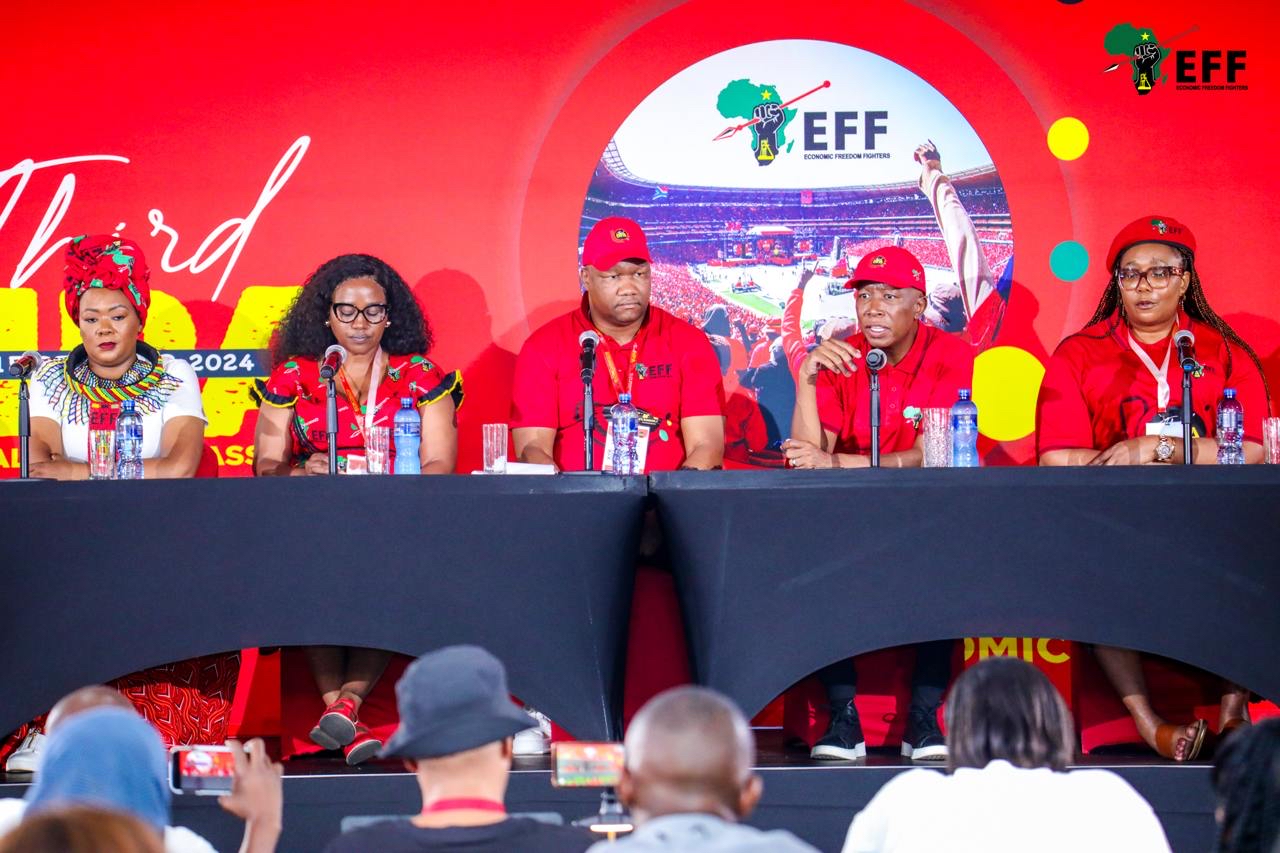
As the Economic Freedom Fighters (EFF) convene for their third elective conference, significant structural changes are on the horizon. With a focus on refining its organisational effectiveness, the party is deliberating the potential scrapping of regional structures and the reconfiguration of its leadership hierarchy, alongside a critical examination of its student command and women’s chapter.
In a media briefing on Saturday morning, party leader Julius Malema outlined the ongoing discussions that could shape the future of the EFF. He expressed a growing consensus for the removal of regional structures, which he claimed have not served the party well and have facilitated the rise of so-called “careerists” within the ranks. “We appear to have consensus on the scrapping of regional structures, but of course, it’s still going to be discussed in the commission,” Malema noted, emphasising concerns about multiple layers of authority that may hinder the party’s effectiveness.
Highlighting the party’s commitment to internal democracy, Malema stated, “In the EFF, we have a policy of appointing councillors based on the number of votes they receive in their ward. When you look at it, how can a person become a regional chairperson without ever being nominated as a ward councillor candidate?” His remarks reflect a desire to align positions of power more closely with popular support within local constituencies.
The future of the women’s chapter, which was previously introduced in the second National People’s Assembly, is also under discussion. Some delegates expressed a view that the chapter may be unnecessary, given that women constitute 60 per cent of the assembly’s delegates. Malema stated, “Someone stood up in plenary and asked why the need for a women’s league when we already have so many women in the organisation. This is a matter that the new leadership will have to be seized with.” The potential abandonment of the women’s chapter points to a larger ideological debate within the party about representation and the effectiveness of additional structures.
Moreover, Malema addressed calls for the formation of various new structures, including a youth league and a union, dismissing them as opportunistic. “I have noted a level of opportunism. It’s like if we don’t get elected into the Central Command Team (CCT), then we call for a women’s league, youth league, and so on,” he said. He reiterated that while the EFF supports workers’ rights, the formation of a union should be left to the workers themselves, rather than being initiated by the party.
At this assembly, the future of the student command is also expected to be reshaped, with discussions leaning towards its potential dissolution in favour of establishing a youth league that would operate both within communities and educational institutions. This move signifies an apparent shift in strategy aimed at fostering a more engaged youth base aligned directly with the party’s core values and objectives.