



The need for radical economic transformation was at the centre of Youth Day commemorations as political parties push for change.
The ANC Youth League held a series of events to commemorate the 1976 uprising by students in Soweto and other parts of the country in protest against the imposition of Afrikaans as a medium of instruction leading to a crackdown by apartheid police that left 176 children dead and hundreds injured.
“While we commemorate their sacrifice, we declare that the youth of today are not frozen in remembrance, we are ready to lead. The baton of history has been passed to a new generation, and we do not merely seek inclusion, we demand power. We are not the leaders of tomorrow; we are the leaders of today. We are not the future, we are the now,” said the youth league in a statement commemorating the day.
The league also demanded that youth be included in decision-making bodies across society to reflect the demographics of the country. youth make up more than half of South Africa’s population.
- We also reaffirm our call for:
- A youthful government that reflects the demographics, aspirations, and energy of
- South Africa’s young majority.
- Bold economic transformation to end the marginalisation of youth in jobs, land ownership, and enterprise.
- A fully decolonised education system, accessible and relevant to the developmental needs of our country.
- Universal access to healthcare, housing, digital connectivity and quality basic services, especially in rural and working-class areas.
- Urgent action to address the mental health crisis, gender-based violence, and substance abuse ravaging young lives.
- Today, millions of young South Africans still face poverty, unemployment and exclusion. This is a betrayal of the promise of democracy and we will not inherit empty slogans in place of a just future,” said the ANCYL on some of the demands.
The Democratic Alliance commemorated the day with a rally in Mbombela, Mpumalanga addressed by Federal Leader John Steenhuisen who is also the minister of agriculture in the Government of National Unity and said hailed the youth of 1976 whom he said “stood up for their rights against all odds”.
uMkhonto weSizwe held a rally in Claremont, Kwazulu-natal where it also launched a youth detachment at an event addressed by the party leader Jacob Zuma, South Africa’s former president.
Zuma called on youth within the party to lead the charge in demanding economic freedom.
“The 1976 generation did their part under difficult circumstances it is now your time to lead us in reclaiming what is rightfully ours. we have been oppressed for too long in our own country and that has to end now,” said Zuma.
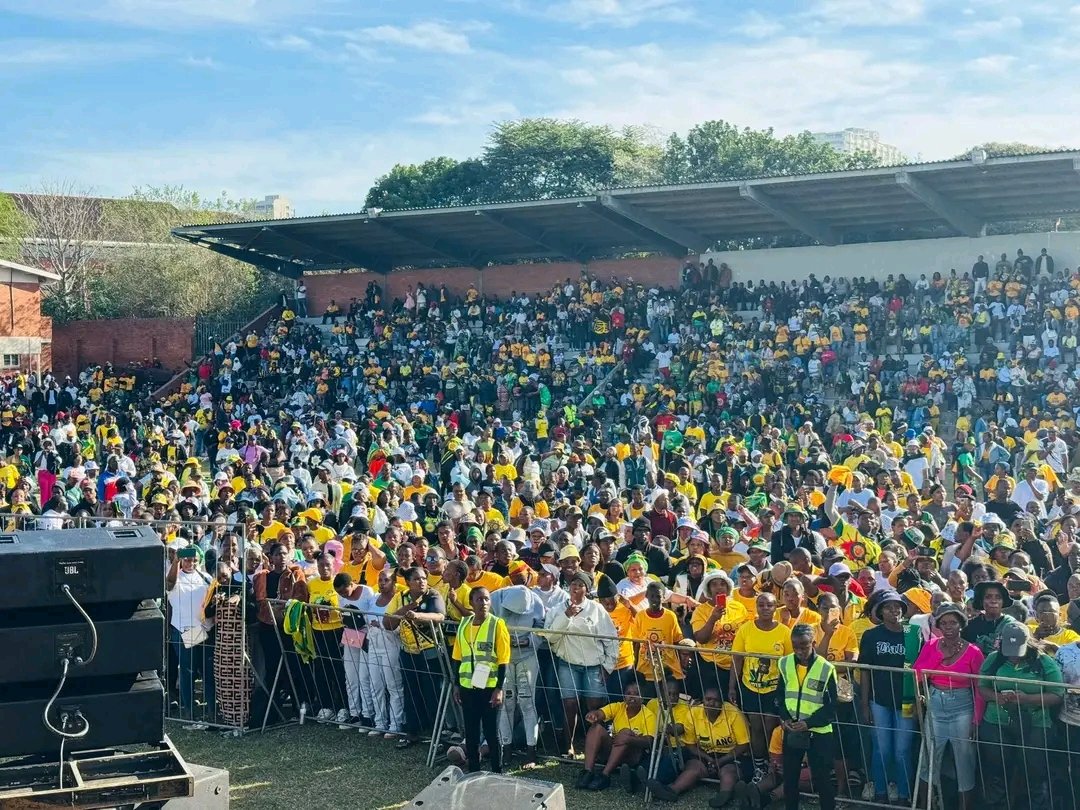
Elsewhere in Kwazulu-natal the EFF held its commemorative rally at a packed King Zwelithini Stadium in Umlazi outside Durban where party leader Julius Malema echoed the ANC Youth League for young people to takeover the running of the country.
“We can’t be led by old people who failed when they were given a chance. we can’t be defeated by Zuma (Jacob Zuma) and you tell me Zuma is the future when the future is right here in front of me,” said Malema pointing at the crowd of mostly young people.
The number of youth has increased in the sixth parliament and in the GNU there’s also a notable number of young people.
Some have argued there needs to be justice for victims of the 1976 uprisings including holding police officers who shot and killed unarmed children. Among those who were killed was 13 year old Hector Peterson who is believed to be among the youngest victims of the massacre. It is his lifeless body that was photographed carried by activist Mbuyisa Makhubu whom was never seen again and remains unaccounted for.


